
Most people don’t know this. Jaywalking doesn’t kill your case in Colorado, and we’ve watched insurance adjusters try to convince injured people otherwise more times than we can count.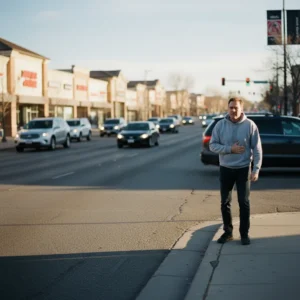
Colorado runs on a modified comparative negligence system under C.R.S. § 13-21-111. Here’s what that actually means for you. You can still recover money for your injuries as long as you’re less than 50% at fault for what happened. At 50% or more, your recovery goes to zero. But crossing outside a crosswalk? That alone almost never puts you at 50%.
Consider what actually happens on Arapahoe Road near the Denver Tech Center. A driver is going 15 over the speed limit, glancing at their phone, and hits someone crossing mid-block. Yes, the pedestrian was jaywalking. The driver was speeding and distracted. Both people made mistakes. Colorado law looks at who carries more of the blame, not just who made any mistake at all.
We see this play out regularly in Greenwood Village cases. A pedestrian crosses Orchard Road between marked crosswalks. A driver blows a stale yellow or fails to yield on a turn. The insurance company immediately points to the jaywalking and says the pedestrian was at fault. But that’s only one piece of the picture.
What the Driver Was Doing Matters Just as Much
Insurance adjusters love to focus on what you did wrong. They’ll argue jaywalking, dark clothing, phone distraction, whatever they can find. They want your percentage of fault as high as possible, because every percentage point cuts what they owe you. If you’re found 30% at fault, your compensation drops by 30%. A $100,000 case becomes $70,000.
But the driver’s conduct gets weighed too. Were they following Colorado’s hands-free driving law under SB 24-065? Were they at the posted speed? Did they have time to stop and just didn’t? Were their headlights on? Every one of those questions can push fault back toward the driver, and adjusters won’t volunteer that information to you.
“It’s very important that you end up with the right attorney, not just the one who advertises the most or has the most clicks online. You want an attorney with significant experience, not only handling this type of work but actually trying cases. That doesn’t mean your case will go to trial, but it matters that your attorney has trial experience. Insurance companies know which firms actually take cases to trial, and that affects how your case is handled.”, Jason Jordan, Founding Partner
A Real Scenario We’ve Handled
Someone leaves a restaurant near Fiddler’s Green after a show. The nearest crosswalk is 200 yards away, so they cross mid-block. A driver making a left turn clips them at speed. Broken leg. Surgery. Weeks off work.
The insurance company assigns the pedestrian 40% fault for jaywalking. At 40% fault, that person still recovers 60% of their damages, medical bills, lost wages, pain and suffering. None of that disappears just because they crossed in the wrong spot.
Most people don’t realize this until it’s too late, they’ve already accepted a lowball offer or given a recorded statement admitting fault. Don’t do that. If you’ve been hit as a pedestrian in Greenwood Village, even while jaywalking, talk to a Denver pedestrian accident lawyer before you say a word to any insurance company. The gap between getting nothing and getting real compensation usually comes down to how fault gets argued.
How Colorado’s Comparative Fault Law Applies to Pedestrian Accident Claims
Here’s the statute that matters most. Colorado follows a modified comparative negligence rule under C.R.S. § 13-21-111. Your compensation gets reduced by your percentage of fault. You don’t lose everything just because you made a mistake.
The cutoff is 50%.
If a jury or adjuster decides you were 49% at fault, you can still recover 51% of your damages. Hit 50% or above, you get nothing. That’s the line, and insurance companies will work hard to push you past it.
What Fault Percentage Actually Looks Like
 Say you crossed Arapahoe Road outside a crosswalk near the I-25 interchange in Greenwood Village. The driver was going 15 over the limit and looking at their phone. You stepped into traffic where you shouldn’t have. Both of you did something wrong. A jury might assign you 30% fault for jaywalking and the driver 70% for speeding and violating Colorado’s hands-free driving law under SB 24-065. If your total damages were $200,000, your recovery would be $140,000. That 30% reduction stings, but $140,000 is a lot better than zero.
The fault split rarely lands where the insurance company first claims it should. We’ve seen this play out hundreds of times.
How Insurance Companies Try to Shift Blame
The adjuster’s job is to make your share of fault look as big as possible. They have a playbook for pedestrian cases, and it works on people who don’t know the law. They’ll argue you were wearing dark clothing at night. They’ll say you were distracted. They’ll point out you weren’t in a crosswalk. They’ll claim you never looked before stepping off the curb.
Every one of those arguments is designed to push your fault percentage toward that 50% bar. What adjusters won’t tell you is that jaywalking alone doesn’t automatically make you 50% at fault. It’s one factor. The driver’s speed, attention, sobriety, and reaction time all carry weight too, sometimes more weight.
Evidence That Shifts Fault Back to the Driver
Along busy corridors like Orchard Road and DTC Boulevard, traffic cameras and business surveillance footage can show whether a driver had time to stop. Skid mark analysis tells us whether they even tried to brake. Phone records reveal whether they were texting. (Greenwood Village has a dense commercial corridor along Arapahoe Road with a lot of private security cameras that often capture exactly what happened, footage that gets overwritten in days if nobody moves to preserve it.)
Colorado requires drivers to use due care around pedestrians regardless of where the pedestrian is walking. That duty doesn’t disappear because someone crossed mid-block. A driver going the speed limit with eyes on the road might have avoided the collision entirely. That argument is what brings your fault percentage down.
The statute of limitations for a pedestrian accident claim in Colorado is 3 years under C.R.S. § 13-80-101 when a motor vehicle is involved. But evidence disappears fast. If you were hit while jaywalking and you’re wondering whether you even have a case, talk to a pedestrian accident lawyer before that window closes.
For a free legal consultation, call (303) 465-8733
Drivers Still Have a Legal Duty of Care, Even When a Pedestrian Jaywalks
A driver doesn’t get a free pass just because you crossed outside a crosswalk. Colorado law requires every driver to use reasonable care to avoid hitting a pedestrian. That duty exists no matter where you’re walking. Adjusters won’t lead with that fact, but it’s the law.
A driver going 45 mph down Arapahoe Road near the DTC has to watch for people. Full stop. If that driver was on their phone, running a red, or cutting through a parking lot exit too fast, the fact that you jaywalked doesn’t erase what they did.
What “Duty of Care” Actually Means
Duty of care is a legal term. It means drivers must act like a reasonable person would behind the wheel, scanning for pedestrians, slowing in busy areas, keeping their eyes up. Colorado’s hands-free law under SB 24-065 makes phone use while driving a violation. A driver scrolling through texts who hits someone jaywalking has already broken their duty of care before the collision even happened.
We’ve seen this play out near Fiddler’s Green and along the I-25 frontage roads in Greenwood Village. A driver blows through a turn, hits a pedestrian who stepped off a median, and the adjuster immediately says the pedestrian was at fault. But when we pull the evidence, the driver was going 15 over. Or they never touched the brakes.
That matters.
Common Ways Drivers Breach Their Duty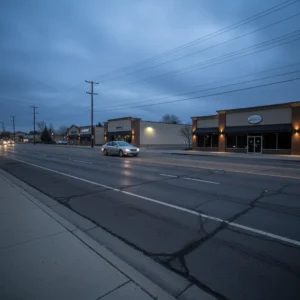
Distracted driving is the biggest one we see. A driver on their phone has already failed their duty of care before the crash. Excessive speed is right behind it. Going 50 in a 35 zone near Orchard Road doesn’t become acceptable because someone crossed mid-block. And impaired driving, a drunk or drugged driver can’t turn around and argue the pedestrian should have been more careful.
Failure to yield when turning catches people off guard. Drivers making left turns along Belleview Avenue owe a duty to watch for anyone in their path, even someone not in a marked crosswalk. Poor visibility awareness comes up too, if it’s dark, snowing, or the driver’s windshield is fogged and they don’t slow down, that’s on them. Denver metro winters create exactly those conditions on a regular basis.
The driver’s breach of duty doesn’t have to be the only cause of the crash. Under Colorado’s modified comparative negligence rule in C.R.S. § 13-21-111, both sides can share fault. You might be 20% at fault for jaywalking. The driver might be 80% at fault for speeding. You’d still recover 80% of your damages.
“It’s very important that you end up with the right attorney, not just the one who advertises the most or has the most clicks online. You want an attorney with significant experience, not only handling this type of work but actually trying cases. That doesn’t mean your case will go to trial, but it matters that your attorney has trial experience. Insurance companies know which firms actually take cases to trial, and that affects how your case is handled.”, Jason Jordan, Founding Partner
The driver’s duty of care is your strongest tool in a jaywalking case. If you’ve been hit while crossing outside a crosswalk in Greenwood Village, a pedestrian accident lawyer can dig into whether the driver failed that duty. That investigation changes what your case is worth, sometimes dramatically.
Frequently Asked Questions
Can you still get compensation if you were jaywalking when you got hit in Greenwood Village?
Can you still get compensation if you were jaywalking when you got hit in Greenwood Village?Yes, you can still recover money even if you were jaywalking. Colorado uses a modified comparative negligence rule under C.R.S. § 13-21-111. As long as you are less than 50% at fault, you can still collect damages. Your payout gets reduced by your share of fault — but it doesn’t disappear. Crossing mid-block on Orchard Road or near Arapahoe Road doesn’t automatically make you more than half responsible. The driver’s speed, attention, and reaction time all count too.
What is the 50% fault rule, and how does it affect a jaywalking pedestrian case?
What is the 50% fault rule, and how does it affect a jaywalking pedestrian case?The 50% rule is the cutoff under Colorado law. If you are found 50% or more at fault, you recover nothing. Below 50%, your compensation is reduced by your fault percentage. For example, if you are 30% at fault and your damages total $100,000, you receive $70,000. Jaywalking alone almost never pushes a pedestrian to 50%. The driver’s conduct — speeding, phone use, failure to yield — gets weighed alongside your actions. That balance matters a lot.
Does jaywalking automatically mean the pedestrian is at fault in Colorado?
Does jaywalking automatically mean the pedestrian is at fault in Colorado?No — jaywalking is one factor, not an automatic finding of fault. This is one of the biggest misconceptions injured people have. Insurance adjusters will tell you otherwise because it saves them money. But Colorado law looks at the full picture. A driver who was speeding, distracted, or violating Colorado’s hands-free law under SB 24-065 carries fault too. Jaywalking raises your percentage, but it rarely tells the whole story on its own.
Why does it matter whether a driver was on their phone or speeding in a jaywalking accident near the Denver Tech Center?
Why does it matter whether a driver was on their phone or speeding in a jaywalking accident near the Denver Tech Center?It matters because fault is shared, not assigned to just one person. Along busy corridors near the Denver Tech Center and Arapahoe Road in Greenwood Village, drivers often speed or use their phones. If a driver was violating Colorado’s hands-free driving law under SB 24-065 or exceeding the speed limit, that shifts fault toward them. Every percentage point shifted to the driver means more money in your pocket. Evidence like phone records, skid marks, and traffic camera footage can prove what the driver was doing.
What should you do right after being hit as a pedestrian in Greenwood Village, even if you were jaywalking?
What should you do right after being hit as a pedestrian in Greenwood Village, even if you were jaywalking?Do not give a recorded statement to any insurance company before speaking with a lawyer. That is the most important step. Insurance adjusters use recorded statements to lock in a high fault percentage for you. Get medical care right away. If you can, note whether any nearby businesses — especially along Arapahoe Road’s commercial corridor — may have security cameras. That footage gets overwritten fast. Then talk to a pedestrian accident lawyer before you say anything else to the insurer.
How does Greenwood Village’s road layout affect fault in pedestrian accident cases?
How does Greenwood Village’s road layout affect fault in pedestrian accident cases?Greenwood Village has wide, high-speed commercial corridors like Arapahoe Road and Orchard Road where crosswalks can be far apart. That spacing makes mid-block crossings more common and more dangerous. It also means drivers are often traveling fast in areas where pedestrians are present. Private security cameras along these corridors frequently capture accidents — but only if someone requests the footage quickly. Local road conditions and traffic patterns are real factors when arguing how fault should be divided in your case.