
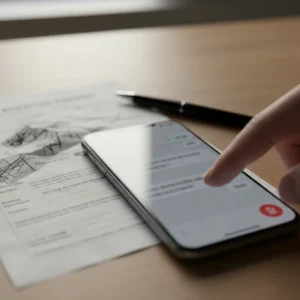
 Most people assume deleted means gone. It doesn’t work that way. When you delete a text, your phone’s operating system marks that space as available, but the data sits right there until something new writes over it. That can take weeks. Sometimes longer.
We’ve pulled this kind of evidence in Greenwood Village crash cases more times than we can count. The other driver swears they weren’t texting. Their phone looks clean. A forensic examiner gets hold of the device and finds everything, the texts, the timestamps, the app activity happening at the exact moment of impact.
How Forensic Recovery Works
Digital forensics tools read a phone’s memory at a level you can’t see on the screen. Think of tearing a page out of a notebook, the impression of what you wrote still shows on the page underneath. Phone memory works the same way.
A forensic examiner can recover deleted texts, iMessages, WhatsApp chats, and Snapchat messages in a lot of cases. They pull data from internal storage, from cloud backups, from carrier records. Even if someone wipes the conversation off their device, a copy probably exists somewhere else entirely.
Carriers keep their own logs. They won’t always show message content, but they’ll show the exact time a message was sent or received. That timestamp alone can prove distracted driving.
And here’s something worth knowing, the DTC Parkway corridor and Arapahoe Road through Greenwood Village see a real mix of commuter traffic and commercial delivery vehicles, which means distracted driving crashes in this area often involve people who were multitasking on phones during what they thought was a routine drive. We see that pattern a lot here.
Why Deleting Evidence Makes Things Worse
When someone deletes texts to hide what they were doing before a crash, they’ve made their situation worse. Colorado courts take evidence destruction seriously. It’s called spoliation of evidence, and judges can instruct a jury to assume the worst about whatever was deleted.
Think about what that means at trial. The jury hears that the other driver actively tried to hide what they were doing on their phone. That doesn’t just suggest guilt, it looks like a confession. Insurance companies know this, which is part of why they sometimes push for fast settlements before anyone gets around to forensic analysis.
Insurance companies count on you not knowing this.
But the clock is running. The longer you wait, the higher the chance that data actually does get overwritten. Cloud backups cycle. Carriers purge records on their own schedules. A factory reset or even a routine software update can make recovery harder or impossible. Speed matters here more than most people realize.
What You Should Do Right Now
If you were hit by a distracted driver near the DTC Parkway corridor or along Arapahoe Road, the steps you take in the first few days shape everything that comes after. Your attorney can send a spoliation letter to the other driver, a formal notice that they must preserve all phone data. If they destroy evidence after receiving that letter, the consequences in court are real and serious.
We handled a distracted driving case where the other driver cleared their entire message history the night after a crash near the Orchard Road interchange on I-25. The carrier records still showed 14 texts sent in the 10 minutes before impact. The phone looked clean. The data told a different story.
Deleting texts doesn’t make them disappear. It makes the other driver look like they had something to hide, and a jury in Arapahoe County won’t forget that.
If you think the other driver was on their phone, talk to a distracted driving accident lawyer before that evidence has any chance to fade.
Spoliation of Evidence Means Destroying Proof, and Courts Take It Seriously
There’s a legal term for what happens when someone destroys evidence on purpose. Spoliation. And in Colorado courts, it can shift the direction of an entire car accident case.
Spoliation means a person got rid of proof that matters to a legal claim, deleted texts, a wiped phone, cleared app data, a “lost” device. It doesn’t matter if they say it was an accident. What matters is that the evidence is gone and it was relevant to your case.
What Happens When a Court Finds Spoliation
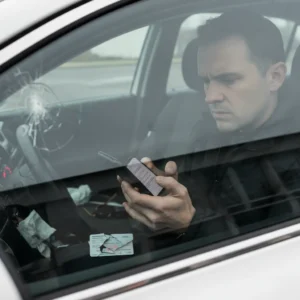
Colorado judges don’t ignore destroyed evidence. A driver who wipes their phone after a crash on Arapahoe Road or near the I-25 corridor through Greenwood Village can face real consequences. The judge can issue an adverse inference instruction, that tells the jury to assume the deleted texts would have hurt the person who destroyed them. The jury gets told to believe the worst.
That’s not the only tool available. Courts can block the other side from making certain arguments, shift the burden of proof, or award attorney fees tied to the extra work your legal team had to do chasing down what was destroyed. We’ve seen spoliation sanctions change the entire settlement conversation overnight. One ruling, and the dynamic flips.
The “Duty to Preserve” Kicks In Early
The duty to preserve evidence starts the moment a person knows, or reasonably should know, that a legal claim is coming. After a car accident, that moment is immediate. You don’t need to file a lawsuit first. You don’t need to send a letter. The crash itself triggers the obligation.
A driver who wipes their texts two days after hitting you at Yosemite and Belleview has likely already violated that duty. Their insurance company knows it too, adjusters are trained to tell policyholders to preserve everything. When texts disappear anyway, it’s a red flag that’s hard to explain away at trial.
As Jason Jordan, our founding partner, puts it: “Insurance companies know which firms actually take cases to trial, and that affects how your case is handled. A lot of the high-volume firms don’t actually try cases. In fact, many times they end up calling firms like ours to litigate and take their cases to trial.”
That matters here because spoliation fights happen during litigation. If your attorney doesn’t have real trial experience, they may not even raise the issue, let alone know how to use it.
Intentional vs. Negligent Destruction
Courts look at intent. Did the driver delete texts knowing they were relevant? Or did they switch phones and lose the data without thinking? Both situations can trigger sanctions, but intentional destruction draws the harshest response. A judge in Arapahoe County District Court has wide discretion here, and we’ve seen them use it.
Even negligent destruction matters under Colorado law. If the other driver should have known those texts were relevant and failed to protect them, that’s still a problem for their case. You don’t have to prove bad intent. You just have to show the evidence was relevant and they didn’t preserve it.
If the other driver may have deleted texts or other digital evidence, don’t sit on it. Colorado’s three-year statute of limitations for motor vehicle accidents under C.R.S. § 13-80-101 gives you time to file a lawsuit, but digital evidence disappears long before that deadline. Talk to a car accident lawyer who knows how to fight when proof goes missing.
For a free legal consultation, call (303) 465-8733
A Subpoena Can Force Carriers to Hand Over Cell Phone Records
Even if the other driver wipes every text from their phone, their wireless carrier still has records. Not always the message content, but the metadata. Timestamps. Numbers contacted. Data usage logs. And in Colorado, your attorney can get those records through a subpoena.
A subpoena is a court order that forces a third party to hand over documents. In a car accident case filed in Arapahoe County District Court, your lawyer can subpoena Verizon, AT&T, T-Mobile, or any other carrier. The carrier has to comply. The other driver doesn’t get a vote, they lost that control the moment the data hit the carrier’s servers.
What Carrier Records Actually Show
The records won’t give you a screenshot of the text. But a call detail record shows the exact second a message was sent or received. It shows whether data was being used at the moment of impact. So if the crash happened at 4:47 p.m. on Arapahoe Road near the I-25 interchange, and the carrier record shows an outgoing text at 4:47 p.m., that’s real evidence of distracted driving, the kind that holds up in court.
We’ve watched this play out. The other driver swears they weren’t on their phone. Their attorney backs them up. The carrier records come in. Timestamps don’t lie, and the story changes fast.
Timing Matters More Than You Think
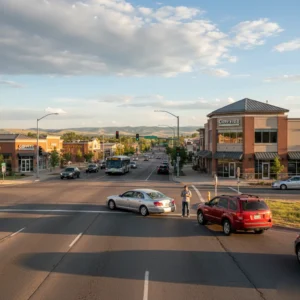
Carriers don’t keep records forever. Most hold call detail records for one to two years, some less. If you wait too long to get a lawyer involved, those records could be gone before anyone requests them. Colorado gives you three years to file a motor vehicle accident lawsuit under C.R.S. § 13-80-101, but the evidence you need to win that case can disappear well before that deadline.
Evidence has an expiration date. That’s why we move fast.
Your attorney can also send a spoliation letter directly to the other driver and their insurance company, putting them on legal notice to preserve all phone records, app data, and device contents. If they destroy evidence after receiving that letter, the court can impose serious penalties, including adverse inference instructions, where the judge tells the jury they can assume the deleted evidence would have hurt the other side.
Insurance companies count on you not knowing any of this. They’d rather you take a settlement before anyone pulls those carrier records. But if the other driver was texting and caused your crash on DTC Boulevard or Orchard Road, that data is what proves it. If you’ve been hurt in a distracted driving crash in Greenwood Village, talk to a car accident lawyer before the clock runs out on the evidence that matters most.
As Jason Jordan puts it: “Insurance companies know which firms actually take cases to trial, and that affects how your case is handled. A lot of the high-volume firms don’t actually try cases. In fact, many times they end up calling firms like ours to litigate and take their cases to trial.”
Frequently Asked Questions
Can the other driver really delete their texts before you get access to them?
Yes, they can delete texts — but deleted does not mean gone. When a text is erased, the phone marks that space as available, but the data stays put until something new overwrites it. Forensic examiners recover deleted messages, timestamps, and app activity regularly. Carrier records also log when messages were sent, even if the content is wiped. Speed matters here. The sooner your attorney acts, the better the chance that data is still recoverable.
What is spoliation of evidence, and how does it affect a crash case in Greenwood Village?
Spoliation means destroying evidence that matters to a legal claim. In Colorado courts, it carries real consequences. A driver who wipes their phone after a crash near Arapahoe Road or the DTC Parkway corridor can face an adverse inference instruction. That tells the jury to assume the deleted texts would have hurt the person who destroyed them. Courts can also block certain arguments or award attorney fees. One spoliation ruling can shift the entire case overnight.
When does the duty to preserve phone evidence actually start after a crash?
The duty to preserve starts the moment a person knows a legal claim is coming — and after a car accident, that moment is immediate. You do not need to file a lawsuit first. The crash itself triggers the obligation. A driver who clears their texts two days after hitting you at an intersection like Yosemite and Belleview has likely already violated that duty. Their insurer knows it. Adjusters are trained to tell policyholders to preserve everything, so disappearing texts are a serious red flag at trial.
What is a spoliation letter, and why should your attorney send one fast?
A spoliation letter is a formal notice telling the other driver they must preserve all phone data. Once they receive it, destroying evidence becomes much harder to explain away in court. If they delete texts after getting that letter, the legal consequences are serious and hard to walk back. Carrier records purge on their own schedules, and cloud backups cycle regularly. The longer you wait, the higher the chance data gets overwritten for good. Acting in the first few days protects your case. Learn more about how a distracted driving accident lawyer can help you move quickly.
Is distracted driving at crash sites near the DTC Parkway corridor a common problem in Greenwood Village?
Yes, it is a real pattern in this area. The DTC Parkway corridor and Arapahoe Road carry a heavy mix of commuter and commercial delivery traffic. Many drivers treat these routes as routine, which leads to multitasking on phones. Crashes in this area often involve people who were texting or checking apps during what felt like a normal drive. Forensic evidence pulled from phones in Greenwood Village cases has confirmed this pattern more than once.
Does a factory reset make phone evidence impossible to recover?
A factory reset makes recovery harder, but it does not always make it impossible. Forensic tools read phone memory at a level you cannot see on the screen. Even after a reset, traces of deleted data can remain until new data physically overwrites that space. Beyond the device itself, carrier records and cloud backups often hold copies of message logs and timestamps. A reset after a crash also raises serious questions in court about why the driver felt the need to wipe the device at all.