
In a regular car accident, you’re dealing with one person and their insurance policy. Maybe a $25,000 limit. Maybe $100,000. A UPS truck accident puts you across the table from a Fortune 500 corporation worth over $100 billion. That changes how everything works.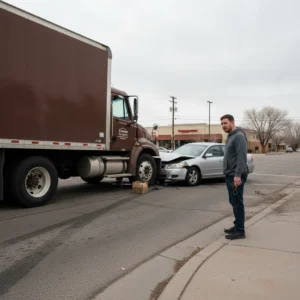
UPS drivers are W-2 employees, not independent contractors the way some delivery companies try to classify their people. UPS owns the trucks. UPS sets the routes, the schedules, the training. So when a UPS driver causes a crash on Arapahoe Road near the DTC, or along I-25 through Greenwood Village, UPS itself carries direct liability under respondeat superior. Latin phrase. Plain meaning: the employer is responsible for what the employee does on the job.
Why This Matters for Your Claim
A corporate defendant means corporate-level defense. Within hours of a serious crash, UPS will have its own investigators at the scene. They’ll pull GPS data from the truck. They’ll download electronic logging device records. They’ll talk to witnesses before you’ve left the emergency room. We’ve seen this play out many times, and the speed at which UPS moves to protect itself surprises most people.
Their adjusters aren’t local. Their lawyers aren’t solo practitioners working out of a strip mall off Orchard Road. UPS uses national defense firms that handle nothing but commercial vehicle litigation. These attorneys know exactly how to minimize what the company pays out, and they’re good at it. Insurance companies count on you not knowing this.
Rapid evidence control is the first thing a corporate defendant does. UPS can overwrite dashcam footage, telematics data, and internal communications if a preservation letter doesn’t go out fast enough. Deep legal resources means motion after motion to delay, limit discovery, or shift blame onto you. Trained corporate witnesses, safety managers who know exactly how to testify in ways that protect the company rather than tell the full story. Layered insurance coverage means UPS carries commercial policies worth millions, but getting to those funds requires proving your case against a team built to prevent that outcome.
Compare that to a fender bender with a commuter on Orchard Road. You file a claim, negotiate for a few months, settle. A UPS truck accident has layers of corporate bureaucracy designed to wear you down.
Colorado’s modified comparative negligence rule under C.R.S. § 13-21-111 makes this even more critical. UPS will argue you were partly at fault. They’ll say you failed to brake in time, that you were on your phone, that you changed lanes without signaling. Push your fault to 50% or higher and you recover nothing. Zero. Corporate defendants exploit this more effectively than individual drivers ever could, and they have the legal team to back it up.
What this means for you is simple. You need someone who has gone to trial against corporate defendants and won. Not just settled. If a UPS truck hit you in Greenwood Village or anywhere along the I-25 corridor, talk to an attorney who knows the difference between suing a person and taking on a corporation.
“Insurance companies know which firms actually take cases to trial, and that affects how your case is handled. A lot of the high-volume firms don’t actually try cases. Many times they end up calling firms like ours to litigate and take their cases to trial.”, Jason Jordan, Founding Partner
Federal Regulations Apply to Commercial Delivery Trucks, Not Personal Vehicles 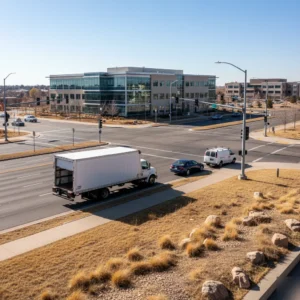
This is the part most people miss. A UPS truck isn’t just a big brown van. It’s a commercial motor vehicle, and that means it operates under a completely different set of rules than your Honda Civic or your neighbor’s pickup.
The Federal Motor Carrier Safety Administration, FMCSA, sets strict rules for commercial vehicles. How long a driver can be behind the wheel. How cargo must be loaded and secured. Pre-trip inspection requirements. None of these rules touch regular passenger cars. And that gap changes what your UPS truck accident claim actually looks like.
Hours-of-Service and Electronic Logging
FMCSA hours-of-service rules cap how many hours a commercial driver can work in a day and across a week. UPS drivers have to follow these limits and track their time using electronic logging devices, ELDs. If a driver was over hours when your crash happened near the Arapahoe Road interchange on I-25, that ELD data becomes real evidence of what was going on before impact. But that data can be overwritten. A preservation letter needs to go out within days of the crash, not weeks. Days.
Driver Qualification Files
UPS must keep a qualification file on every driver. Driving record, drug and alcohol test results, medical certifications, training history. In a regular car accident claim, you get none of this. In a UPS truck accident claim, these files are fair game in discovery, and they often reveal problems the company should have caught before putting that driver on Greenwood Village roads.
We’ve handled cases where the driver’s file showed a pattern of moving violations that should have triggered a review. The company ignored it. That’s not just negligence, that’s a failure to follow federal law, and it matters at trial.
Vehicle Maintenance and Inspection Standards
Every UPS truck must pass regular inspections. FMCSA requires pre-trip and post-trip checks by the driver. The company has to keep maintenance logs covering brakes, tires, lights, mirrors. All of it documented.
Your neighbor’s Subaru? No such requirement.
When a UPS truck’s brakes fail on a grade near the Denver Tech Center, those maintenance records tell us whether someone cut corners. We look at every entry. Every missed inspection. Every deferred repair. That paper trail can make or break a case, and it’s the kind of evidence that never comes up in a standard two-car accident claim.
Cargo Securement Rules
How packages are loaded inside a UPS truck matters more than most people would guess. FMCSA cargo securement standards apply to commercial carriers, and an improperly loaded truck shifts weight during turns and hard stops. That causes rollovers. Loss of control. If you’ve driven the tighter curves along Orchard Road near the office complexes off the DTC, you know how little margin there is for a top-heavy vehicle to correct itself.
Insurance companies want to treat your UPS truck accident like a fender bender between two sedans. It’s not. Every violation of an FMCSA rule is potential evidence of negligence per se, meaning the violation itself proves the negligence. You don’t have to show the driver was careless in some general sense. You show the rule was broken, and the rule exists precisely to prevent what happened to you.
The federal angle alone makes these cases worth investigating thoroughly. If a UPS truck hit you in Greenwood Village, the regulatory framework is one of the first things we look at.
For a free legal consultation, call (303) 465-8733
Multiple Parties May Share Liability in a Commercial Truck Accident Claim 
A regular car accident claim usually comes down to two drivers and two insurance policies. A UPS truck accident? Completely different. Cases involving four or five separate parties all bearing some responsibility for a single crash on I-25 near the Arapahoe Road interchange are not rare.
Each liable party means another insurance policy. Another legal team pushing back. Another layer of investigation your attorney has to cut through before anyone writes a check.
Who Could Be Responsible Beyond the Driver
The UPS driver is the obvious starting point, but UPS as a corporation often bears direct liability under respondeat superior. If the driver was on the clock doing their job, UPS can be held responsible for the harm they caused. And UPS knows this, they have entire legal departments ready to fight these claims from day one.
But think about all the hands that touch a UPS truck before it rolls out of the distribution center each morning. The maintenance company that services the brakes and tires could be liable if a mechanical failure caused your crash. A third-party cargo loader might share fault if an improperly loaded truck shifted weight and caused the driver to lose control on a turn. The vehicle manufacturer or a parts supplier could be on the hook if a defective component failed. We’ve handled cases where a brake malfunction traced back to a parts manufacturer three states away. Most people have no idea how many companies are involved in keeping a single delivery truck on the road.
Why This Changes Your Case Strategy
Here’s what insurance companies count on you not knowing. Each liable party carries separate coverage. UPS carries substantial commercial policies, but the maintenance contractor has their own policy. So does the parts manufacturer. Identifying every responsible party isn’t just a legal exercise, it directly affects how much money is actually available to cover your medical bills, lost wages, and long-term care.
Colorado’s modified comparative negligence law under C.R.S. § 13-21-111 adds another layer. Each defendant’s percentage of fault gets assigned by the jury. You can recover as long as your own fault stays below 50%. But defense teams will try to shift blame onto each other and onto you. Along the busy corridors near the Denver Tech Center, where UPS trucks make constant stops and traffic is always moving in multiple directions, this finger-pointing between defendants is a pattern we recognize immediately.
scenario. You’re rear-ended by a UPS truck on Yosemite Street. The driver says the brakes didn’t respond. UPS says maintenance was current. The maintenance company blames a faulty brake part. Everyone points fingers. Without an attorney who knows how to investigate commercial trucking operations and send preservation letters for ELD data and dashcam footage before it disappears, you’re watching these companies protect each other while your claim gets smaller.
Sorting out who’s liable in a multi-party commercial truck case isn’t something you should do alone. We handle the investigation, the preservation demands, and the multi-party litigation, so you can focus on recovering.
Frequently Asked Questions
Why is a UPS truck accident claim harder to win than a regular car accident claim?
A UPS truck accident claim is harder because you’re up against a billion-dollar corporation with a full legal team, not just one driver and their insurer. UPS sends investigators to the scene fast. They pull GPS data, dashcam footage, and driver logs before you’ve even left the hospital. Their lawyers handle nothing but commercial vehicle cases. A regular car accident involves one person and one policy. A UPS claim has layers of corporate defense built to reduce what you recover.
What federal rules apply to UPS trucks that don’t apply to regular drivers in Greenwood Village?
UPS trucks must follow Federal Motor Carrier Safety Administration (FMCSA) rules that regular drivers never have to think about. These include strict limits on how many hours a driver can work, required pre-trip and post-trip inspections, and electronic logging device (ELD) records. When a crash happens near the Arapahoe Road interchange on I-25, those ELD records can show whether the driver was over hours. Your neighbor’s car has none of those requirements. That gap in rules creates real evidence in a commercial truck claim. A Denver delivery truck accident lawyer can help identify potential safety violations, review driver logs, and use available evidence to establish liability in a UPS truck accident case.
Does Colorado’s fault rule affect how UPS handles accident claims differently than a regular car crash?
Yes, and UPS uses it aggressively. Colorado’s modified comparative negligence law under C.R.S. § 13-21-111 means you recover nothing if you’re found 50% or more at fault. UPS’s legal team will argue you braked too late, changed lanes without signaling, or were distracted. They have trained corporate witnesses and experienced attorneys to push your fault percentage up. A regular driver doesn’t have those resources. This is one reason why having an attorney who has actually taken corporate defendants to trial matters so much.
What’s a common mistake people make after a UPS truck accident on roads like Arapahoe Road or I-25 through Greenwood Village?
The biggest mistake is waiting too long to act. UPS moves fast after a crash. They can overwrite dashcam footage and telematics data if a legal preservation letter doesn’t go out within days. Most people don’t know this. They assume there’s time to think it over. By the time they contact an attorney, key evidence is already gone. If you were hit by a UPS truck anywhere along the I-25 corridor through Greenwood Village, speed matters more than most people realize.
Can UPS’s driver qualification files be used as evidence in a Greenwood Village truck accident case?
Yes. UPS must keep a qualification file on every driver, including their driving record, drug and alcohol test history, medical certifications, and training records. In a regular car accident, you never get access to anything like this. In a UPS truck accident claim, these files can be requested through discovery. They sometimes reveal a pattern of moving violations or missed training that UPS should have caught. That kind of evidence goes far beyond what’s available in a standard two-car accident case.
How is UPS legally responsible for what its drivers do on the road?
UPS is directly responsible under a legal rule called respondeat superior, which means an employer is liable for what an employee does on the job. UPS drivers are W-2 employees. UPS owns the trucks, sets the routes, and controls the training. So when a driver causes a crash on Arapahoe Road near the Denver Tech Center, UPS itself carries the liability, not just the driver. This is very different from a crash with a private driver. To learn more about how these claims work, visit our UPS truck accident attorney page.