
Those first few minutes are chaos. Your phone’s on the floor. Maybe the airbag went off. The driver’s talking to someone and you’re not sure who. But what you do right now shapes everything that comes later.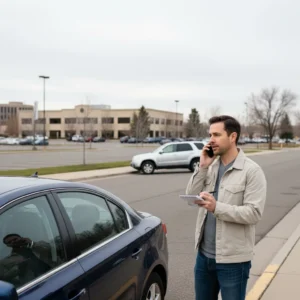
The people who protect themselves in the first 10 minutes end up in a far better position than those who don’t. Not because they’re lawyers. Because they stayed focused when it counted.
Check Yourself First
Before anything else, check your body. Move your fingers and toes. Touch your neck. Adrenaline masks pain — don’t trust how you feel right now. A torn ligament or mild brain injury won’t announce itself at the scene. If you hit your head on the window or felt your neck snap forward, that matters even if you feel fine.
If you’re on Belleview near the I-25 interchange or along Orchard Road by the DTC office complexes, traffic moves fast and there’s nowhere to stand safely. Get out of the travel lane if you can do it without crossing moving traffic. Stay near the vehicle but off the road.
Call 911 and Stay Put
Call 911 yourself. Don’t let the rideshare driver tell you a police report isn’t needed. It is. The Greenwood Village Police Department will respond and create an official crash report. That report becomes a key piece of evidence. Without it, the insurance company has room to question whether the crash happened the way you say — and they will use that room.
Here’s something most people don’t know going in. If the crash involves a city bus or an RTD vehicle, you’re dealing with a government entity. Colorado’s Governmental Immunity Act requires a written notice within 182 days under C.R.S. § 24-10-109. Miss that deadline and your claim is gone. Period.
Document Everything at the Scene
Your phone is your best tool right now. Use it.
Open the rideshare app and screenshot everything you can see — your trip details, the driver’s name, the license plate, and the route. Rideshare companies can change or limit what you see in the app later, so capture it before you close out.
Photograph the damage from multiple angles. Get every vehicle involved. Get the intersection. If you’re at Orchard and Yosemite or near Fiddler’s Green Amphitheatre, grab a shot that shows the road layout and any nearby traffic signals. That context matters when someone later disputes who had the right of way.
Get witness information. Other passengers, bystanders, anyone who saw what happened. Names and phone numbers. Witnesses disappear fast, and once they’re gone they’re nearly impossible to track down.
One thing to remember — don’t give a recorded statement to anyone at the scene except the police. Not the other driver’s insurance adjuster. Not even your own insurer. Not yet.
A Real Scenario We See Often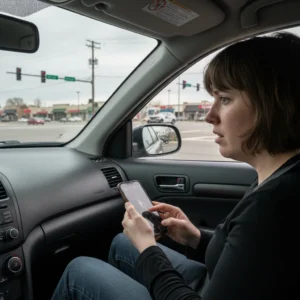
Someone gets picked up from a restaurant near the Landmark in Greenwood Village. The Uber driver runs a red turning onto Belleview. Another car clips them. The passenger’s shoulder hits the door hard. But the driver says “it’s minor” and wants to keep going. The passenger agrees because they just want to get home. No police report. No photos. No documentation of the trip.
Two days later their shoulder is killing them. Now they’re trying to prove a crash happened, who was driving, and that they were actually in the car. That’s a situation we can work with — but it’s so much harder than it needs to be.
Colorado follows modified comparative negligence under C.R.S. § 13-21-111. If the insurance company can pin 50% or more of fault on you, your recovery drops to zero. Strong evidence from the scene keeps that from happening.
Evidence You Need to Collect Before Leaving the Scene
Most people don’t realize how fast rideshare accident evidence disappears. A client calls us two weeks after a crash near Belleview and Orchard Road, and the dashcam footage from a nearby business is already gone. The rideshare app data has been changed. The other driver’s story has shifted completely.
You have a small window. Use it.
Before you leave the scene, open the rideshare app and screenshot everything — your trip details, the driver’s name and photo, the vehicle info, and the route map. Rideshare companies can limit what you see in the app after the fact, so capture it while it’s still there.
What to Document With Your Phone
Photos of every vehicle involved. Get all four sides of each car. Get close-ups of the damage. Get the license plates. If there’s debris on the road, photograph that too. Try to capture the overall scene from a safe distance showing how the vehicles came to rest.
The rideshare driver’s information. It’s in the app, but also ask the driver directly for their insurance card. Rideshare drivers carry personal insurance and may also be covered under the rideshare company’s policy. Which policy applies depends on what phase of the ride you were in — but you need the personal insurance info now.
Witness contact info. Other drivers stop. Pedestrians watch from the sidewalk. People at nearby shops saw the whole thing. Get their names and phone numbers before they walk away. Once they leave, they’re almost impossible to find again.
The Police Report Matters More Than You Think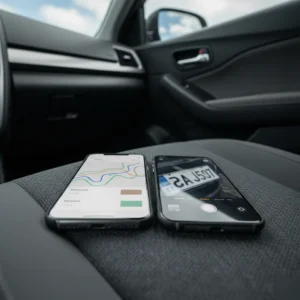
Call 911 even if the crash seems minor. In Greenwood Village, the police will respond and create an official report. That report documents the officer’s observations, driver statements, and sometimes a preliminary fault determination.
Here’s something most people don’t know. If you don’t call the police, the rideshare company’s insurer may argue the accident wasn’t serious enough to matter. We’ve seen adjusters use the absence of a police report to lowball offers or deny claims entirely. Insurance companies are counting on you not knowing this.
Write down what happened while it’s still fresh. Where were you sitting? What direction were you traveling? Did the driver brake? Was the driver looking at the app? These details fade fast, and your notes from the scene will be far more accurate than anything you try to recall three months later.
One more thing people miss. If you notice any traffic cameras or business security cameras near the crash site, write down their exact locations. The stretch of Belleview near the DTC has several commercial properties with exterior cameras that often catch street-level accidents. But most businesses overwrite surveillance footage within 72 hours. Your attorney needs to send a preservation letter quickly to save that footage before it’s gone for good.
For a free legal consultation, call (303) 465-8733
How Rideshare Insurance Coverage Actually Works in Colorado
This is where most people get tripped up. Rideshare accident claims don’t work like normal car accident claims. There’s not just one insurance policy in play. There can be two or three — and which one covers you depends on what the driver was doing at the exact moment of the crash.
Rideshare companies like Uber and Lyft break their coverage into phases. Each phase has different limits. Most passengers have no idea this structure even exists until they’re already in the middle of a claim.
The Three Coverage Phases
Phase 1: App on, no ride request. The driver has the app open but hasn’t matched with a passenger yet. In this phase, the rideshare company provides bare-minimum coverage — $50,000 per person for bodily injury and $100,000 per accident. That’s it. If the driver’s personal insurance denies the claim because they were working, you could be stuck fighting for very little under this thin policy.
Phase 2: Ride accepted, driver heading to pick you up. Once the driver accepts a ride request, coverage jumps. Uber and Lyft both carry $1 million in liability coverage during this phase. But the rideshare company’s insurer will still try to push liability onto the driver’s personal policy first. We see this play out constantly near the DTC corridor in Greenwood Village, where rideshare traffic stacks up during the evening commute and drivers are toggling between apps.
Phase 3: Passenger in the car. This is the phase with the strongest coverage. The $1 million liability policy is fully active, and there’s also uninsured and underinsured motorist coverage. If you were a passenger during a rideshare accident on Belleview Avenue or near Orchard Road, you were in Phase 3. That’s actually the clearest path to a claim.
Why the Phase Matters So Much
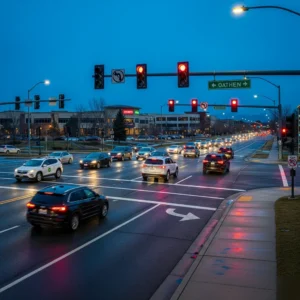 The insurance company’s first move is always to argue the driver was in a lower phase. Lower phase means lower coverage. If they can say the driver hadn’t accepted a ride yet, they cut their exposure by hundreds of thousands of dollars.
So the app data is critical. It shows exactly when the driver went online, when they accepted the ride, and when the trip started. This data lives on Uber’s or Lyft’s servers. You can’t get it yourself. And the rideshare company has no reason to hand it over quickly.
Here’s a situation we see often. Someone gets hit by a rideshare driver turning left off Orchard Road near the I-25 interchange. The driver had a passenger. But the rideshare company’s insurer claims the trip had already ended, putting the driver back in Phase 1. Without the app data to prove otherwise, the claim gets stuck.
That’s why acting fast matters. A rideshare accident lawyer can send a preservation letter to the rideshare company before that data disappears or gets filed away.
Colorado’s modified comparative negligence rule under C.R.S. § 13-21-111 also comes into play here. The rideshare company’s insurer will argue you share fault. Maybe you weren’t wearing a seatbelt. Maybe you distracted the driver. If they pin 50% or more on you, your recovery drops to zero. They push this angle hard in rideshare cases because there’s often a back-and-forth between passenger and driver — and you were sitting in the back seat, which they’ll use to suggest you couldn’t possibly know what happened.
One more thing. Colorado requires all drivers to carry minimum liability coverage of $25,000 per person. But rideshare drivers often carry the bare minimum on their personal policies. If the rideshare company successfully argues a lower coverage phase applies, that personal policy gap becomes your problem.
The insurance picture in a rideshare accident is layered. It shifts based on timing. And every insurer involved is looking for a way to point the finger at someone else’s policy.
Frequently Asked Questions
Do I really need to call 911 after a rideshare crash on Belleview or Orchard Road if the damage looks minor?
Do I really need to call 911 after a rideshare crash on Belleview or Orchard Road if the damage looks minor?Yes — call 911 every time, even if the crash looks small. The Greenwood Village Police Department will respond and file an official crash report. That report is one of the strongest pieces of evidence you have. Without it, the insurance company can question whether the crash happened at all. Minor-looking crashes on fast-moving corridors like Orchard Road near the I-25 interchange often involve more damage than it first appears. Don’t let the rideshare driver talk you out of it.
What is the biggest mistake people make right after a rideshare accident in Greenwood Village?
What is the biggest mistake people make right after a rideshare accident in Greenwood Village?The biggest mistake is skipping the police report and leaving the scene without documentation. Many passengers feel fine at first and just want to get home. But adrenaline hides pain. A shoulder injury or mild traumatic brain injury may not show up for hours or days. Once you leave without photos, a police report, or witness contact info, proving what happened becomes much harder. That missing evidence can be used against you later when you file a claim.
How does Colorado’s fault law affect my rideshare accident claim?
How does Colorado’s fault law affect my rideshare accident claim?Colorado uses modified comparative negligence under C.R.S. § 13-21-111. If the insurance company can show you were 50% or more at fault, you recover nothing. Strong scene evidence — photos, a police report, witness names — keeps your share of fault low. This is why what you do in the first 10 minutes matters so much. Our rideshare accident lawyer page explains how fault is determined and what steps protect your claim from the start.
What happens if the rideshare crash near Belleview involved an RTD bus or city vehicle?
What happens if the rideshare crash near Belleview involved an RTD bus or city vehicle?If a government vehicle like an RTD bus was involved, Colorado’s Governmental Immunity Act applies. You must file a written notice within 182 days under C.R.S. § 24-10-109. Miss that deadline and your claim is gone — no exceptions. This rule catches a lot of people off guard near busy corridors like Belleview and the DTC area where RTD routes run regularly. Acting quickly matters more than usual in these situations.
Should I give a recorded statement to the insurance company after a rideshare accident?
Should I give a recorded statement to the insurance company after a rideshare accident?No — do not give a recorded statement to any insurance company at the scene or shortly after. This includes the other driver’s insurer and your own. Anything you say can be used to reduce what they pay you. At the scene, speak only to the police. Insurance adjusters are trained to ask questions that shift fault onto you. Wait until you understand your rights before you talk to anyone representing an insurance company.
How do I know which insurance policy covers me as a rideshare passenger in Greenwood Village?
How do I know which insurance policy covers me as a rideshare passenger in Greenwood Village?Which policy applies depends on what the driver was doing at the moment of the crash. If you were actively in the car as a passenger, the rideshare company’s commercial policy is typically active. If the driver was waiting for a request or heading to pick someone up, a different coverage tier may apply. This is why you collect the driver’s personal insurance card at the scene — your attorney sorts out which policy controls later, but you need that information now.