
Here, fault matters.
The driver who caused your crash is legally responsible for your medical bills, lost income, pain, and other losses. You file a claim against their insurance. If their insurance won’t pay fairly, you can file a lawsuit. That framework gives you rights that people in no-fault states don’t have.
What “At-Fault” Actually Looks Like After a Crash

Say you’re heading south on Yosemite Street near the Landmark entertainment district. Someone runs a red light and hits your driver’s side door. In Colorado’s fault system, that driver bears financial responsibility for your injuries. Their liability insurance is supposed to cover your damages. You don’t have to rely on your own policy first.
But here’s where it gets real. Most people don’t know how this system actually works, and the at-fault driver’s insurer is counting on that. Their job is to pay you as little as possible, and they start working on that goal within hours of the crash. We’ve seen this play out hundreds of times.
The adjuster calls fast. They sound helpful. They ask for a recorded statement. They might offer a settlement before you even know the full extent of your injuries. Every bit of that is designed to protect their bottom line, not yours.
Three Ways You Can Pursue a Claim in Colorado
Colorado’s fault system gives you options. You’re not locked into one path. Understanding all three can help you make a better decision about your car accident claim.
First, you can file a claim with the at-fault driver’s insurer. This is the most common route. You submit your demand to their liability carrier and negotiate a settlement. Most car accident claims start here.
Second, you can file through your own insurance. If you carry collision or med-pay coverage, your own policy can cover some costs upfront. Your insurer then goes after the at-fault driver’s carrier to get reimbursed. This can help when the other side is dragging their feet.
Third, you can file a lawsuit. Colorado gives you three years from the date of a motor vehicle accident to file suit under C.R.S. § 13-80-101. That clock starts ticking on crash day. Miss it, you lose your right to recover. Full stop.
Most people don’t realize that third option exists until it’s almost too late. And just having a car accident lawyer who’s willing to file a lawsuit changes the math for the insurance company. They know which firms try cases and which ones don’t, and that reputation follows a firm into every negotiation.
“Insurance companies know which firms actually take cases to trial, and that affects how your case is handled. A lot of the high-volume firms don’t actually try cases. In fact, many times they end up calling firms like ours to litigate and take their cases to trial.”, Jason Jordan, Founding Partner
The fault system is built to protect you. But it only works if you use it correctly. If you’re dealing with an insurer that’s stalling or lowballing your car accident claim, talk to a car accident lawyer who knows how to push back. The system gives you leverage, you just have to know how to use it.
Colorado’s Modified Comparative Negligence Rule Changes How Much You Can Recover
Here’s where your car accident claim gets personal. Colorado uses a modified comparative negligence rule under C.R.S. § 13-21-111. The state looks at what percentage of fault belongs to you and what belongs to the other driver. Your payout shrinks by your share of blame. And if you hit 50% fault or more, you get nothing.
Zero.
Say you’re rear-ended at the Arapahoe Road and I-25 interchange in Greenwood Village. The other driver was texting. But you’d tapped your brakes suddenly without signaling. A jury decides you were 20% at fault. If your total damages are $100,000, that 20% gets subtracted. You’d recover $80,000. Not ideal, but you still collect.
Now flip it. Same crash, but the insurance adjuster argues you were 50% at fault. Maybe they claim you were distracted too. Under Colorado’s 50% bar, your recovery drops to exactly zero. That hard cutoff is the single biggest weapon insurance companies use against injured people in Greenwood Village and across the Denver metro.
How Insurance Companies Push Your Fault Percentage Up
We’ve seen this play out hundreds of times. The adjuster’s job isn’t to find the truth. It’s to find reasons you share blame.
For a free legal consultation, call (303) 465-8733
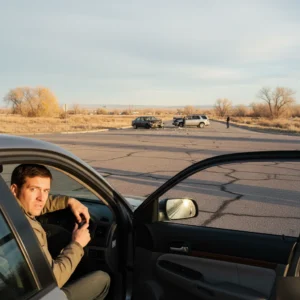
Speeding allegations show up constantly, even when you were going with traffic on DTC Boulevard. The adjuster pulls the police report and highlights any note about your speed, however minor. Failure to avoid the crash is another favorite, they’ll argue you should have swerved or braked sooner, even if you had a fraction of a second to react. Phone records get subpoenaed. If you sent a text within five minutes of the crash, they’ll claim distraction. No seatbelt won’t bar your claim entirely, but they use it to argue your injuries are partly your own fault.
Many injured drivers don’t realize any of this until it’s too late. Adjusters want you to accept blame early, maybe in a recorded statement the week after your crash. One wrong sentence can shift your fault percentage from 10% to 40%. That’s the difference between recovering most of your damages and losing nearly half.
Why the Percentage Fight Matters More Than You Think
Most people focus on proving the other driver was wrong. That’s important. But the real battle in a Colorado car accident claim is often about how wrong each side was. A 5% shift in fault can mean tens of thousands of dollars.
Picture a crash near Fiddler’s Green Amphitheatre where someone runs a red light and T-bones your car. Clear liability, right? But the other side’s insurer hires an accident reconstructionist. They argue you entered the intersection late on a yellow. Suddenly you’re looking at 15% fault instead of zero. On a $200,000 claim, that’s $30,000 gone.
This is exactly why the evidence you gather in the first 48 hours matters so much. Dashcam footage, witness contact information, photos of the scene on Orchard Road or Yosemite Street, all of it builds your case against a fault-shifting defense. If you’re already talking to a car accident lawyer, they can send a preservation letter to keep surveillance footage and electronic data from disappearing.
And here’s something most people don’t realize until it’s too late. Colorado’s comparative negligence rule applies at trial, but it also shapes every settlement offer. If the insurer thinks they can convince a jury you were 30% at fault, they’ll reduce their offer by at least that much. Having a firm that actually tries cases changes the math, insurance adjusters know which lawyers will take them to a courtroom and which ones won’t.
If you want to understand how fault could affect your specific situation, our car accident claim page walks through the process step by step.
Fault Is Determined Three Separate Times, Not Just by the Police Report
Most people think fault gets decided once. The officer shows up, writes a report, and that’s it. Not even close.
In Colorado, fault gets evaluated at three separate stages. Each one matters, each one can shift the outcome of your car accident claim. And the police report? It’s just the first draft.
Stage One: The Police Report
When an officer responds to a crash near I-25 and Arapahoe Road or along Orchard Road in Greenwood Village, they’ll talk to drivers, check the scene, and write up their findings. Sometimes they issue a citation. Sometimes they don’t. Here’s what most people miss: the officer wasn’t there when it happened. They’re piecing together a story from skid marks, damage patterns, and whatever each driver says. We’ve seen police reports that got the basic facts wrong, listed the wrong driver as at fault, or left out key details entirely. The report carries weight, but it’s not a legal ruling on fault.
Stage Two: The Insurance Investigation
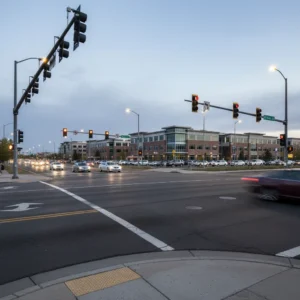
This is where things get tricky. After you file a claim, the other driver’s insurance company runs its own investigation. They’ll pull the police report, sure. But they’ll also look for anything they can use against you.
Insurance adjusters are trained to find shared fault. That’s their job. Under Colorado’s modified comparative negligence rule (C.R.S. § 13-21-111), if they can pin 50% or more of the blame on you, your recovery drops to zero. So they dig.
Common tactics we see adjusters use on Greenwood Village claims include arguing you were on your phone (Colorado’s hands-free law under SB 24-065 makes this easier for them now), claiming you failed to brake in time, or saying you were speeding through the DTC corridor. They’ll request your phone records. They’ll pull traffic camera footage. They’ll take your recorded statement and use your own words to build their case.
What most injured drivers don’t know is that the insurer’s fault determination isn’t final. They present it like it is. It isn’t.
Stage Three: The Legal Determination
If your case goes to litigation or trial, fault gets decided a third time. This is the one that actually controls your recovery. A jury weighs all the evidence, not just the police report, not just the insurer’s version. Accident reconstruction experts, dashcam footage, witness testimony, cell phone data, vehicle black box records, everything comes into play.
We’ve handled cases where the police report said our client was at fault, the insurance company denied the claim, and a jury found the other driver 100% responsible. That’s not rare. It happens because each stage uses different standards and different evidence.
Here’s a scenario we see often. A driver gets rear-ended at a stoplight near the Landmark entertainment district. The police report notes both cars were moving. The insurance adjuster argues our client changed lanes suddenly. But dashcam footage from a nearby delivery truck shows the other driver looking at their phone for six seconds before impact. That footage didn’t exist in the police report. The adjuster never asked for it. Only a thorough legal investigation uncovered it.
So what does this mean for you? Don’t panic if the police report isn’t perfect. And don’t accept an insurance company’s fault determination as gospel. The statute of limitations for motor vehicle accidents in Colorado is three years under C.R.S. § 13-80-101, but evidence disappears fast. Surveillance footage gets overwritten. Witnesses forget details. The sooner you get someone looking at all three stages of fault, the stronger your position.
If you’ve been in a crash and the fault picture feels wrong, talk to a car accident lawyer who understands how to challenge it at every level. We’re available 24/7 and there’s no fee unless we win your case.
Frequently Asked Questions
What does Colorado’s at-fault system mean for my car accident claim in Greenwood Village?
What does Colorado’s at-fault system mean for my car accident claim in Greenwood Village?Colorado’s at-fault system means the driver who caused your crash is responsible for paying your damages. You file a claim against their insurance — not your own. This gives you the right to recover medical bills, lost wages, and pain and suffering. People in no-fault states don’t have that same direct path. If you were hurt near the Arapahoe Road and I-25 interchange, the other driver’s insurer is your first target. But that insurer works to pay you as little as possible from day one.
What is Colorado’s modified comparative negligence rule, and how does it affect what I recover?
What is Colorado’s modified comparative negligence rule, and how does it affect what I recover?Colorado’s modified comparative negligence rule reduces your payout by your share of fault. If you’re 20% at fault, you lose 20% of your damages. But if you’re found 50% or more at fault, you recover nothing — zero. That hard cutoff under C.R.S. § 13-21-111 is the single biggest tool insurers use against injured drivers. Even a small shift in your fault percentage can mean tens of thousands of dollars lost. Fighting that percentage is often more important than proving the other driver was wrong.
How do insurance adjusters try to raise my fault percentage after a crash in Greenwood Village?
How do insurance adjusters try to raise my fault percentage after a crash in Greenwood Village?Adjusters look for any reason to say you share blame. They use speeding allegations, claims you failed to avoid the crash, phone records showing recent texts, and even seatbelt use. They may call you within days and ask for a recorded statement. One wrong sentence can shift your fault from 10% to 40%. That difference can cost you nearly half your recovery. Never give a recorded statement without talking to a car accident lawyer first — this is one of the most common and costly mistakes injured drivers make.
How long do I have to file a car accident lawsuit in Colorado?
How long do I have to file a car accident lawsuit in Colorado?You have three years from the date of your crash to file a lawsuit under C.R.S. § 13-80-101. Miss that deadline and you lose your right to recover — completely. Most people don’t think about filing a lawsuit right away, but knowing that option exists changes things. Insurance companies know which firms actually take cases to trial. That knowledge affects how seriously they treat your claim. Our car accident claim page explains how the full process works and what your options look like at each stage.
Does it matter which part of Greenwood Village the crash happened in when it comes to fault?
Does it matter which part of Greenwood Village the crash happened in when it comes to fault?Location can affect how fault is argued. High-traffic areas like the DTC Boulevard corridor or the Yosemite Street stretch near the Landmark district see frequent disputes about speed and lane changes. Adjusters pull police reports and look for any detail that puts blame on you. Traffic patterns, road design, and signal timing in Greenwood Village can all become part of the fault argument. Local knowledge of these roads matters when building your case — especially if the crash happened at a busy interchange or near a major venue like Fiddler’s Green Amphitheatre.
Is it a mistake to accept the first settlement offer from the at-fault driver’s insurer?
Is it a mistake to accept the first settlement offer from the at-fault driver’s insurer?Yes — accepting early is one of the most common mistakes injured drivers make. The first offer usually comes before you know the full cost of your injuries. Once you accept and sign a release, you can’t go back for more, even if your medical bills grow. Insurers move fast on purpose. They want to close your claim before you understand what it’s worth. Take time to understand your total damages — medical costs, lost income, and long-term effects — before agreeing to anything.