
Most people think you have to prove a company was careless. That’s not how it works in Colorado. Under C.R.S. § 13-21-401 et seq., product liability runs on strict liability. You don’t need to show the company was negligent. You just need to show the product was defective and it hurt you.
That’s a big deal.
It means the focus shifts away from what the company knew or didn’t know. The focus lands on the product itself. Was it dangerous? Did it cause your injury? If yes, every party in the chain of distribution can be held responsible, the designer, the manufacturer, the distributor, the retailer who sold it to you at a store right here in Greenwood Village or anywhere else in Colorado.
Three Types of Product Defects
Colorado law recognizes three ways a product can be defective. Each one creates a different path to holding a company accountable, and we see all three regularly in the cases that come through our office at the DTC.
Design defects exist before the product is even built. The blueprint itself is flawed. Think of a space heater that tips over too easily and catches fire. Every unit off the line has the same problem because the design made it that way, not a factory mistake, a deliberate choice that turned out to be dangerous.
Manufacturing defects happen during production. The design might be sound, but something went wrong on the assembly line. Maybe a batch of brake pads used the wrong material. One unit is dangerous even though thousands of others are fine. We’ve seen cases where a single missing bolt in a child’s car seat was the whole case. That’s a manufacturing defect.
Failure-to-warn defects involve missing or misleading instructions. The product works as designed, but the company didn’t tell you about a known risk. A medication without proper side effect warnings. A power tool without safety labels. The company knew the danger and said nothing.
You’d think the hardest cases to win are the ones where the company claims ignorance. But failure-to-warn claims are often stronger than people expect, because internal documents frequently show the company knew exactly what the risk was.
Who Can Be Sued
Here’s something most people don’t figure out until it’s too late. You’re not limited to suing the company whose name is on the box. Colorado’s product liability statute lets you go after anyone in the chain of distribution, the parts manufacturer, the assembler, the wholesaler, and the store that sold it.
Why does that matter? Because sometimes the manufacturer is overseas. Sometimes they’ve gone bankrupt. But the U.S. distributor or the retailer still bears liability under Colorado law. We’ve seen this play out hundreds of times: a defective appliance sold at a local retailer causes a house fire, and the injured family has a claim against every company that touched that product before it reached the shelf.
The 10-Year Statute of Repose
Colorado has a 10-year statute of repose for product liability claims. You generally can’t sue for a product sold more than 10 years ago. But there are exceptions for latent defects, dangers that don’t show up right away. If a defect was hidden and couldn’t have been discovered within that window, the clock may not have started yet.
The standard statute of limitations still applies. You have 2 years from the date of injury to file under C.R.S. § 13-80-102. Miss that deadline and your claim is gone.
If you’ve been hurt by a product and you’re trying to figure out your next step, our Product Liability Lawyer page breaks down exactly how we handle these cases from the first call through trial.
Who Can Be Held Responsible for a Defective Product 
Most people assume you can only sue the company whose name is on the box. That’s not how it works in Colorado.
Colorado follows strict liability for defective products under C.R.S. § 13-21-401 et seq. You don’t have to prove the company was careless. You just have to show the product was defective and that defect caused your injury. And here’s the part most people miss: every company in the chain of distribution can be held responsible. Not just the brand name. Not just the manufacturer. Everyone who had a hand in getting that product to you.
The Chain of Distribution
Think about how a product reaches your hands. Someone designs it. Someone else makes the parts. Another company assembles it. A distributor ships it. A retailer sells it. Every one of those companies played a role in getting that product to you, and every one of them can be a defendant in your case.
We’ve seen this play out in cases right here in the south Denver metro. A family near the Park Meadows corridor buys a space heater from a big-box retailer. The heater catches fire because of a bad wiring connection made at a factory overseas. That family may have claims against the manufacturer who built the unit, the company that designed it, the importer who brought it into the U.S., and the store that sold it. Four potential defendants from one product.
Why Multiple Defendants Matter
More responsible parties means more insurance policies. More insurance policies means a better shot at full recovery for your injuries.
A foreign manufacturer might be hard to collect from. But the U.S. distributor sitting in an office park off I-25? They carry insurance. The retailer with 500 locations? They carry even more. Your attorney’s job is to identify every link in that chain and hold each one accountable for the role they played.
Colorado’s modified comparative negligence rule under C.R.S. § 13-21-111 applies here too. The defendants will try to point fingers at each other. That’s fine. Let them fight over who’s more at fault. As long as no one successfully pins 50% or more of the blame on you, you can still recover, and your damages get reduced only by your own share of fault, not theirs.
Parties You Might Not Think Of
Some defendants aren’t obvious. A component part maker who supplied a faulty valve to a larger machine can be liable even though their name never appeared on the final product. A company that refurbished or repackaged a product can step into the chain. So can a company that licensed its brand name to another manufacturer, a detail that catches a lot of people off guard.
We see this a lot with vehicle defects. A car rolls off the assembly line, but the brakes were made by one company, the airbag module by another, the tires by a third. If the airbag fails to deploy in a crash on Arapahoe Road or anywhere along the I-225 stretch, the airbag manufacturer is a defendant alongside the automaker. Anne Dieruf, our product liability attorney at Jordan Law, builds these cases by tracing every component back to its source, not just the name on the hood.
And there’s a deadline most people don’t know about. Colorado has a 10-year statute of repose for product liability claims. If the product was sold more than 10 years before your injury, you may lose your right to sue entirely. Exceptions exist for latent defects, but the clock runs from the date of first sale.
If you’ve been hurt by a product in Greenwood Village, identifying every responsible party early is not optional. Our product liability team starts that investigation on day one.
For a free legal consultation, call (303) 465-8733
Steps to Take Before You File a Product Liability Lawsuit
Most people don’t realize how much groundwork happens before a lawsuit ever gets filed. The steps you take right now matter more than almost anything that happens in a courtroom later. We’ve seen strong cases fall apart because someone threw away the broken product or waited too long to see a doctor.
Here’s what you need to do, in order.
Get medical attention right away. Even if your injury seems minor. A doctor’s record from the day of the incident ties your injury directly to the product. Wait a few weeks, and the manufacturer’s lawyers will argue something else caused your harm. Insurance companies count on that gap.
Keep the product exactly as it is. Don’t fix it. Don’t throw it away. Don’t return it to the store for a refund. That defective item is your single most important piece of evidence. We’ve had clients bring us a broken space heater still in the box they sealed it in the night it malfunctioned. That’s exactly right. The moment you hand it back to the retailer, you’ve handed them a way out.
Save everything connected to the purchase. Receipts, packaging, instruction manuals, warranty cards, online order confirmations. Even a screenshot of the Amazon listing helps. These documents prove when and where you bought the product and establish the chain of distribution, which, as we covered above, determines who you can actually sue.
Document your injuries and the scene. Take photos of the product, your injuries, and the area where the incident happened. Do this the same day if you can. Write down what happened while it’s still fresh. Video is better than photos. Both are better than memory alone six months later when a defense attorney is asking you to recall every detail.
Report the incident. File a report with the Consumer Product Safety Commission if the product is a consumer good. If a vehicle part failed, report it to NHTSA. These reports create an official record and sometimes reveal that other people have been hurt by the same product, which is exactly the kind of pattern evidence that changes a case.
Talk to a product liability lawyer before you talk to anyone else. The manufacturer’s insurance company will call you. They’ll sound friendly. They’ll ask for a recorded statement. Don’t give one. Anything you say can be used to reduce your claim or deny it entirely, and they’ve done this thousands of times before.
Colorado’s product liability law at C.R.S. § 13-21-401 et seq. lets you hold a manufacturer strictly liable for a defective product. You don’t have to prove carelessness. You just have to show the product was defective and it hurt you. But the 10-year statute of repose is real, if the product was sold more than 10 years before your injury, your claim may be barred unless a latent defect exception applies.
The general statute of limitations for personal injury in Colorado is 2 years under C.R.S. § 13-80-102. That clock starts the day you’re hurt.
And if the defective product caused a death, the family has just 2 years to file a wrongful death claim under C.R.S. § 13-21-204. Two years sounds like a long time until you see how long it actually takes to investigate a product defect, trace every party in the chain of distribution, and build a case that holds up at trial. It goes fast.
Don’t sit on this. If you’ve been hurt by a faulty product in Greenwood Village or anywhere nearby, the smartest first step is a conversation with a product liability lawyer who can tell you exactly where your case stands. Anne Dieruf focuses on product liability cases at Jordan Law, and our team can review what happened and give you a straight answer about your options, at no cost to you, and with no obligation to move forward.
What Damages You Can Recover in a Colorado Product Liability Case
People often ask us what a product liability case is actually worth. The honest answer is that it depends on what the product took from you. Colorado law doesn’t put a ceiling on economic damages, medical bills, lost wages, future care costs, and lost earning capacity are all fully recoverable with no cap.
Noneconomic damages are a different story. Under HB 24-1472, which took effect January 1, 2025, noneconomic damages in personal injury cases are capped at approximately $1.5 million. That covers things like pain and suffering, emotional distress, and loss of enjoyment of life. The cap can be exceeded if you present clear and convincing evidence that a higher amount is justified, but that’s a high bar, and you need a trial team willing to actually make that argument in front of a jury.
Punitive damages are also available in product liability cases where the manufacturer’s conduct was willful or wanton. Under C.R.S. § 13-21-102, punitive damages can equal the full compensatory award and can be tripled on clear and convincing evidence of particularly egregious behavior. We’ve seen internal company documents, the kind that surface during discovery, show that a manufacturer knew about a defect and chose not to fix it because the recall would cost more than the projected lawsuits. That’s the kind of conduct that puts punitive damages in play.
Wrongful death cases follow their own damage framework. Under HB 24-1472, the noneconomic damages cap in a wrongful death case is approximately $2.125 million, with an exception for cases involving a felonious killing. Economic damages in wrongful death, the financial support the deceased would have provided, future earnings, household services, remain uncapped.
One thing worth knowing: Colorado’s modified comparative negligence rule under C.R.S. § 13-21-111 means the defense will look for any way to put some of the blame on you. Did you modify the product? Use it in a way the manual warned against? Ignore a recall notice? These arguments come up. As long as your share of fault stays below 50%, you can still recover, but your damages get reduced by that percentage. At 50% or more, recovery is zero. Insurance companies push this angle hard, and they’re good at it.
How a Product Liability Lawsuit Actually Works 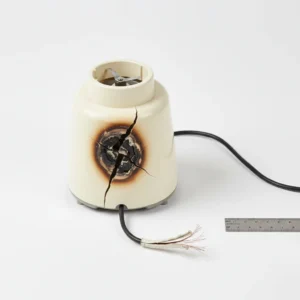
Filing a product liability lawsuit isn’t like filing a complaint with a company. It’s a formal legal process with specific stages, and understanding what those stages look like can help you make better decisions about your case right now.
It starts with investigation. Before anything gets filed, we need to understand exactly what happened. That means preserving the defective product, gathering purchase records, reviewing medical records, and in many cases retaining an expert, an engineer, a safety specialist, a medical professional, who can explain to a jury why the product was defective and why it caused your specific injuries. Product liability cases are expert-driven. A credible expert witness is often the difference between a strong settlement and a weak one.
Once we’ve built the foundation, we file the complaint. That formally starts the lawsuit and names every defendant in the chain of distribution. From there, the case moves into discovery, the phase where both sides exchange documents, take depositions, and dig into the facts. This is where internal company records come out. Design files. Safety test results. Complaint logs. We’ve seen discovery in product liability cases produce documents that change everything, a manufacturer’s own engineers flagging the same defect years before our client was hurt.
Most cases settle before trial. But here’s what most people don’t know: the settlement you get depends almost entirely on whether the other side believes you’ll actually go to trial. Insurance companies track which law firms try cases and which ones fold. We’re a true trial firm. We’ve taken product liability cases to verdict, including a $42 million verdict in a left-turn motorcycle collision involving a vehicle defect and a $26.6 million verdict involving a truck brake malfunction. Those results exist because we were willing to go all the way.
If the case doesn’t settle, we try it. That means presenting your case to a jury, cross-examining the manufacturer’s experts, and making the argument that this company knew or should have known their product was dangerous and sold it anyway. That’s the trial. And the preparation we put in from day one, preserving evidence, retaining experts, building the chain of distribution, is what makes that argument land.
The whole process can take anywhere from several months to a few years depending on the complexity of the case, the number of defendants, and whether the other side wants to fight. We keep clients informed throughout. Not through a paralegal you’ve never met, through the attorneys actually working the case.
Frequently Asked Questions: Suing a Company for a Faulty Product in Greenwood Village
Do I need to prove the company was negligent to win a product liability case in Colorado?
No. Colorado follows strict liability for defective products under C.R.S. § 13-21-401 et seq. You don’t need to show the company was careless or that it knew about the defect. You need to show the product was defective, in its design, its manufacturing, or its warnings, and that the defect caused your injury. That’s a lower bar than negligence, and it’s one of the reasons product liability cases can be strong even against large manufacturers with deep pockets.
What if the product was made overseas? Can I still sue?
Yes, in most cases. Colorado’s product liability statute covers every party in the chain of distribution. If a foreign manufacturer is hard to reach or has no U.S. assets, the U.S. importer, distributor, or retailer can still be held liable. We’ve handled cases where the original manufacturer was unreachable, and we recovered for our clients through the domestic companies that brought the product to market here.
How long do I have to file a product liability lawsuit in Colorado?
Two years from the date of injury under C.R.S. § 13-80-102. There’s also a 10-year statute of repose, if the product was first sold more than 10 years before your injury, your claim may be barred unless a latent defect exception applies. If the product caused a death, the family has 2 years under C.R.S. § 13-21-204. These deadlines are firm. Don’t wait to get legal advice.
What if I was partly at fault for my injury?
Colorado uses modified comparative negligence under C.R.S. § 13-21-111. If you were partly at fault, say, you used the product in a way the manual warned against, your damages get reduced by your percentage of fault. As long as your share stays below 50%, you can still recover. At 50% or more, recovery is zero. The defense will push this angle. We push back.
What damages can I recover in a product liability case?
Economic damages, medical bills, lost wages, future care costs, have no cap in Colorado. Noneconomic damages like pain and suffering are capped at approximately $1.5 million under HB 24-1472 (effective January 1, 2025), though that cap can be exceeded with clear and convincing evidence. Punitive damages are available where the manufacturer’s conduct was willful or wanton, and can be tripled under C.R.S. § 13-21-102 in the most egregious cases.
Should I return the defective product to the store or manufacturer?
No. Not yet. That product is your most important piece of evidence. Once it leaves your hands, you lose control over it. The manufacturer can repair it, destroy it, or claim it was never defective in the first place. Keep it exactly as it is, don’t fix it, don’t clean it, don’t use it again. Seal it if you can. Talk to a lawyer before you do anything else with it.
What if the manufacturer issues a recall after I’m already hurt?
A recall doesn’t eliminate your claim, it can actually strengthen it. A recall is an admission that the product had a problem. If you were hurt before the recall was issued, or if you never received proper notice of the recall, that’s relevant to your case. We’ve seen manufacturers issue recalls and then argue in court that the recall somehow limits their liability. It doesn’t work that way.
Can I sue if I was hurt by a product I didn’t personally buy?
Yes. You don’t have to be the original purchaser to have a product liability claim. If a defective product hurt you, whether you borrowed it, received it as a gift, or used it at someone else’s home or workplace, you may still have a valid claim against the parties in the chain of distribution. The injury is what matters, not who bought it.
How much does it cost to hire Jordan Law for a product liability case?
Nothing upfront. We handle product liability cases on a no-win, no-fee basis. You pay nothing unless we recover for you. We offer free consultations 24/7, and we’ll give you a straight answer about your case on the first call, no pressure, no obligation. If we take your case, we front the costs of investigation, expert witnesses, and litigation. You focus on recovering. We handle the rest.