

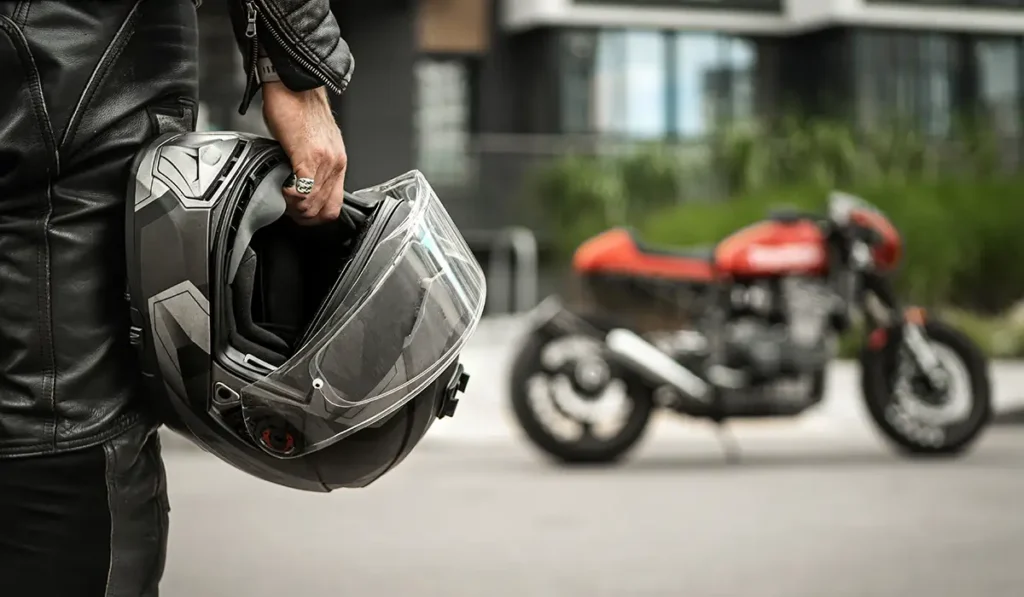
Colorado doesn’t require adult motorcycle riders to wear helmets. It’s one of 29 states with only a partial helmet law. But here’s what the freedom-to-choose crowd doesn’t always mention: in 2024, 73 of the 165 motorcyclists killed in Colorado — 44% — were not wearing a helmet. And if you’re injured in a crash without a helmet, the insurance company will use that choice against you to reduce what they pay.
Understanding Colorado’s helmet law isn’t just about knowing what’s legal. It’s about understanding how your gear choices affect your injury claim, your compensation, and the arguments the insurance company will make when it matters most.
What Colorado Law Actually Says
Colorado’s helmet law is straightforward: riders under 18 years of age must wear a DOT-approved helmet with a chin strap while operating or riding as a passenger on a motorcycle (C.R.S. § 42-4-1502). Riders 18 and older are not required to wear a helmet.
That’s it. No exceptions based on engine size, no endorsement requirements tied to helmet use, no distinction between highways and surface streets. If you’re 18 or older, the state leaves the decision to you.
Colorado also requires protective eyewear unless the motorcycle is equipped with a windscreen — but there is no requirement for any other protective gear such as gloves, boots, jackets, or high-visibility clothing.
For a free legal consultation, call (303) 465-8733
The Numbers Are Hard to Argue With
The data from CDOT and NHTSA paints a clear picture of what helmets do — and what happens without them.
Colorado motorcycle fatalities, 2020-2024:
2020: 140 total fatalities, 74 without helmets (53%) 2021: 137 total fatalities, 76 without helmets (55%) 2022: 149 total fatalities, 76 without helmets (51%) 2023: 135 total fatalities, 68 without helmets (50%) 2024: 165 total fatalities, 73 without helmets (44%)
2024 was the deadliest year on record for Colorado motorcyclists — 165 riders killed, a 22% increase over 2023 and a 57% increase since 2015. September 2024 was the single deadliest month, claiming 33 lives. Motorcycles accounted for 24% of all traffic deaths in the state despite representing just 3% of registered vehicles.
Nearly half of all motorcyclists killed over the last five years were not wearing helmets. In Weld and Pueblo counties, the percentage of unhelmeted fatalities is even higher. Riders aged 40-59 have the highest rate of non-helmet use in fatal crashes.
Nationally, NHTSA estimates that helmets are 37% effective at preventing rider deaths and reduce the risk of head injury by 69%. In 2017 alone, NHTSA estimated that helmets saved 1,872 motorcyclists’ lives — and that 749 more could have been saved if all riders had worn helmets. The economic savings from universal helmet use would exceed $1.5 billion annually.
The early data from 2025 isn’t reassuring either. Between January and March 2026, 15 motorcyclists were killed in Colorado — the deadliest start to a year since 2017. And 2025 closed with 148 motorcyclist deaths statewide, with 26% involving impaired riders.
How Helmet Use Affects Your Injury Claim
This is where the rubber meets the road — literally and legally. Colorado law doesn’t require you to wear a helmet, but that doesn’t mean your decision is irrelevant in a personal injury claim.
The insurance company’s playbook is predictable. If you weren’t wearing a helmet and you sustained head or facial injuries, the at-fault driver’s insurance company will argue comparative negligence under C.R.S. § 13-21-111. They won’t argue that your lack of a helmet caused the accident — they can’t, because it didn’t. What they’ll argue is that your injuries would have been less severe if you’d worn a helmet, and therefore you bear some responsibility for the extent of your damages.
This is called the “failure to mitigate” argument, and it’s designed to reduce your noneconomic damages (pain and suffering, emotional distress, loss of enjoyment of life). Under Colorado’s modified comparative negligence rule, your recovery is reduced by your percentage of fault. The insurance company’s goal is to push that percentage as high as possible — and helmet non-use is one of their favorite tools.
Here’s the critical distinction: not wearing a helmet is legal in Colorado. It’s not evidence that you caused the crash. The insurance company cannot use helmet non-use to establish liability for the accident itself. They can only argue it as a factor in the severity of your injuries — and only for injuries where a helmet would have made a difference (head and facial injuries, not broken legs or spinal cord damage from impact forces).
Countering the helmet defense requires specific evidence. At Jordan Law, we work with biomechanical engineers and medical experts to establish the actual mechanism of injury. In many crashes, the forces involved exceed what any helmet could reasonably mitigate. In others, the most severe injuries — spinal cord damage, internal organ trauma, pelvic fractures — have nothing to do with whether the rider was wearing a helmet. Separating the injuries that a helmet could have affected from those it couldn’t is essential to protecting your recovery.
What About Passengers?
The same rules apply. Adult passengers (18+) are not required to wear helmets in Colorado. Passengers under 18 must wear DOT-approved helmets. If an adult passenger is injured without a helmet, the same comparative negligence arguments apply — the insurance company will try to reduce the passenger’s damages based on helmet non-use, but only for head and facial injuries where the helmet argument is medically supportable.
The Universal Helmet Law Debate
Colorado has debated universal helmet legislation multiple times. Proponents point to the data: states with universal helmet laws see helmet use rates above 90%, compared to roughly 50-60% in states without them. When states repeal universal helmet laws, fatalities and head injuries increase — studies have documented a 14% increase in head injuries following repeal.
Opponents argue personal freedom and individual choice. Colorado State Patrol Chief Matthew Packard has walked the line carefully, saying he “respects one’s ability to make that choice” while pointing out that “the math is really simple and the data shows that if you wear a helmet — if you wear protective gear — your chances of surviving that crash are far better.”
As of now, Colorado shows no indication of moving toward a universal helmet law. That makes it all the more important for riders to understand how their gear choices affect not just their safety but their legal rights after a crash.
Click to contact our personal injury lawyers today
Other Gear That Matters
Helmets get all the attention, but other protective gear significantly affects injury outcomes. A 2023 CDOT survey found that 74% of Colorado motorcyclists wear a helmet every ride — but a majority do not regularly wear high-visibility gear. Protective jackets, pants, gloves, and boots reduce the severity of road rash, fractures, and soft tissue injuries. And high-visibility gear reduces the risk of the most common motorcycle crash of all: the left-turn collision where a driver says “I didn’t see the motorcycle.”
While the insurance company is less likely to argue comparative negligence over a missing jacket than a missing helmet, wearing full protective gear eliminates one more weapon from their arsenal.
What to Do After a Motorcycle Crash — Helmet or Not
Whether or not you were wearing a helmet, the steps after a crash are the same. Call 911 and get medical attention immediately — traumatic brain injuries don’t always present symptoms right away. Document everything: photograph your injuries, the crash scene, your gear (or lack thereof), and the other vehicle. Do not give a recorded statement to the insurance company. And contact a motorcycle accident attorney before the insurer starts building its comparative negligence case.
The statute of limitations for motorcycle accident claims in Colorado is 3 years (C.R.S. § 13-80-101). Under HB 24-1472, noneconomic damages are capped at approximately $1.5 million, with the potential to exceed the cap on clear and convincing evidence. There is no cap on economic damages.
At Jordan Law, we’ve recovered over $550 million for injury victims across Colorado, including a $42 million verdict in a motorcycle left-turn collision case. We know how to counter the helmet defense with medical evidence and biomechanical analysis — and we have the trial record to back it up.
If you were involved in a Colorado motorcycle accident, call our team of experienced attorneys. We’ve helped clients in Denver Motorcycle Accident Lawyer, Greenwood Village, Aurora, Arvada, and more.
Free Consultation — Call (303) 465-8733
Jordan Law Accident & Injury Lawyers 5445 DTC Parkway, Suite 1000 Greenwood Village, CO 80111