
If you’ve been in a crash near the DTC area, you might think the evidence will sit there waiting for you. It won’t. We’ve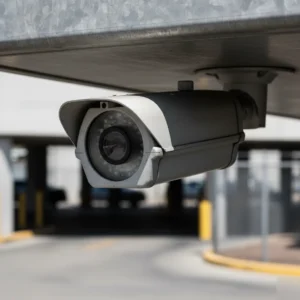 seen cases where the most important proof was gone before our client even left the hospital. That’s not a worst-case scenario, that’s a Tuesday in Greenwood Village.
The clock starts the moment of impact.
Skid marks are one of the first things to go. Along DTC Parkway and the Arapahoe Road corridor, road crews and daily traffic wear them down fast. A few hundred cars driving over the same spot can blur or erase tire marks within a day. Rain or snow speeds that up to hours, and Colorado weather doesn’t wait for anyone’s timeline. We’ve photographed crash scenes on a Monday where the skid marks were already faint, by Wednesday they were gone.
Vehicle positions tell a story that disappears the second tow trucks arrive. Where each car came to rest, the angle of impact, debris scatter patterns on the pavement, all of it gets swept up and hauled away. At busy intersections like I-25 and Arapahoe or Orchard Road and Yosemite, crews clear the scene fast to restore traffic flow. Good for commuters. Bad for your case.
Surveillance footage is the piece most people don’t think about until it’s too late. The office buildings and parking structures throughout the Denver Tech Center run security cameras constantly. But here’s what insurance companies count on you not knowing: most commercial systems overwrite footage on a loop. Some cycle every 24 hours. Others hold 72 hours. A few keep footage for a week. After that, it’s recorded over and gone. We’ve handled cases where a single camera angle from a DTC office building proved exactly who ran the red light. Without it, the case would have been a coin flip.
Witness memory fades fast too. Someone who saw your crash clearly at 5:15 p.m. on a Tuesday will remember less by Friday. By next month, details blur. The National Highway Traffic Safety Administration has noted that crash reconstructions become less reliable as physical evidence degrades, which is why early documentation matters so much to accurate findings.
So what should you do right at the scene if you’re physically able? Take photos of everything, vehicle damage, road conditions, traffic signals, skid marks, debris. Get contact info from witnesses before they leave. Note the exact location, time, and weather. Ask nearby businesses if they have cameras pointed at the road. Call law enforcement so there’s an official report on file.
Most people skip at least two of those steps. That’s normal when you’re shaken up and hurting. But every step you miss is a gap the other driver’s insurance company will try to fill with their own version of events.
We see this play out over and over. Someone calls us a month after a wreck near Fiddler’s Green or along Belleview Avenue, and the surveillance footage is gone. The road’s been repaved. The witness moved out of state. The case isn’t dead, but it’s harder than it needed to be.
If you’ve been in a crash and you’re worried about losing evidence, talk to a motor vehicle accident lawyer in Greenwood Village before the proof disappears. Early action is the single biggest factor in preserving what you need to build a strong claim under Colorado’s modified comparative negligence rules (C.R.S. § 13-21-111), where the other side will use every gap in evidence to push fault onto you.
Surveillance Footage Has the Shortest Window of Any Evidence Type
Most people don’t realize this until it’s too late. That gas station camera on the corner of Arapahoe Road? The office building security feed along DTC Boulevard? Those recordings get written over on a loop. And the window is shockingly small.
A client calls us two weeks after a collision in the DTC area, we send a preservation letter to the business with the camera, and the footage is already gone. Erased. Not because anyone was hiding anything, the system just recorded over it automatically.
How Fast Do Recordings Disappear?
It depends on the system. Most commercial properties in Greenwood Village use one of a few standard setups. Small businesses with basic DVR systems often keep only 72 hours of footage before the hard drive loops back and starts recording over the oldest files. Mid-size office buildings along the DTC Parkway corridor typically retain 7 to 14 days. Larger properties with more storage might hold 30 days, but that’s the exception, not the rule.
There’s no law requiring these businesses to save footage for you. None. Once it’s gone, it’s gone forever.
That’s the part worth sitting with for a second.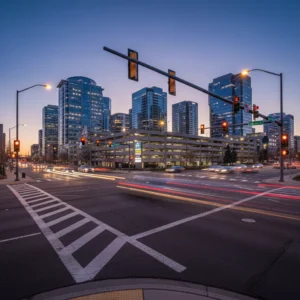
Why This Matters So Much for Your Case
Surveillance footage is often the single most useful piece of evidence in a car accident case. It shows speed, position, traffic signals, who had the right of way. It can prove a driver was distracted. It can show a truck running a red light at the Orchard Road intersection. It doesn’t have bias. It doesn’t forget details. Insurance companies have a much harder time arguing comparative negligence under C.R.S. § 13-21-111 when there’s clear video showing their driver caused the crash.
Without it, your case becomes your word against theirs.
We handled a case where a client was hit by a delivery truck turning onto Greenwood Plaza Boulevard. A camera on a nearby building captured the whole thing. We sent a preservation letter within 48 hours of being hired. The property manager confirmed the system overwrites every five days. Two more days and that footage would have been gone, the strongest piece of evidence in the case, just erased.
What a Preservation Letter Actually Does
A preservation letter is a formal written notice sent to a business or property owner telling them to save their surveillance footage. It creates a legal obligation. If they destroy the footage after receiving that letter, that can have real consequences in court. But the letter only works if it arrives before the footage loops.
This is one of the biggest reasons to contact a car accident lawyer right away after a crash in Greenwood Village. Not next week. Not after you “see how you feel.” The clock on surveillance footage starts ticking the moment the crash happens, it doesn’t wait for you to be ready.
Traffic cameras operated by CDOT or the City of Greenwood Village are a different situation, those agencies have their own retention policies. But private cameras on office buildings, restaurants, and parking garages along the I-25 corridor near Fiddler’s Green follow no standard schedule at all.
Write down every business near the crash scene that might have a camera pointed at the road. Note addresses. Take photos of camera locations with your phone if you can. Get that information to an attorney fast. We can send preservation letters the same day you call. That’s not a pitch, that’s just how evidence works.
For a free legal consultation, call (303) 465-8733
Colorado Weather Can Destroy Physical Road Evidence in a Single Afternoon
A Colorado afternoon storm can wipe a crash scene clean faster than most people expect. We’ve seen it happen in the DTC area more times than we can count. A client calls us two days after a wreck, and the tire marks that would’ve proved the other driver was speeding are already gone.
Greenwood Village sits at about 5,800 feet. The weather here doesn’t play nice with evidence.
A sudden downpour along Orchard Road or near the I-25 and Arapahoe interchange can wash away skid marks in under an hour. Fluid stains from a busted radiator or leaking transmission get diluted and disappear. Debris scatters. Glass fragments that could’ve shown point of impact get swept into storm drains before anyone thinks to document them.
What Disappears First
Tire marks and skid patterns are the most fragile pieces of road evidence. They sit on top of the asphalt surface. Rain dissolves them. Snow covers them. And here’s the part that catches people off guard: even dry heat and UV exposure fade rubber marks within 48 to 72 hours during summer months. The National Highway Traffic Safety Administration has noted that physical road evidence like skid marks and gouge patterns is among the most time-sensitive data in crash reconstruction. We’ve seen that firsthand, what looked like clear evidence on a Monday photo was barely visible by Thursday.
Fluid spills from vehicles tell a story about speed and direction of travel. But a single afternoon thunderstorm, the kind Greenwood Village gets regularly from May through September, can flush those stains off DTC Parkway or Yosemite Street completely. We’ve had cases where the only proof of a fluid trail came from a bystander’s cell phone photo taken minutes after the crash.
Vehicle debris and broken parts get moved by wind, swept by city maintenance crews, or run over by other cars. Along busy corridors near Fiddler’s Green or the office complexes off East Belleview Avenue, traffic volume alone pushes small evidence pieces to the shoulder or gutter within hours. By the time anyone goes back to look, there’s nothing to find.
Winter Makes It Worse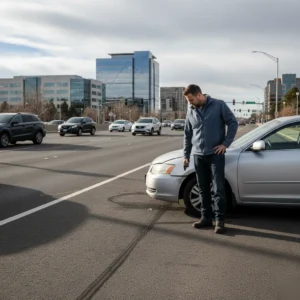
Snow and ice create a whole different problem. A crash that happens on a Tuesday morning might be buried under six inches of snow by Tuesday night. CDOT and Greenwood Village road crews plow and salt aggressively, they have to for safety. But that salt and sand mixture grinds away at tire marks and paint transfers on the road surface.
Freeze-thaw cycles crack asphalt. A gouge mark left by a motorcycle or truck bumper can change shape or disappear entirely after one hard freeze.
Here’s what we tell every client who calls us after a wreck in the DTC corridor: if you can safely take photos at the scene, do it right then. Don’t wait for the police report. Don’t assume someone else will document the road. Your phone camera is the one evidence preservation tool you have in those first few minutes, and it costs nothing to use it.
If you weren’t able to photograph the scene, that doesn’t mean your case is lost. But it does mean the clock is ticking. A car accident lawyer can send an investigator to the scene fast, sometimes the same day you call. We’ve dispatched investigators to intersections along Arapahoe Road and DTC Boulevard within hours of getting a call, and the difference between day-one evidence and day-three evidence can be the difference between proving fault and losing that proof entirely.
Colorado’s weather is something to see. It’s also ruthless on crash evidence. Don’t let a single afternoon storm erase what happened to you.
Frequently Asked Questions
How quickly does surveillance footage from DTC area businesses get deleted?
Most commercial security systems in the DTC area overwrite footage within 24 to 72 hours. Some mid-size office buildings along DTC Parkway hold recordings for 7 to 14 days. Larger properties may keep footage up to 30 days, but that’s rare. There is no law requiring businesses to save footage for you. Once the system loops back and records over it, that footage is gone permanently. Acting within the first 48 hours gives you the best chance of preserving it.
Do skid marks and road debris really disappear that fast near Greenwood Village intersections?
Yes, and it happens faster than most people expect. At high-traffic spots like Arapahoe Road and I-25, daily vehicle traffic can blur tire marks within a single day. Colorado rain or snow can erase them within hours. Road crews also clear debris quickly at busy intersections to restore traffic flow. By the time many people think to document the scene, the physical evidence is already gone or too faded to be useful in a claim.
What is a preservation letter, and why does it matter after a crash?
A preservation letter is a formal written notice sent to a business telling them to save their surveillance footage. Once a business receives that letter, they have a legal obligation to hold that recording. If they destroy it afterward, that can have serious consequences in court. The letter only works if it arrives before the footage is overwritten. This is one of the most time-sensitive steps in protecting your case, which is why early contact with a car accident lawyer matters so much.
Does witness memory really fade that fast after a crash near the DTC area?
It does. A witness who saw your crash clearly on a Tuesday afternoon will remember fewer details by Friday. A month later, key specifics blur or disappear entirely. This is a common problem in cases near busy corridors like Belleview Avenue or Fiddler’s Green, where bystanders are often commuters passing through. Getting contact information from witnesses at the scene, before they leave, is one of the most important steps you can take right after a crash.
What’s the biggest mistake people make after a crash in Greenwood Village?
Waiting too long to act is the most common mistake. Many people assume evidence will stay in place while they recover or deal with insurance calls. It won’t. Skid marks fade, footage gets overwritten, and witnesses move on. Colorado’s modified comparative negligence rules under C.R.S. § 13-21-111 mean the other driver’s insurance company will use every gap in evidence to shift fault onto you. Every day you wait makes that harder to fight.
Does Colorado weather affect how fast crash evidence disappears near the DTC area?
Colorado weather can speed up evidence loss dramatically. A rain or snow event along the Arapahoe Road corridor can wash away skid marks and debris within hours of a crash. The DTC area sits at an elevation where weather shifts quickly and without much warning. A scene that looks intact in the morning can be completely cleared by afternoon. This is one reason why photographing everything at the scene, right away, is so important if you are physically able to do so.