

The first few minutes matter more than you think. We’ve seen cases won and lost based on what a cyclist did, or didn’t do, right after a driver left the scene. Your body is running on adrenaline, you’re probably hurt, and the person responsible is already gone. What you do next can make or break your ability to recover anything.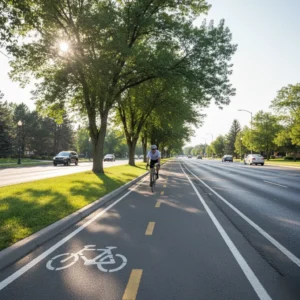
Here’s the order that matters.
Get to safety first. Move yourself and your bike out of the road if you can. Along corridors like Arapahoe Road or DTC Boulevard, traffic moves fast and doesn’t slow down for a downed cyclist. A second collision is a real danger. If you can’t move, wave your arms to flag down other drivers.
Call 911. Not optional. You need a police report, and you need it filed the same day. Tell the dispatcher a driver hit you on your bicycle and left the scene, that specific language triggers a hit-and-run investigation rather than a standard traffic call. Officers from the Greenwood Village Police Department will respond and generate a case number. Without that report, your insurance company will question whether the accident happened at all. We’ve seen that argument used, and it works when there’s no documentation.
Write down everything you remember about the vehicle. Color. Make. Model. Partial plate. Direction it went after the hit. Even one detail can crack a case open. We’ve had situations where a client remembered three digits of a license plate, police ran it through DMV records, and we found the driver. Three digits.
Find witnesses before they walk away. Was someone at the intersection? A car stopped behind you? A pedestrian on the sidewalk near Fiddler’s Green? Ask immediately. Get a name and phone number. Witness memory fades within hours, not days.
Photograph everything. Your injuries. Your bike. The road surface. Skid marks. Debris. Anything the driver’s vehicle left behind, a side mirror, a bumper piece, paint transfer. Shoot from multiple angles. These photos become evidence your attorney uses months later when the insurance company disputes how the crash happened.
Get medical attention that day. Even if you feel fine. Adrenaline masks pain. Concussions don’t always surface right away, we’ve seen clients feel okay at the scene and wake up the next morning unable to lift their arm. Go to an emergency room or urgent care and tell them you were struck by a car while riding your bike. That detail needs to be in your medical records from day one, because insurance companies will scrutinize the timeline of your treatment and use any gap against you.
Most people don’t realize how much that first medical visit matters to their claim. If you didn’t go right away, the insurer’s argument is simple: you weren’t really hurt. We see this tactic constantly.
Check for cameras near the scene. Businesses along the DTC Parkway corridor often have security cameras pointed at parking lots and sidewalks. Traffic cameras at major intersections may have captured the vehicle. But that footage gets overwritten, sometimes within 48 to 72 hours. Someone needs to be requesting it immediately, before it’s gone.
And that’s where most people hit a wall. You’re injured, dealing with doctors, maybe missing work. Tracking down surveillance footage and following up with police isn’t something you should be doing alone. If you’ve been hit by a driver who fled, talk to a bicycle hit-and-run attorney who handles these cases in Colorado. The clock is already running.
“Insurance companies know which firms actually take cases to trial, and that affects how your case is handled. A lot of the high-volume firms don’t actually try cases. In fact, many times they end up calling firms like ours to litigate and take their cases to trial.”, Jason Jordan, Founding Partner
Reporting the Accident in Greenwood Village: Who to Call and Why It Matters
Call 911 first. Every time. Even if you think the driver is long gone, even if your injuries feel minor, even if someone standing nearby says “they probably won’t find the person.” That 911 call creates a record. That record becomes the backbone of your hit-and-run case.
We’ve seen people wait hours, or a full day, before reporting. By then, details blur. Witnesses leave. Security footage gets overwritten. The window to identify the driver closes fast, and it doesn’t reopen.
The Greenwood Village Police Department handles these calls directly. Their non-emergency line is (303) 773-2525, but if you’re injured on your bike, use 911. Officers will respond, document the scene, and generate a case number. Your insurance company will ask for that case number almost immediately. So will your attorney.
What to Tell the Responding Officer
Give the officer everything you can remember about the vehicle. Color, make, model, partial plate. Direction of travel after impact. Did the driver accelerate after hitting you? Were they turning off Arapahoe Road or heading toward I-25? Specific details about Greenwood Village roads and intersections help officers narrow the search area quickly, this isn’t a sprawling city grid, and local geography matters.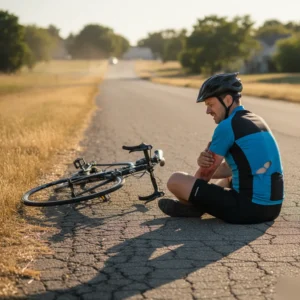
Don’t guess. If you didn’t see the plate, say so. If you’re uncertain about the color, say “I think” rather than stating it as fact. Officers can work with honest uncertainty. What hurts your case is a contradictory statement that shows up later in the report when your memory shifts.
Tell the officer about every part of your body that hurts, even if it seems minor right now. Adrenaline does a number on you after a bicycle crash. You might feel functional standing there talking to police, then wake up the next morning barely able to move. If shoulder pain, knee pain, or a headache gets noted at the scene, it’s in the report. That matters when an insurance company reviews your medical timeline weeks later and tries to argue the injuries came from somewhere else.
Why the Police Report Is Your Most Important Document
Insurance companies count on you not knowing this: without a police report, a hit-and-run claim gets exponentially harder to prove. Your own uninsured motorist carrier will look for reasons to minimize your payout, and their favorite argument, that maybe the accident didn’t happen the way you described, gets cut off by a same-day police report.
Colorado law under C.R.S. § 42-4-1412 gives bicyclists the same rights as motor vehicles on the road. That means the responding officer should treat your crash with the same seriousness as a car-on-car collision. If they don’t, ask them to note in the report that a motor vehicle struck a cyclist and fled. The language in that report matters more than most people realize.
After the police leave, there’s one more call to make. Contact your own auto insurance company to open a UM/UIM claim. Yes, your auto policy, most people don’t realize their car insurance covers them while riding a bicycle. About 15 percent of Colorado drivers carry no insurance at all, so even if police find the driver, there may be nothing to collect. Your uninsured motorist coverage exists for exactly this situation.
If you’ve already reported the crash and want to understand what comes next, our bicycle accident attorney page walks through the full claims process from here.
For a free legal consultation, call (303) 465-8733
Compensation Is Still Possible Even If the Driver Is Never Found
This is the part most people don’t know. You can still recover money for your injuries even if police never identify the driver who hit you. We tell clients this regularly, and the reaction is almost always the same, visible relief.
The key is your own auto insurance policy. Specifically, your uninsured motorist coverage, UM or UM/UIM. In Colorado, a hit-and-run driver is treated the same as an uninsured driver for insurance purposes. That means your own UM coverage steps in to pay for medical bills, lost wages, and pain and suffering. The Insurance Research Council puts the rate of uninsured Colorado drivers at around 15 percent. Your UM coverage was built for situations like this one.
How a UM Claim Works After a Bicycle Hit and Run
Here’s what surprises people: you don’t need to own a car to have UM coverage. If you live with a spouse, parent, or relative who carries an auto policy, their UM coverage may apply to you as a cyclist. Colorado’s resident relative rule can extend that protection to household members. So even if you were riding along the High Line Canal Trail, which cuts through the area and sees a lot of bike traffic, and got clipped by a car that took off, you might be covered under a family member’s policy.
But your own insurance company is not on your side in a UM claim. They owe you the money, they know they owe you the money, and they will still fight to pay as little as possible. They’ll act friendly. They’ll sound helpful. Then they’ll lowball you, delay the process, or deny the claim outright, counting on you not pushing back.
If your insurer acts in bad faith during a UM claim, Colorado law gives you real leverage. Under C.R.S. § 10-3-1116, you can recover double damages plus attorney fees. That statute exists because the legislature understood how insurers behave when they’re the ones writing the check.
What If You Don’t Have UM Coverage?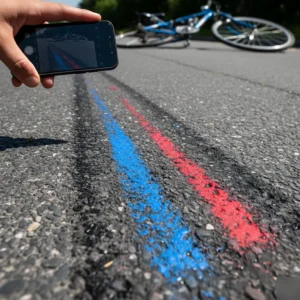
Tougher. Not impossible, but tougher. If police later identify the driver through surveillance footage or witness tips, you can pursue a claim against that driver’s insurance, or directly against them personally. Greenwood Village has growing camera coverage near the DTC corridors and along major intersections like Arapahoe Road and Yosemite Street. That footage sometimes leads to an identification weeks or months after the crash.
Your health insurance can cover medical treatment in the meantime. And if the driver is eventually found, you can recover those costs through a personal injury claim. The statute of limitations for motor vehicle accidents in Colorado is three years under C.R.S. § 13-80-101. You have time, but don’t let that create a false sense of comfort. Building a strong case takes time too, and evidence doesn’t wait.
“Insurance companies know which firms actually take cases to trial, and that affects how your case is handled. A lot of the high-volume firms don’t actually try cases. In fact, many times they end up calling firms like ours to litigate and take their cases to trial.”, Jason Jordan, Founding Partner
We’ve handled bicycle hit-and-run cases in Greenwood Village where the driver was never caught. The client still recovered full compensation through their UM policy. It took work. It took knowing how to apply real pressure on the insurer. But the money was there, and we got it.
If you’re not sure what coverage applies to your situation, we can review your policy and tell you exactly where you stand. No cost for that conversation. Call us anytime, we’re available 24/7.
Frequently Asked Questions
Does my own insurance cover me if the driver who hit me in Greenwood Village fled the scene?
Yes, your own auto insurance may cover you through uninsured motorist (UM) coverage — even though you were on a bicycle. Colorado requires insurers to offer UM coverage, and it can apply when a hit-and-run driver is never identified. You’ll need a police report filed with the Greenwood Village Police Department to support the claim. Without that report, your insurer can argue the accident didn’t happen. File the report the same day, then contact your insurance company to open a UM claim.
What if no one saw the hit-and-run happen near my location in Greenwood Village?
Even without eyewitnesses, you still have options. Businesses along corridors like DTC Parkway and Arapahoe Road often have security cameras. Traffic cameras at major intersections may have captured the vehicle. That footage can disappear within 48 to 72 hours, so someone needs to request it fast. A partial plate number, paint transfer on your bike, or debris left by the driver’s vehicle can all help identify who hit you. Don’t assume a missing witness means a dead end.
Is there a common mistake cyclists make after a hit-and-run that hurts their claim?
The biggest mistake is skipping medical care on the day of the crash. Many cyclists feel okay at the scene because adrenaline masks pain. If you wait two or three days to see a doctor, the insurance company will argue your injuries came from something else. Go to an emergency room or urgent care the same day. Tell them a car struck you while you were riding your bike. That specific language needs to be in your records from day one — it protects your timeline.
How long do I have to file a claim after a bicycle hit-and-run in Colorado?
In Colorado, the statute of limitations for personal injury claims is generally three years from the date of the accident. However, waiting that long is a serious risk. Evidence disappears quickly — surveillance footage is often gone within days, witnesses forget details, and police investigations go cold. The sooner you act, the stronger your case. If you want to understand how hit-and-run bicycle accident claims work from start to finish, the parent page on bicycle accident claims in Colorado covers the full process.
Can police actually find a hit-and-run driver in a city like Greenwood Village?
Yes, and it happens more often than people expect. Greenwood Village is a smaller, well-monitored city — not a sprawling metro grid. Local officers know the road network around areas like Fiddler’s Green and the DTC corridor well. Even partial plate numbers can be matched through DMV records. Paint transfer and vehicle debris can narrow down the make and model. Telling the 911 dispatcher that a driver hit you and fled triggers a hit-and-run investigation, not just a standard traffic report. That distinction matters for how aggressively officers pursue the case.
What if the hit-and-run driver is found later — does that change my case?
Yes, it changes your options significantly. If the driver is identified, you can pursue a claim directly against their liability insurance instead of relying solely on your own UM coverage. You may also have grounds for a personal injury lawsuit against that driver. The police report, your medical records, and any evidence collected at the scene all become more valuable once there’s a named defendant. This is why documenting everything right after the crash — photos, witness contacts, road details — matters so much, even before anyone is found.
Need a Denver Car Accident Lawyer? Contact us for a free consultation.