
Most people think product liability claims are rare. They’re not. We see them come through our Greenwood Village office regularly, and the products involved are often things sitting in your home or garage right now.
Here’s what actually drives these cases.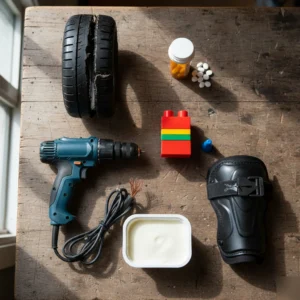
Motor Vehicles and Vehicle Parts
This is the big one. Defective tires, faulty brakes, bad airbag systems, and flawed ignition switches cause serious crashes every year on I-25 and Arapahoe Road. The defect doesn’t have to cause the crash itself. Sometimes a seatbelt fails during impact. Sometimes an airbag deploys late or not at all. Under Colorado’s product liability law, C.R.S. § 13-21-401 et seq., the manufacturer faces strict liability, you don’t have to prove they were careless. You prove the product was defective.
We’ve worked cases where the collision itself was survivable, but the vehicle’s structural failure turned it fatal. That’s a different claim than a car accident. It’s a product claim layered on top of one.
Medical Devices and Pharmaceuticals
Hip implants that corrode inside the body. Hernia mesh that migrates. Prescription drugs with side effects the label never mentioned. These claims are common because the injuries often don’t surface for months or years. Colorado’s 10-year statute of repose applies, but latent defect exceptions can extend that window. We’ve seen clients walk around for two years before connecting their symptoms to a device they had implanted.
By the time the connection is made, the clock is already running.
Children’s Products and Toys
Cribs, car seats, strollers, small toys with parts that break off. Kids can’t protect themselves from a design flaw. The Consumer Product Safety Commission recalled over 200 children’s products in 2023 alone. A recall doesn’t automatically mean you have a claim, but it’s strong evidence of a defect. If your child was hurt by a product anywhere in the DTC or Cherry Creek area, save everything, the packaging, the receipt, the product itself. Don’t clean it. Don’t repair it. Don’t throw it away.
Household Appliances and Electronics
Space heaters that overheat. Pressure cookers that explode. Lithium batteries in laptops and e-bikes that catch fire. These cases often involve burn injuries, and burn cases are among the most expensive to treat. Acute burn care can run $10,000 or more per day. Under Colorado law, the manufacturer, the retailer, and every company in the chain of distribution can be held responsible. The chain matters because it means there may be multiple parties with insurance coverage on the line. If you want to look up reported incidents involving specific products, the Consumer Product Incident Database is a useful resource for consumers researching product safety complaints.
Recreational and Off-Road Vehicles
ATVs, snowmobiles, Polaris side-by-sides. Colorado’s outdoor culture means these vehicles get hard use. And they fail. Rollover defects, throttle malfunctions, steering problems. We handle Polaris vehicle recall cases specifically because those defects have caused real injuries across the Front Range. The fact that someone was having fun when it happened doesn’t reduce the manufacturer’s duty to make the product safe.
Industrial and Workplace Equipment
Power tools, forklifts, scaffolding components, industrial machinery. A worker in Greenwood Village or the surrounding Arapahoe County area who gets hurt by a defective tool has options beyond workers’ comp. Most people don’t know this. If a third-party manufacturer made the equipment that failed, you can file a product liability claim on top of your workers’ comp benefits. Those two paths run parallel, and you don’t have to choose between them.
The thread connecting all six categories is straightforward. Someone designed, built, or sold a product that wasn’t safe, and it hurt you. Colorado’s strict liability framework means you don’t need to prove the company knew about the problem. You need to prove the product was defective when it left their hands.
And here’s what insurance companies count on you not knowing. They’ll try to blame you. They’ll argue you misused the product or ignored the instructions. That’s Colorado’s modified comparative negligence rule at work under C.R.S. § 13-21-111. If they can pin 50% or more of the fault on you, your recovery drops to zero. How the claim gets built from day one matters more than most people realize.
If a product hurt you or someone in your family, our product liability team can look at what happened and tell you straight whether you have a case worth pursuing.
The Three Types of Product Defects That Support a Legal Claim
Not every broken product leads to a lawsuit. The product has to be defective in a specific way that the law recognizes. Colorado’s product liability rules under C.R.S. § 13-21-401 et seq. lay out three categories of defects. Each one works differently, and knowing which type applies to your situation changes how the whole case gets built.
We see people mix these up all the time.
Design Defects
A design defect means the product was dangerous before it was ever made. The blueprint itself was flawed. Every unit that rolls off the line carries the same risk. Think about an SUV with a center of gravity so high it tips during normal turns. Or a space heater that overheats after 30 minutes because the internal layout can’t handle sustained use. The manufacturer followed the plans perfectly. The problem is the plan.
These cases often involve engineers and testing experts who show that a safer design existed and would have cost roughly the same to produce. We’ve worked with families in Greenwood Village who had no idea the product they’d been buying at a store along Arapahoe Road had a known design flaw documented in industry safety reports for years.
That’s the part that sticks with you.
Manufacturing Defects
This is different. The design was fine. Something went wrong during production. Maybe a batch of car brake pads used the wrong friction material. Maybe a children’s toy from one specific factory run contained lead paint while thousands of identical toys from other runs were safe. The defect shows up in some units but not all.
Manufacturing defect claims are sometimes easier to prove because you can compare the defective product against a normal one. The gap between what it should have been and what it actually was tells the story. But you need the product itself as evidence, most people don’t realize this until it’s too late, and they’ve already thrown away the item or let it get repaired before anyone documented the flaw.
Failure to Warn
Sometimes the product works exactly as designed. Built correctly. But the company didn’t tell you about a serious risk. A medication that causes liver damage in certain patients but carries no label warning. A power tool that kicks back violently under specific conditions with nothing in the manual. An over-the-counter supplement that interacts badly with common prescriptions.
Colorado law requires manufacturers to provide adequate warnings about risks they know about or reasonably should know about. And “should know” does a lot of heavy lifting in that sentence. If industry research flagged a danger and the company looked the other way, that silence becomes the defect.
Here’s what matters for your situation. Under Colorado’s strict liability framework, you don’t have to prove the manufacturer was careless or negligent. You have to show the product was defective and that the defect caused your injury. That shifts the focus from what the company did wrong to what the product did wrong. It’s a real distinction, and it changes what your attorney needs to build.
Which type of defect applies to you? That answer shapes everything, from what evidence you need to preserve to which experts get involved. Anne Dieruf on our team handles product liability cases and knows how to trace a defect back through the chain of distribution. If you’ve been hurt by a product in Greenwood Village or anywhere along the Front Range, we can help you figure out exactly where your claim fits.
Don’t guess at this on your own.
For a free legal consultation, call (303) 465-8733
Outdoor and Recreational Equipment Is a Locally Relevant Product Category
Living in Greenwood Village puts you close to some of the outdoor access in the state. People here ski, ride ATVs, snowmobile, hike, and bike year-round. That also means product liability claims tied to outdoor and recreational equipment hit close to home for a lot of our clients.
We’ve seen this play out dozens of times. A family buys a new off-road vehicle for weekend trips near Chatfield State Park. The throttle sticks on a hill. Someone gets thrown. A fun Saturday turns into months of surgeries and rehab. The product failed, the manufacturer knew about a design flaw, and nobody warned the buyer.
Common Outdoor Products in Product Liability Claims
ATVs and off-road vehicles are one of the most frequent sources of product liability claims in Colorado. Rollovers from defective steering, stuck throttles, and missing safety guards show up in case after case. The Consumer Product Safety Commission reports roughly 100,000 ATV-related emergency room visits per year nationally. That number stays stubbornly high because design problems keep repeating across model years, sometimes with the manufacturer fully aware.
Ski and snowboard bindings cause serious knee and leg injuries when they don’t release properly. Greenwood Village residents who head up I-70 to the ski resorts every winter should know this. A binding designed to release under a certain amount of force but doesn’t is a textbook manufacturing defect. We’ve handled cases where the binding mechanism looked fine on the outside but had an internal component that was out of spec from the factory.
Snowmobiles present their own set of risks. Fuel system leaks, brake failures, defective handlebars. These aren’t user errors. They’re product failures. Under Colorado’s strict liability rules, C.R.S. § 13-21-401 et seq., the manufacturer is responsible even without proof of negligence. You show the product was defective, you show the defect caused your injury, and the liability follows.
Helmets and protective gear are supposed to save your life. But when a helmet shell cracks on low-impact contact or a chin strap buckle snaps during a fall, the protective equipment itself becomes the danger. These claims can combine design defect and failure-to-warn theories at the same time.
Why This Matters for Greenwood Village Residents
Colorado’s outdoor culture isn’t a side hobby here. It’s how people live. The High Line Canal Trail runs right through this part of the metro, Cherry Creek State Park is minutes away, and mountain access is under an hour. Recreational equipment is a real part of daily life for many families in this area, which means product failures in this category show up in our office more than people might expect.
But here’s something most people don’t realize until it’s too late. Colorado has a 10-year statute of repose on product liability claims. If the product was sold more than 10 years ago, your claim may be barred entirely, with limited exceptions for latent defects. And the general statute of limitations for personal injury is just 2 years under C.R.S. § 13-80-102. The clock starts the day you’re hurt.
Insurance companies count on you not knowing this. They’ll drag out the process, request more documents, ask for another recorded statement, all while your deadline gets closer.
If you or someone in your family was hurt by a defective piece of outdoor equipment, don’t wait to find out where you stand. Our product liability team at Jordan Law handles these cases from our office on DTC Parkway. Attorney Anne Dieruf focuses on product liability specifically, and she knows how to trace a defect back through the entire chain of distribution, from the retailer to the manufacturer.
The product should have worked. It didn’t. That’s not on you.
Frequently Asked Questions
What kinds of products most often lead to liability claims in Greenwood Village?
The most common products involved in liability claims include motor vehicles, medical devices, children’s products, household appliances, recreational vehicles, and workplace equipment. In Greenwood Village, we regularly see cases tied to vehicle defects on I-25 and Arapahoe Road, faulty e-bike batteries, and off-road vehicles used along the Front Range. These aren’t rare situations. They involve everyday products that failed when they shouldn’t have. If a product hurt you, the category it falls into shapes how your case gets built.
Does a product have to be recalled for me to have a liability claim in Colorado?
No, a recall is not required for you to have a valid product liability claim. A recall can be strong evidence of a defect, but Colorado’s strict liability law under C.R.S. § 13-21-401 et seq. only requires you to prove the product was defective when it left the manufacturer’s hands. Many defective products are never officially recalled. If you were hurt by a product in the Greenwood Village area, the absence of a recall does not mean you don’t have a case worth looking at.
What is the difference between a design defect and a manufacturing defect?
A design defect means every single unit of that product is dangerous because the blueprint itself was flawed. A manufacturing defect means the design was fine, but something went wrong during production for one specific unit. Think of it this way: a space heater that overheats because of how it was engineered is a design defect. A space heater that overheats because a single faulty part slipped through the factory is a manufacturing defect. Which type applies to your situation changes how the entire claim gets built. Our product liability page explains how Colorado law treats both.
Can I still recover damages if the company says I misused the product?
Yes, you may still recover damages even if the manufacturer claims you misused the product. Colorado uses a modified comparative negligence rule under C.R.S. § 13-21-111. You can still recover as long as you are less than 50% at fault. However, your recovery is reduced by your percentage of fault. Manufacturers and their insurance companies often push the misuse argument hard. That’s why how your claim is documented from the very beginning matters. Don’t let that argument go unchallenged without legal guidance.
Are recreational vehicles like ATVs and snowmobiles covered under product liability law in Colorado?
Yes, recreational vehicles like ATVs, snowmobiles, and side-by-sides are fully covered under Colorado’s product liability law. Colorado’s outdoor culture means these vehicles get heavy use across the Front Range, including in and around Greenwood Village. Rollover defects, throttle malfunctions, and steering failures have caused real injuries here. The fact that you were using the vehicle for recreation does not reduce the manufacturer’s duty to make it safe. If a defect caused your injury, the claim works the same as any other product liability case.
How long do I have to file a product liability claim in Colorado after a defective product injures me?
In Colorado, you generally have two years from the date of injury to file a product liability claim. Colorado also has a 10-year statute of repose, which means claims are typically barred if the product has been in use for more than 10 years. However, latent defect exceptions can extend that window in some cases, especially for medical devices or pharmaceuticals where symptoms appear years later. If you or a family member in Greenwood Village was hurt by a product, don’t wait to find out where you stand on the timeline.