
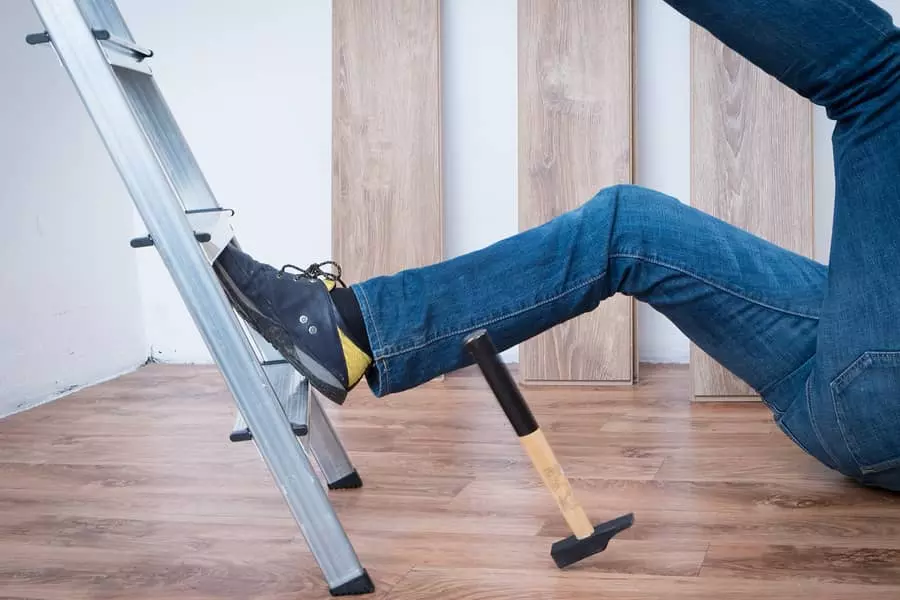



Why Scaffolding Accidents Happen on Commercial Job Sites
We handle scaffolding accident cases across Greenwood Village, and the causes repeat themselves. Different job sites, same shortcuts. Most of the time, it’s something that never should have happened.
The DTC corridor has constant commercial construction and renovation work. Office buildings get facelifts. New mixed-use projects go up along Belleview and Orchard. Those projects put workers on scaffolding. When a general contractor is pushing to hit a deadline, safety gets squeezed first.
Here’s what we see drive these cases.
Improper assembly is the big one. Scaffolding has to be erected by trained workers following the manufacturer’s specs. We’ve seen crews skip cross-bracing, use damaged frames, or mix components from different systems that don’t fit together. One missing pin can bring down an entire section.
Overloading happens more than people think. Every scaffold has a rated load capacity. Workers stack materials, tools, and debris on platforms that can’t handle the weight. The platform bows, the connections fail, people fall.
Missing guardrails and planking gaps violate OSHA standards and leave workers exposed. According to OSHA, falls are the leading cause of death in the construction industry. A scaffold platform without toe boards and guardrails is a citation waiting to happen, and a fall waiting to happen too. You can review the full OSHA scaffolding safety standards to understand exactly what employers are required to provide.
Lack of fall protection ties right into that. Harnesses not provided. Lanyards not anchored. Workers told to “just be careful” instead of being given the gear they’re required to have.
Weather and ground conditions matter in Greenwood Village. Colorado wind gusts can destabilize scaffolding that’s not properly tied to the structure. Freeze-thaw cycles soften the ground under base plates. A scaffold that was level on Monday might not be level on Thursday.
But the root cause behind all of these is pressure to move fast and cut costs. Subcontractors underbid jobs. General contractors look the other way. The worker on the scaffold pays the price for decisions made in a trailer or a boardroom. That’s exactly the kind of case we build, tracing the failure back to the people who created the danger.

For a free legal consultation with a -- none -- lawyer serving Greenwood Village, call (303) 465-8733
Who Can Be Held Liable After a Scaffold Injury
This is where scaffolding cases get complicated fast. And it’s where having the right attorney matters most. A scaffold collapse on a job site near the DTC Parkway corridor doesn’t just point to one responsible party. There are usually several, and sorting them out takes real investigation.
Workers’ comp covers some of your bills, sure. But it won’t cover all your losses, and it won’t hold anyone accountable. The real recovery comes from third-party claims against the people and companies whose negligence caused the accident. We handle these cases across Greenwood Village regularly, and most of the time there are multiple parties at fault.
The general contractor runs the job site. They’re responsible for overall safety, including scaffold inspections and OSHA compliance. If they cut corners on training or ignored a known hazard, they’re on the hook. The scaffolding company that supplied or erected the structure can be liable too. We’ve seen setups where the scaffold was missing guardrails, had damaged planks, or wasn’t anchored to the building at all. That’s not a gray area.
Property owners carry responsibility under Colorado premises liability law (C.R.S. § 13-21-115). If they knew about dangerous conditions or failed to maintain the site, they can be named in a claim. Equipment manufacturers fall under Colorado’s strict liability statute (C.R.S. § 13-21-401) when a defective scaffold component causes a collapse. A cracked coupling, a faulty brace, a base plate that fails under normal load. No negligence required for that claim.
Then there are subcontractors. Maybe another trade overloaded the scaffold or altered it without authorization. We see this all the time on multi-trade commercial projects.
Colorado follows a modified comparative negligence standard under C.R.S. § 13-21-111. That means the defense will try to push blame onto you. They’ll argue you weren’t wearing a harness. They’ll argue you should’ve noticed the hazard. They’ll argue you were on a section you shouldn’t have been. Insurance companies count on you not knowing this. As long as your fault stays below 50%, you can still recover. But every percentage point they pin on you reduces your payout, so building the strongest possible case against every liable party isn’t optional.
Colorado’s Dual Recovery Rule for Scaffolding Accident Victims
Here’s something insurance companies count on you not knowing. If you got hurt on scaffolding at a job site in Greenwood Village, workers’ comp isn’t your only option. Colorado law lets you file a third-party claim on top of your workers’ comp benefits. Two separate paths to recovery. Most people don’t realize that.
Workers’ comp covers your medical bills and a portion of lost wages. That’s it. No pain and suffering. No full wage replacement. And the benefits cap out fast, especially if you’ve got a serious fall injury like a spinal cord fracture or traumatic brain injury. We’ve seen workers accept a comp settlement thinking that’s all there is, only to find out months later they left real money on the table.
The third-party claim is where things change. Under C.R.S. § 13-21-111, you can sue the general contractor, the scaffolding company, the equipment manufacturer, or the property owner if their negligence caused your fall. You just can’t be 50% or more at fault. And the defense will try hard to pin blame on you. They’ll say you weren’t wearing a harness. They’ll say you ignored safety protocols. We’ve seen this play out hundreds of times.
So what does this mean in real numbers? Workers’ comp might cover your surgery and two-thirds of your wages. But a third-party claim can recover full lost earnings, future medical care, and noneconomic damages up to approximately $1.5 million under HB 24-1472. If someone died in the scaffolding collapse, the wrongful death cap sits around $2.125 million. Economic damages like lifetime care costs have no cap at all.
One thing to watch. The statute of limitations for a personal injury claim in Colorado is two years (C.R.S. § 13-80-102). Not three. That clock starts the day you fall. If the scaffolding accident happened on a project near the DTC Parkway corridor or anywhere else in Greenwood Village involving a government entity like CDOT, you’ve got just 182 days to file notice under the Colorado Governmental Immunity Act. Miss that deadline, your claim disappears.
Both paths matter. We build scaffolding accident cases to recover on every front available to you.
Greenwood Village -- None -- Lawyer Near Me (303) 465-8733
What to Do in the First 72 Hours After a Scaffolding Accident
The clock starts running the moment you hit the ground. Or the moment a board falls on you. Or the moment the whole platform shifts and you grab whatever you can. What you do in the next three days can make or break your case.
We’ve seen people lose strong claims because they waited a week to act. Don’t be that person. Here’s the order of operations.
Get medical attention first. Even if you think you’re fine. Adrenaline masks a lot of pain. Head injuries from scaffolding falls don’t always show symptoms right away. Go to Sky Ridge Medical Center or your nearest ER in Greenwood Village and tell them exactly what happened. Say the words “scaffolding accident” so it’s in your chart. That medical record becomes your first piece of evidence.
Report the accident to your employer. Do it in writing if you can. A text or email works. You want a timestamp. If your employer tries to downplay what happened or tells you to “take a few days off and see how you feel,” that’s a red flag. We hear that one constantly.
Document everything you can. Photos of the scaffolding, the site conditions, your injuries. Get names and numbers of anyone who saw it happen. If OSHA shows up to investigate, that report matters too. But don’t count on someone else preserving the scene for you. The general contractor might dismantle that scaffolding by tomorrow morning.
Don’t sign anything from the insurance company. Not a release. Not a recorded statement. Not even a “routine form.” Insurance companies count on you not knowing this, but anything you say in those first 72 hours gets used to reduce your claim later. They’ll ask leading questions designed to pin partial fault on you. Under C.R.S. § 13-21-111, if they push you past 50% fault, your recovery drops to zero.
And call a scaffolding accident lawyer before you talk to anyone else’s adjuster. The general personal injury statute of limitations in Colorado is two years (C.R.S. § 13-80-102), but evidence disappears fast on active job sites near the DTC corridor. Three days from now, that scaffolding could be gone. Your case depends on what gets preserved right now.
How Jordan Law Builds a Scaffolding Accident Case in Greenwood Village
Most people think a scaffolding accident case starts with a lawsuit. It doesn’t. It starts with evidence that’s disappearing by the hour.
We’ve seen this play out hundreds of times. A worker falls from scaffolding at a commercial build site near the DTC corridor, gets rushed to the hospital, and by the time anyone thinks about legal rights, the general contractor has already sent a crew to “fix” the platform. Surveillance footage from nearby buildings gets overwritten within days. The scaffolding company’s internal inspection logs quietly vanish. That’s not paranoia. That’s how it works — and experienced legal services in Greenwood Village exist precisely because someone has to move faster than the cover-up.
So we move fast. Our team sends preservation letters to every party that might hold evidence before they have a chance to destroy it. We’re talking about the general contractor, the scaffolding supplier, the subcontractor who assembled the platform, and the property owner. Each one may carry separate liability, and each one has records we need.
OSHA reports are a big part of this. If OSHA investigated the accident, their findings can establish negligence per se. That means a safety violation happened, and we don’t have to prove the defendant was careless. The violation speaks for itself. We pull OSHA inspection records, citation history for the companies involved, and any prior complaints filed against them. Most of the time, the company that cut corners on your job site has done it before.
We also bring in our own experts early. Structural engineers who can examine what’s left of the scaffolding setup. Safety consultants who know OSHA’s scaffold standards cold. Medical specialists who can document how a fall from height caused your specific injuries, whether that’s a spinal cord injury, a traumatic brain injury, or fractures that’ll need years of follow-up care.
Jason Jordan has over 20 years of experience building cases like this, and roughly 85% of our litigation work comes from other attorneys who know we’ll actually take a case to trial if the insurance company won’t pay what’s fair. That reputation changes the math on every offer. Insurance companies know which firms try cases. And they adjust accordingly.
If you were hurt on scaffolding at a Greenwood Village job site, call us before evidence goes missing. That’s not a sales pitch. It’s the most practical advice we can give you.
Click to contact our Legal Services in Greenwood Village today
Our Greenwood Village, Colorado Office Location

Our main office is located in Greenwood Village, also known as the Denver Tech Center, just south of Downtown Denver.
Jordan Law Accident and Injury Lawyers
5445 DTC Parkway Suite 1000 Greenwood Village CO 80111
Frequently Asked Questions
Can I file a lawsuit if I was already getting workers’ comp after a scaffolding accident in Greenwood Village?
Yes, you can file a third-party lawsuit on top of your workers’ comp claim. Colorado law gives you two separate paths to recovery. Workers’ comp covers medical bills and part of your lost wages, but nothing more. A third-party claim lets you go after the general contractor, scaffolding company, or property owner for pain and suffering and full wage loss. Many injured workers in Greenwood Village don’t know this until it’s too late.
Who is actually responsible for my scaffolding injury — my employer, the contractor, or someone else?
Responsibility often falls on multiple parties at once, not just one. The general contractor controls job site safety. The scaffolding company is liable if the structure was missing guardrails or had damaged planks. Property owners can be held responsible under Colorado premises liability law. Equipment makers face strict liability if a defective component caused the collapse. On busy commercial sites like those along the DTC corridor, we almost always find more than one party at fault.
How does Colorado’s comparative negligence rule affect my scaffolding accident case?
Colorado follows a modified comparative negligence standard under C.R.S. § 13-21-111. As long as you are less than 50% at fault, you can still recover damages. The defense will try to blame you — claiming you skipped a harness or ignored a hazard. Every percentage point they pin on you reduces your payout. That’s why building a strong case against every liable party from the start matters so much.
Does Greenwood Village’s weather or construction environment make scaffolding accidents more common here?
It does play a real role. Colorado wind gusts can destabilize scaffolding that isn’t properly tied to a structure. Freeze-thaw cycles soften the ground under base plates, so a scaffold that was level Monday may not be level by Thursday. The heavy commercial construction activity along Belleview and Orchard adds pressure to move fast, which is when safety shortcuts happen most. These local conditions come up regularly in the cases we handle in Greenwood Village.
What should I do right after a scaffolding accident before calling a lawyer?
Get medical attention first, even if you think your injuries are minor. Report the accident to your employer and make sure it’s documented in writing. Take photos of the scaffold, the fall area, and any missing guardrails or damaged planks before anything gets moved or repaired. Write down the names of anyone who witnessed the fall. Do not give a recorded statement to any insurance company. Then call a scaffolding accident lawyer in Greenwood Village as soon as possible.
How long do I have to file a scaffolding injury claim in Colorado?
Colorado’s statute of limitations gives you two years from the date of injury to file a personal injury claim. That window sounds long, but evidence disappears fast on active construction sites. Scaffolding gets taken down, photos get deleted, and witnesses move on to other jobs. The sooner you contact a scaffolding accident lawyer serving Greenwood Village, the better your chances of preserving the evidence needed to build a strong case.