
Economic damages are the money you’ve lost, or will lose, because someone hit you while texting, scrolling, or messing with their GPS. These aren’t estimates. Every dollar has a receipt, a bill, or a record behind it. And in Colorado, there’s no cap on economic damages. No cap. The at-fault driver’s insurance owes you every provable dollar.
We see people in Greenwood Village who get rear-ended on Arapahoe Road near the I-25 interchange and think the claim is just about fixing their car. It’s not. The financial fallout from a distracted driving accident reaches into parts of your life you don’t expect.
Medical Bills Past and Future
This is usually the biggest number. It covers your ER visit, surgeries, imaging, physical therapy, prescriptions, and any assistive devices you need. But here’s what most people miss: the bills don’t stop when treatment ends. If your injuries require future care, you’re owed that too. A herniated disc from a crash on DTC Boulevard might need injections for years. A traumatic brain injury could require lifelong neuropsychological treatment. We work with medical experts who project those future costs so nothing gets left out of your claim.
Lost Wages and Earning Capacity
You missed work. Maybe a week, maybe six months. Those lost paychecks are recoverable. But what about the promotion you couldn’t pursue because of chronic pain? Or the career change you were forced into? That’s called lost earning capacity, it’s separate from lost wages and often worth far more.
Say you’re a project manager at one of the tech firms along the DTC Parkway corridor. You earned $120,000 a year before the crash. Now you can’t sit at a desk for more than two hours without debilitating headaches. Your earning trajectory just changed. An economist can calculate that difference over the rest of your working life. Insurance companies count on you not knowing this.
Property Damage and Out-of-Pocket Costs
Your vehicle repair or replacement is the obvious one. But economic damages also cover the rental car you needed, the Uber rides to doctor appointments, home modifications if you’re in a wheelchair, even the cost of hiring someone to handle yard work while you recover. Keep every receipt. We tell our clients to start a folder on day one.
Here’s a real scenario we’ve seen play out. A driver gets hit by a distracted motorist near Fiddler’s Green Amphitheatre. The insurance adjuster offers to cover the ER bill and car repair. That’s it. No mention of the three months of physical therapy ahead. No mention of the PTO the client burned through. No mention of the $4,000 in childcare costs because they couldn’t drive their kids to school. Those are all economic damages, and the adjuster was hoping you’d never ask.
Colorado’s three-year statute of limitations for motor vehicle accidents under C.R.S. § 13-80-101 gives you time, but don’t wait to start documenting. Medical records get harder to obtain. Employers change payroll systems. Receipts disappear. The sooner you build your evidence file, the stronger your claim becomes.
If you’re trying to figure out what your distracted driving accident claim is actually worth, the Distracted Driving Accident Lawyer page at Jordan Law breaks down the full process. Economic damages are just one piece. But they’re the piece with hard numbers, and getting those numbers right can mean the difference between a lowball settlement and what you’re actually owed.
Non-Economic Damages Include Pain, Suffering, and Life Impact
This is the category most people undervalue. And it’s the one insurance adjusters work hardest to minimize.
Non-economic damages cover the harm you can’t attach a receipt to. Physical pain, emotional distress, lost sleep, anxiety behind the wheel, the things that change your daily life but don’t show up on a billing statement. In Colorado, these damages are real and recoverable. They’re also capped under HB 24-1472 at roughly $1.5 million, though a judge can go beyond that cap with clear and convincing evidence of greater harm.
What Counts as Non-Economic Damage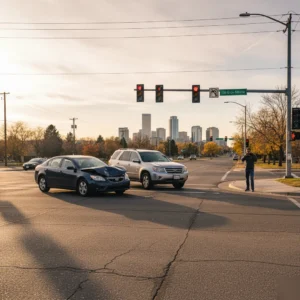
Physical pain and suffering is the most obvious form. A rear-end collision on Arapahoe Road caused by a texting driver might leave you with chronic neck pain for months. That daily ache counts. The sleepless nights count. The fact that you can’t pick up your kid without wincing counts.
Emotional distress goes beyond feeling upset. We see clients who develop real anxiety about driving through the DTC after a distracted driving accident. Some avoid I-25 entirely. Others have nightmares or panic attacks at intersections. These are documented, diagnosable conditions, and they carry real weight in a claim.
Loss of enjoyment of life is something most people don’t think to mention. But if you used to hike at Centennial Open Space on weekends and now you can’t because of back injuries from a distracted driver, that loss matters. Colorado law recognizes it as a separate category of harm.
Loss of consortium applies to your spouse. If your injuries have damaged your relationship or your ability to be present as a partner, your spouse may have their own claim.
Why Insurance Companies Fight These Hardest
Insurance companies count on you not knowing this. Non-economic damages often make up the largest portion of a distracted driving accident claim. So adjusters push back hard. They’ll say you look fine in surveillance photos. They’ll point to gaps in your treatment records. They’ll argue your anxiety existed before the crash.
We’ve seen this play out hundreds of times in Greenwood Village cases. The adjuster offers a number based only on your medical bills. No mention of pain. No mention of the fact that you haven’t slept through the night in three months. That first offer is designed to close your file fast.
How do you prove something that doesn’t show up on an X-ray? Documentation. Your medical records need to reflect your pain levels at every visit. A therapist or psychologist should be documenting emotional symptoms. Your own journal entries about daily limitations can become evidence. Testimony from your family about how you’ve changed since the crash holds real value at trial.
“Insurance companies know which firms actually take cases to trial, and that affects how your case is handled. A lot of the high-volume firms don’t actually try cases. In fact, many times they end up calling firms like ours to litigate and take their cases to trial.”, Jason Jordan, Founding Partner
The gap between a low settlement and full compensation often comes down to how well non-economic damages are built and presented. If you’re dealing with a distracted driving accident claim and want to understand what your non-economic damages might look like, our distracted driving accident lawyers can walk you through it.
For a free legal consultation, call (303) 465-8733
Colorado’s Comparative Negligence Rule Affects How Much You Can Recover
Here’s where things get real. Colorado follows a modified comparative negligence rule under C.R.S. § 13-21-111. In plain English, your compensation gets reduced by your share of fault. And if you’re found 50% or more at fault, you get nothing.
Zero.
We’ve seen this play out hundreds of times. The other driver was texting, ran a red light on Arapahoe Road, and slammed into your car. Open-and-shut, right? Not so fast. The insurance adjuster starts digging. Maybe you were going 5 over the speed limit. Maybe you didn’t brake as quickly as they think you should have. Maybe your turn signal wasn’t on. They use every small detail to push your fault percentage higher, because every point they add saves them money.
Say your total damages are $200,000. The insurance company argues you were 20% at fault for not checking your mirrors before changing lanes near the I-25 and Orchard Road interchange. If a jury agrees, your recovery drops to $160,000. That 20% cost you $40,000.
Now imagine they push it to 50%. You lose everything.
Insurance companies use specific tactics to inflate your fault percentage. We see the same playbook over and over in Greenwood Village distracted driving cases. They’ll argue you were on your phone too. They’ll say you failed to brake in time. They’ll claim you weren’t wearing your seatbelt, even though seatbelt use doesn’t cause a crash. They’ll point to dark clothing if the accident happened at dusk along a stretch of Yosemite Street. Every detail becomes a weapon.
But here’s what most people don’t realize. Comparative negligence cuts both ways. The distracted driver who hit you bears the bigger share of fault. Phone records, dashcam footage, and witness statements can prove they were looking at their screen. Colorado’s hands-free driving law, SB 24-065, makes it illegal to hold a phone while driving. A violation of that law is strong evidence of negligence.
“It’s very important that you end up with the right attorney, not just the one who advertises the most or has the most clicks online. You want an attorney with real experience, not only handling this type of work but actually trying cases. That doesn’t mean your case will go to trial, but it matters that your attorney has trial experience. Insurance companies know which firms actually take cases to trial, and that affects how your case is handled.”, Jason Jordan, Founding Partner
The fight over fault percentages often decides the entire case. We pull cell phone records, subpoena app usage data, and work with accident reconstruction experts to show exactly what the other driver was doing at the moment of impact. A distracted driving accident lawyer who knows how to counter these arguments can protect your recovery.
If you’ve been in a distracted driving crash near the Denver Tech Center or anywhere in Greenwood Village, don’t let the insurance company quietly shift blame onto you. Understanding how comparative negligence works is the first step. To learn more about building a strong case, visit our distracted driving accident lawyer page for a closer look at how we handle these claims.
Frequently Asked Questions
What types of compensation can I recover after a distracted driving accident in Colorado?
What types of compensation can I recover after a distracted driving accident in Colorado?You can recover two main types of compensation: economic damages and non-economic damages. Economic damages cover things like medical bills, lost wages, and property damage — every dollar tied to a receipt or record. Non-economic damages cover pain, emotional distress, and how the crash changed your daily life. Colorado has no cap on economic damages. Non-economic damages are capped under HB 24-1472 at roughly $1.5 million, though a judge can go higher with strong evidence.
How does lost earning capacity differ from lost wages after a crash in Greenwood Village?
How does lost earning capacity differ from lost wages after a crash in Greenwood Village?Lost wages cover the paychecks you missed while you were hurt. Lost earning capacity covers what your career could have looked like going forward. Many Greenwood Village residents work in the DTC corridor in high-earning roles. If chronic pain or a brain injury stops you from advancing in that career, an economist can calculate what that lost trajectory is worth over your working life. That number is often much larger than the missed paychecks alone.
What is the deadline to file a distracted driving accident claim in Colorado?
What is the deadline to file a distracted driving accident claim in Colorado?Colorado gives you three years to file a motor vehicle accident claim under C.R.S. § 13-80-101. That sounds like plenty of time, but waiting hurts your case. Medical records get harder to pull. Employers change payroll systems. Receipts disappear. If you were hit near Arapahoe Road or anywhere in Greenwood Village, start building your evidence file right away. The sooner you document everything, the stronger your claim becomes when it matters most.
Is emotional distress from a distracted driving accident actually recoverable in Colorado?
Is emotional distress from a distracted driving accident actually recoverable in Colorado?Yes, emotional distress is a real and recoverable form of non-economic damage in Colorado. It is not just feeling upset after a crash. If you now feel anxious driving through the DTC, avoid I-25, or experience panic attacks at intersections, those are documented, diagnosable conditions. Insurance adjusters often argue these feelings existed before the crash. That is a common tactic. Having consistent treatment records from a mental health provider helps counter that argument and supports your claim.
What out-of-pocket costs do most Greenwood Village accident victims forget to claim?
What out-of-pocket costs do most Greenwood Village accident victims forget to claim?Most people remember to claim car repairs and ER bills. They forget the rest. Rental cars, rideshare trips to doctor appointments, childcare costs when you could not drive, and home modifications if you needed a wheelchair — all of these are economic damages. Keep every receipt from day one. We have seen Greenwood Village cases where clients left thousands of dollars on the table simply because they did not know these costs were recoverable. A folder of receipts is some of the strongest evidence you can have.
How do I know if the insurance company’s first settlement offer is fair?
How do I know if the insurance company’s first settlement offer is fair?The first offer is almost never fair. Adjusters are trained to close files fast by offering only what is obvious — usually your medical bills and car repair. They rarely mention future medical costs, lost earning capacity, or non-economic damages like pain and loss of enjoyment of life. Before you accept anything, learn what your claim actually includes. The distracted driving accident lawyer resource at Jordan Law walks through the full picture of what Colorado law allows you to recover.