
No. You don’t need one. A citation helps, but it’s not a requirement, and we see this confusion stop people from pursuing claims they absolutely should be making. Our office sits right on DTC Parkway, and this question comes up more than almost any other.
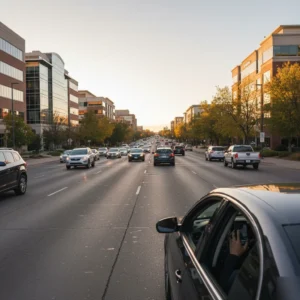
Here’s the thing people miss. A distracted driving claim is a civil case. A citation is a traffic or criminal matter. Those are two separate systems with different rules. In a civil claim, you have to show the other driver was negligent by a “preponderance of the evidence”, meaning more likely than not. A traffic citation requires the officer to witness the violation or have solid reason to believe it occurred. Most distracted drivers never get cited at the scene.
A driver rear-ends you at Arapahoe Road and Yosemite Street. They were scrolling their phone. By the time the officer arrives, the phone is put away, and the driver says they just didn’t see you stop. No citation gets written. Does that kill your distracted driving claim? Not even close.
Colorado’s hands-free driving law under SB 24-065 makes it illegal to hold or use a phone while driving. But officers can only cite what they can prove at the scene, and your civil case runs on a much broader set of evidence. Cell phone records showing activity at the moment of impact. Witness statements. Dashcam footage. Even the crash pattern itself can point to distraction when a driver made zero effort to brake on a clear road.
Insurance companies count on you not knowing this. They’ll point to the police report and say “no citation, no proof of distraction.” That’s not how civil law works in Colorado. Under C.R.S. § 13-21-111, Colorado uses modified comparative negligence, you can recover damages as long as you’re less than 50% at fault. The absence of a citation doesn’t shift fault to you. It just means you need to build your case through other evidence, and that’s exactly what we do.
We’ve handled distracted driving cases in Greenwood Village where the police report was completely silent on phone use. No mention of it at all. But a subpoena of the at-fault driver’s cell phone records showed texts sent within seconds of the collision. That evidence carried the case. The citation, or lack of one, was beside the point.
“Insurance companies know which firms actually take cases to trial, and that affects how your case is handled. A lot of the high-volume firms don’t actually try cases. Many times they end up calling firms like ours to litigate and take their cases to trial.”, Jason Jordan, Founding Partner
If you were hit by a distracted driver along I-25 near the DTC or on Orchard Road during the evening commute, when that stretch backs up and people start reaching for their phones out of frustration, the absence of a ticket doesn’t erase what happened to you. It just means your attorney needs to dig deeper for proof. And that’s not a problem. It’s just a different kind of case.
What does matter is acting within Colorado’s three-year statute of limitations for motor vehicle accidents under C.R.S. § 13-80-101. Phone records get deleted. Witnesses forget. Dashcam footage gets overwritten, sometimes within 48 hours. Time matters far more than a citation ever will.
If you’ve been hurt by a distracted driver and there’s no citation on the police report, talk to a distracted driving accident lawyer who knows how to build the case without one.
Police Citation vs. Police Report: These Are Two Different Documents
Most people use these terms like they mean the same thing. They don’t. And mixing them up can cost you real money in a distracted driving case.
A police citation is a ticket. It’s what an officer hands a driver who broke a traffic law. Under Colorado’s hands-free driving law (SB 24-065), an officer might cite someone for holding a phone while driving. That citation goes through the traffic or criminal court system, the driver pays a fine, fights it, or pleads guilty. It’s between the driver and the state. You’re not really part of that process.
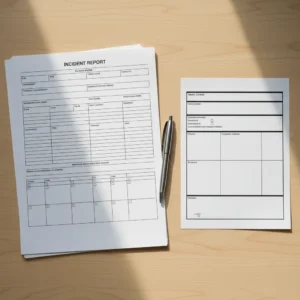
A police report is something else entirely. It’s the officer’s written account of what happened at the crash scene, the date, time, location, driver statements, witness names, road conditions, and what the officer personally observed. If the officer noticed a phone on the seat or a driver admitted to checking a navigation app, that detail goes in the report. We’ve seen cases along the I-25 corridor near Greenwood Village where a single line in a police report changed the entire direction of a claim.
Why the Difference Matters for Your Claim
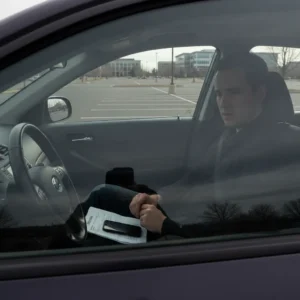 A citation is helpful but not required. The police report, on the other hand, carries real weight, it’s often the first document an insurance adjuster reviews. If it notes distracted behavior, you’re starting from a stronger position. But sometimes no citation gets issued even when the other driver was clearly on their phone. Officers arrive after the fact. They didn’t see the violation happen. They can’t always cite what they didn’t witness. That doesn’t mean distracted driving didn’t occur.
We see this play out at busy Greenwood Village intersections near Orchard Road and Yosemite Street. A driver rear-ends someone at a red light. The officer shows up, takes statements, writes a report. No citation. The at-fault driver says they “just didn’t see the light.” No ticket, no admission of phone use. But the absence of a citation is not the absence of a case.
And here’s something worth knowing about that stretch of Orchard Road specifically, it runs right through the heart of the DTC commercial corridor, with office park exits feeding onto it constantly during the afternoon. Drivers cutting out early, watching for gaps in traffic, glancing at phones. We see a lot of rear-end collisions in that area, and very few of them result in a distracted driving citation.
What Each Document Does in Your Case
Think of a citation as a shortcut. It tells the insurance company the other driver already got in trouble for breaking a law. That makes your case easier to argue. But it’s a shortcut you don’t need.
The police report is your foundation. It documents who was there, what they said, and what the officer saw. Even without a citation, a solid report gives your attorney something to build on. And if the report is thin, other evidence fills the gap, phone records, dashcam footage, witness statements from people who watched the whole thing happen from the crosswalk or the car behind.
Neither document alone wins your case. But together with other proof of distraction, they build something an insurance company can’t just wave away. So when someone asks whether they need a citation to move forward, the answer is no. You need evidence. A citation is one form of it. A police report is another. And there are others we’ll get to.
If you were hit by a distracted driver in Greenwood Village and no citation was issued, don’t walk away from your claim. Talk to a distracted driving accident lawyer who knows how to prove what happened even when the police didn’t write a ticket.
For a free legal consultation, call (303) 465-8733
Evidence That Can Prove Distracted Driving Without a Ticket
A police citation is one piece of evidence. It’s not even close to the strongest piece. We’ve built distracted driving cases in Greenwood Village using evidence the other driver never saw coming, and evidence they probably assumed was already gone.
If the officer didn’t see the crash happen, the citation is really just the officer’s read on what people told them at the scene. A distracted driving accident lawyer builds the case differently. We go after the hard proof.
Phone Records and Cell Tower Data
We subpoena the other driver’s cell phone records. Those records show exactly when texts were sent, when calls connected, when apps went active. Cell tower data can place the phone’s location at the time of the crash. If the other driver was scrolling through something while heading south on Yosemite Street toward Arapahoe, the records will show it. And here’s what insurance companies count on you not knowing, those records exist, they’re obtainable, and they’re hard to explain away in front of a jury.
Colorado’s hands-free law under SB 24-065 makes holding a phone while driving illegal. But proving it in a civil case means going beyond your word versus theirs. Phone records do that. It’s also worth understanding how state-level electronic device laws shape what officers can and cannot cite at the scene — the IIHS research on electronic device laws and distracted driving breaks down how these laws vary and what enforcement actually looks like in practice.
Dashcam and Surveillance Footage
Greenwood Village sits in the Denver Tech Center corridor. That means cameras everywhere, office buildings along DTC Parkway, parking structures near Fiddler’s Green Amphitheatre, business entrances along Arapahoe Road. Any of those may have captured the moments before your crash. But surveillance footage gets overwritten fast, sometimes within 48 to 72 hours. We’ve seen cases where critical footage disappeared because nobody asked for it in time. That’s a loss you can’t recover from.
Your own dashcam matters too. If it caught the other driver looking down at their lap or drifting across the lane line before impact, that’s real evidence of distraction, the kind that’s hard to argue with in a deposition.
Witness Statements
Other drivers and pedestrians often see things you missed. Someone waiting at the intersection of Orchard Road and I-25 might have watched the other driver blow through a light with their head down. A passenger in the at-fault car might admit, under oath, that the driver was texting. We take witness statements early, because memories fade and people move away. We’ve had witnesses who were solid in the first week and nearly useless six months later.
The Crash Itself Tells a Story
Accident reconstruction experts look at physical evidence that points directly to distraction. No skid marks before impact means no braking, and no braking usually means no awareness of what was happening. A distracted driver doesn’t react because they never saw you. The damage pattern, the point of impact, the speed at collision, all of it paints a picture. And when that picture shows a driver who made zero effort to avoid a crash on a straight road with clear visibility, a jury understands what happened without needing a ticket to explain it.
Event data recorders in newer vehicles capture speed, braking, and steering inputs in the seconds before a crash. That data is hard to dispute.
Social Media and App Activity
We’ve pulled evidence from social media posts timestamped at the exact moment of a crash. Someone posting a photo, updating a status, streaming music through an app. All of it creates a digital trail. Insurance companies count on you not knowing this evidence exists, or that it can be obtained through discovery. But a distracted driving accident lawyer knows exactly where to look and how to preserve it before it gets deleted.
By the way, this is also why it matters who you hire. Not every firm knows how to request this data, and not every firm is willing to spend the time and money to go get it. We do, because we prepare every case as if it’s going to trial, and sometimes it does.
Evidence wins distracted driving cases. Not tickets. If you’ve been gathering your own records or wondering what to save, that instinct is right. But the clock is ticking on surveillance footage and digital records. Talk to a distracted driving accident lawyer before that evidence is gone.
Frequently Asked Questions
Do I need a police citation to file a distracted driving claim in Greenwood Village?
No, you do not need a police citation to file a distracted driving claim. A citation is a traffic matter between the driver and the state. Your civil claim runs on a completely separate set of rules. In Colorado, you only need to show the other driver was more likely than not negligent. Cell phone records, witness statements, dashcam footage, and crash patterns can all prove distraction without a single ticket ever being issued.
What is the difference between a police citation and a police report in a distracted driving case?
A police citation is a ticket the officer hands to a driver for breaking a traffic law. A police report is the officer’s written account of the crash — locations, statements, road conditions, and observations. These are two different documents. The report often carries more weight in your civil claim than a citation does. If an officer noted a phone on the seat or a driver admitted to using a navigation app, that detail in the report can support your case significantly.
What evidence can prove distracted driving in Greenwood Village if no ticket was issued?
Several types of evidence can prove distracted driving even without a citation. Cell phone records can show texts or app activity at the exact moment of impact. Witnesses at busy spots like Orchard Road and Yosemite Street may have seen the driver on their phone. Dashcam footage is another strong source, but it can be overwritten within 48 hours. The crash pattern itself — like a driver making zero attempt to brake on a clear road — can also point directly to distraction.
Does the absence of a citation mean the insurance company can deny my distracted driving claim?
No, insurance companies cannot legally deny your claim simply because no citation was issued. However, they often try to use that gap to pressure you. Under C.R.S. § 13-21-111, Colorado’s modified comparative negligence law, the absence of a citation does not shift fault to you. What matters is the full picture of evidence. If you want to understand how fault and evidence work together in these cases, the distracted driving accident lawyer parent page covers this in detail.
How does Colorado’s hands-free driving law affect distracted driving claims near the DTC area?
Colorado’s hands-free law under SB 24-065 makes it illegal to hold or use a phone while driving. But officers can only cite what they personally witness or have solid reason to believe occurred. Along busy stretches like I-25 near the DTC or Orchard Road during afternoon commutes, distraction happens constantly, but citations are rare. The law still matters to your civil case because it sets the standard of care. Breaking that standard — even without a ticket — is evidence of negligence.
Is there a deadline to file a distracted driving claim in Greenwood Village even if I’m still gathering evidence?
Yes, Colorado’s statute of limitations for motor vehicle accidents is three years under C.R.S. § 13-80-101. That clock starts on the date of the crash. Waiting too long is one of the most common mistakes people make. Phone records get deleted. Witnesses forget details. Dashcam footage gets overwritten fast. Even if you’re still pulling evidence together, speaking with an attorney early protects your right to recover damages before that window closes.