
Lane filtering is legal in Colorado. SB 24-079 went into effect in August 2024, putting Colorado in a small group of states that lets motorcyclists move between stopped or slow-moving traffic. But “legal” and “do whatever you want” are not the same thing. The law has specific conditions, and missing even one of them can flip your claim sideways.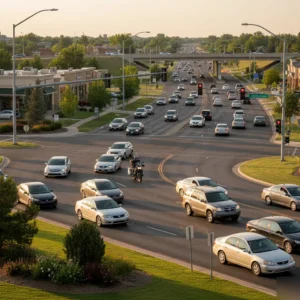
We’ve already seen adjusters in the Greenwood Village area pull up this statute and try to use it against injured riders. So here’s exactly what the law says.
What SB 24-079 Actually Permits
The law lets a motorcyclist pass between two lanes of traffic moving in the same direction. That’s the whole thing. Not weaving across three lanes, not riding the shoulder, not shooting through an intersection at speed. The traffic around you must be stopped or moving at 10 mph or less, and your speed must stay under 15 mph while you filter. Go faster, and you’re outside the law’s protection.
Road type matters too. You can only filter on roads with speed limits of 45 mph or less. Think Arapahoe Road near the DTC during the afternoon backup, or Orchard Road when it stacks up heading toward I-25. Those qualify. I-25 itself does not. Highway filtering isn’t covered by this statute.
There are a few other limits most riders miss. You can’t filter next to large vehicles like trucks or buses. School zones, construction zones, and anywhere a traffic control device says no, all off-limits. And the law only covers motorcycles. Not mopeds. Not e-bikes. Not scooters. If you were on something other than a motorcycle, SB 24-079 doesn’t apply to you at all.
Why the Details Matter for Your Claim
Insurance companies count on you not knowing the specifics. If you were filtering legally and a driver opened a door or merged into you without looking, the other driver is at fault. That’s a solid position for your motorcycle accident claim. But if you were doing 22 mph between lanes, or filtering on a 55 mph road, the insurer will argue you were breaking the law at the moment of impact.
That’s where Colorado’s modified comparative negligence rule comes in under C.R.S. § 13-21-111. If they can push your share of fault to 50% or more, you recover nothing. Zero. Adjusters know this. They’ll pull speed estimates from dashcam footage, GPS data from your phone, even the posted limit of the road to argue you weren’t filtering legally when the crash happened.
We’ve seen this play out dozens of times. A rider does everything right, filters at 12 mph on a 35 mph road while traffic is completely stopped, gets hit by a driver who never checked mirrors. The adjuster still labels it “lane splitting” in the file. They use the wrong term on purpose. It’s a strategy, not a mistake.
Here’s something most riders don’t realize. Lane filtering and lane splitting are different things under Colorado law. Filtering is the legal, controlled movement through stopped or crawling traffic. Splitting is riding between lanes while traffic flows at normal speed. Colorado did not legalize lane splitting. Only filtering. That one-word difference can decide your entire case, and adjusters know it.
If you were filtering legally when you got hurt, don’t let an insurance company rewrite what happened. Talk to a motorcycle accident lawyer who actually knows SB 24-079, and how adjusters try to use it against riders across the Denver metro.
Lane Filtering vs. Lane Splitting: The Difference Is Legally Significant
People use these terms like they mean the same thing. They don’t. And in a crash claim, that mix-up can cost you real money.
Lane filtering is what Colorado legalized under SB 24-079. Traffic must be stopped or moving at 10 mph or less. The rider’s speed must stay below 15 mph. It only applies on roads with at least two lanes going the same direction, with a posted speed limit of 45 mph or under. Picture the backup on Arapahoe Road near the I-25 interchange on a Friday afternoon, a motorcyclist moving carefully between two lanes of bumper-to-bumper traffic at low speed. That’s lane filtering.
Lane splitting is different. It means riding between lanes of traffic moving at normal highway speeds. A motorcycle threading between cars doing 60 through the Denver Tech Center corridor is lane splitting. Colorado did not legalize this. It remains illegal.
Why This Matters in Your Claim
We deal with this regularly. A rider is filtering through stopped traffic on Orchard Road near Greenwood Village, doing maybe 12 mph. A driver opens a door or drifts over without signaling. The rider goes down hard. The insurance company’s first move is to call it “lane splitting” in their report, even though the rider followed every condition in SB 24-079.
That word swap isn’t accidental, it’s a strategy. If they can label your legal maneuver as an illegal one, they push your fault percentage up under C.R.S. § 13-21-111. Get tagged at 50% or more and your recovery drops to zero. The legal distinction comes down to three things that separate lawful filtering from illegal splitting.
Speed of surrounding traffic is the first factor. Filtering only applies when traffic is stopped or crawling at 10 mph or less. If cars around you were moving at normal speed, what you were doing wasn’t filtering under the statute.
Your speed as the rider is the second factor. The law caps you at 15 mph during the maneuver. Dashcam footage, GPS data from your phone, even the motorcycle’s onboard computer can all establish what your actual speed was, and adjusters will look for all of it.
Road configuration is the third factor. The road must have two or more lanes running the same direction. Filtering on a single-lane road or in a turn lane isn’t covered by SB 24-079, full stop.
Miss any one of those conditions and what you were doing might not qualify as lane filtering under the statute. But here’s the thing, even if you technically fell outside one condition, that doesn’t automatically make the crash your fault. The other driver still had a duty to check mirrors, signal before moving, and avoid sudden lane changes. Their failure doesn’t disappear just because you weren’t filtering perfectly.
This is exactly the kind of detail that matters in a motorcycle accident claim. If you’ve been hurt riding in Greenwood Village or anywhere along the I-25 corridor, the language in the police report and the insurance file needs to be accurate from day one. Once “lane splitting” gets written into a report, correcting it takes real work. Our motorcycle accident lawyers know how to document the difference and hold adjusters accountable when they blur it.
Lane filtering is legal. Lane splitting is not. Don’t let anyone treat those as the same thing in your claim.
For a free legal consultation, call (303) 465-8733
Legal Behavior and Legal Fault Are Two Different Things in Colorado
This trips people up constantly. A motorcyclist does something perfectly legal, gets hurt, and the insurance company tries to pin fault on them anyway. We see it all the time. Legal behavior and legal fault are not the same thing, and understanding that gap is the difference between a full recovery and a gutted one.
Just because lane filtering is legal under SB 24-079 doesn’t mean an insurer won’t argue you caused the crash. And just because a driver did something illegal doesn’t automatically make them 100% at fault. Colorado’s fault system is more layered than most people realize going in.
How Comparative Negligence Changes Everything
Colorado uses modified comparative negligence under C.R.S. § 13-21-111. Fault gets split by percentages. You can recover damages as long as you’re less than 50% at fault. Hit 50% or more, you get nothing, not a dollar.
So. You’re filtering on Arapahoe Road near the I-25 interchange during rush hour. You follow every rule in SB 24-079. A driver opens their door into your path. You go down and you’re hurt badly. Seems obvious, right?
Not if the adjuster has anything to say about it.
They’ll dig into every detail. Were you staying under 15 mph? Was traffic truly stopped? Did you filter only between qualifying lanes on a qualifying road? Insurance companies count on you not knowing the specific requirements of the law, and they’ll argue you violated one of those conditions even when you didn’t. Every percentage point they add to your fault column reduces your payout dollar for dollar.
The Tactics Insurers Use to Shift Blame
We’ve seen this play out hundreds of times. The adjuster doesn’t need to prove you broke the law. They just need to create enough doubt to move your fault number up. Common arguments against a filtering rider include claiming you were traveling too fast to be filtering safely, arguing traffic wasn’t slow enough to qualify under the statute, suggesting you startled the other driver by appearing “out of nowhere” between lanes, and pointing to any small deviation from SB 24-079’s requirements. They present these as findings. They’re not. They’re negotiation moves designed to reduce what they owe you.
The legality of lane filtering is your shield, but it’s not automatic protection. You still need evidence showing you followed the law, dashcam footage, witness statements, GPS data showing your speed. All of it matters, and all of it starts disappearing fast after a crash.
A Real Scenario We See Along the DTC Corridor
A rider filters between stopped cars on Belleview Avenue heading toward the Denver Tech Center. A driver changes lanes without signaling. The rider goes down. The police report notes the rider was lane filtering. No citation issued to anyone.
Three weeks later, the insurance company sends a letter. They’ve assigned the rider 40% fault. Their reasoning: “The motorcyclist placed themselves in an unexpected position between lanes.” No statute cited. No evidence of wrongdoing. Just a percentage pulled from thin air to cut the settlement nearly in half.
This is why having a motorcycle accident lawyer matters before you respond to anything from that insurer. Once you accept a fault percentage or give a recorded statement, it’s very hard to undo that damage.
If you’ve been hurt while lane filtering in Greenwood Village or anywhere along the I-25 corridor, call Jordan Law before you talk to their adjuster. The difference between legal and not-at-fault is the difference between a full recovery and a claim that’s been picked apart before you even understood what was happening.
And keep this in mind. You have three years from the date of a motor vehicle accident to file a claim under C.R.S. § 13-80-101. But surveillance footage gets overwritten, witnesses forget what they saw, and physical evidence disappears. Waiting costs you leverage you can’t get back.
Frequently Asked Questions
Is lane filtering actually legal in Greenwood Village, or does it depend on the road?
Lane filtering is legal in Greenwood Village under Colorado’s SB 24-079, but only on roads with posted speed limits of 45 mph or under. Roads like Arapahoe Road near the DTC or Orchard Road heading toward I-25 qualify. I-25 itself does not. The law also requires surrounding traffic to be stopped or moving at 10 mph or less, and your speed must stay under 15 mph. If any one of those conditions isn’t met, you’re outside the law’s protection — and an insurer can use that against you.
What’s the difference between lane filtering and lane splitting, and why does it matter for my claim?
Lane filtering is the legal movement through stopped or slow traffic under SB 24-079. Lane splitting means riding between lanes while traffic moves at normal speed — that’s still illegal in Colorado. The difference matters because insurance adjusters sometimes label legal filtering as illegal splitting in their reports. That’s not a mistake. If they push your fault to 50% or more under Colorado’s modified comparative negligence rule, C.R.S. § 13-21-111, you recover nothing. Knowing the correct term for what you were doing can protect your entire claim.
Can an insurance adjuster use lane filtering against me even if I followed every rule?
Yes, adjusters can still try — and they do. Even when a rider filters legally at 12 mph through stopped traffic on Orchard Road, some adjusters will mislabel the maneuver or hunt for any condition you may have missed. They’ll check dashcam footage, GPS data, and the posted speed limit of the road. If you were fully compliant with SB 24-079, that’s a strong position. But you need to document it clearly. If you’re unsure how your claim is being handled, reviewing your situation with a motorcycle accident attorney is a smart next step.
Does Colorado’s lane filtering law cover scooters and e-bikes, or just motorcycles?
SB 24-079 covers motorcycles only. Mopeds, e-bikes, and scooters are not included. If you were riding anything other than a motorcycle when the crash happened, this law does not apply to your situation. That’s a detail many riders in the Greenwood Village area miss. If you weren’t on a motorcycle, your claim gets evaluated under a different set of rules, and the filtering statute won’t help or hurt you directly.
What roads near Greenwood Village are off-limits for lane filtering?
Any road with a posted speed limit above 45 mph is off-limits for legal filtering. That rules out I-25, which runs along the western edge of Greenwood Village. It also rules out stretches of C-470 and other higher-speed corridors in the area. School zones and construction zones are off-limits too, regardless of the posted speed. Filtering next to large trucks or buses is also prohibited under the statute. Stick to slower surface streets like Arapahoe Road or Orchard Road when traffic is fully stopped or nearly stopped.
A common misconception: does filtering legally mean I can’t be found at fault in a crash?
No — filtering legally reduces your exposure, but it doesn’t automatically make the other driver 100% at fault. Colorado uses modified comparative negligence, so fault is split based on each party’s actions. If you filtered legally but the other driver merged without signaling, they carry most of the fault. However, if any part of your maneuver fell outside SB 24-079’s conditions, your share of fault can rise. The parent page on motorcycle accident claims covers how fault percentages affect your recovery in detail.