
Most people assume the worst. The other driver fled, police couldn’t track them down, and now there’s nothing left to do. We hear this from people in Greenwood Village all the time. They think a hit and run case dies the moment law enforcement stops looking.
That’s not how it works.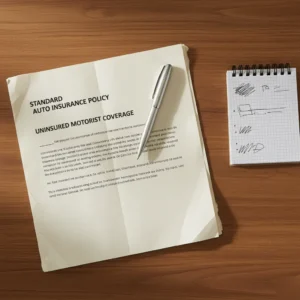
Colorado law gives you real options even when the at-fault driver is never caught. Your hit and run case doesn’t depend on a criminal conviction, or even an arrest. The criminal side and the civil side run on separate tracks. Police might close their file, but your right to recover money for your injuries stays open.
Here’s what actually matters. You have your own insurance policy. Buried inside it is a coverage type called uninsured motorist, UM, coverage. Under Colorado law, a hit and run driver who’s never found counts as an “uninsured motorist.” That means your own policy steps in to cover your medical bills, lost wages, and pain and suffering. Most people don’t realize this until it’s too late.
“I have people tell me all the time, ‘I’ve been dealing with this insurance company for 20 years and they’ve always treated me great.’ And I say, ‘Have you ever made a claim?’ and they say, ‘no.’ Well, ok, so the person who has been taking your money has been treating you great. Not surprising. Wait till you go to the claims department.”, Jason Jordan, Founding Partner
That’s exactly what we see play out. Your insurer collected your premiums for years. Now you need them to pay. And suddenly the relationship changes.
The UM Claim Is Your Real Path Forward
Filing a UM claim against your own insurer is the most common way to recover after a hit-and-run accident where the driver disappears. If you’re looking for a Denver hit-and-run accident lawyer, Jordan Law can help you understand your options and pursue the compensation you deserve. But your insurance company isn’t just going to hand you a fair check. They’ll question whether the hit-and-run actually happened. They’ll argue your injuries were pre-existing. They’ll push a number on pain and suffering that doesn’t come close to what you’ve been through.
If your insurer acts unreasonably in handling your UM claim, Colorado’s bad faith insurance statute may apply. Under C.R.S. § 10-3-1116, you may be able to recover double damages plus attorney fees when an insurer unreasonably delays or denies a covered claim. Many policyholders have no idea this protection exists.
Time Limits Still Apply
Even without a known driver, the clock is running. Colorado’s statute of limitations for motor vehicle accidents is three years under C.R.S. § 13-80-101. Miss that deadline and your case is gone, no matter how strong your evidence was.
There’s a separate trap, too. Your UM policy likely has its own notice requirements. Some policies demand you report the hit and run within 30 days. Others require a sworn statement. Fail to follow those steps and your insurer will use it against you, count on it.
We’ve seen cases along the I-25 corridor near Arapahoe Road and around the DTC office complexes where a driver clips someone in a parking structure and takes off. No plates, no witnesses, no camera footage. The person sits on it for months thinking nothing can be done. By the time they call us, we’re fighting both the injury and the paperwork problems they created by waiting. (The parking structures along the DTC corridor are a particular blind spot, lots of movement, not always well-lit, and cameras that don’t always cover every level.)
So if you’ve been hit in Greenwood Village and the driver vanished, understand this: you still have a case. The path just runs through your own insurance policy instead of the other driver’s. And that path requires a lawyer who knows how to fight an insurer, not just negotiate with one. Visit our hit and run accident lawyer page to see how we handle these claims.
Colorado’s Physical Contact Rule Affects How Your UM Claim Is Filed
Here’s where Colorado law gets tricky. It’s the part most people don’t know about until it’s too late. An uninsured motorist accident lawyer can help you understand your rights and explore your options when the driver responsible for your injuries cannot be identified.
If the driver who hit you is never found, you’ll typically file a claim under your own uninsured motorist (UM) coverage. But Colorado has what’s called a “physical contact rule.” Your insurance company can require proof that the other vehicle actually touched your car before they’ll pay out on a UM claim involving an unknown driver.
Think about that. Someone runs you off the road near the I-25 and Arapahoe interchange, you swerve into a guardrail, and they keep going. You’ve got a smashed car and a hurt back. But if that other vehicle never actually made contact with yours, your own insurer might deny the claim entirely.
Why This Rule Exists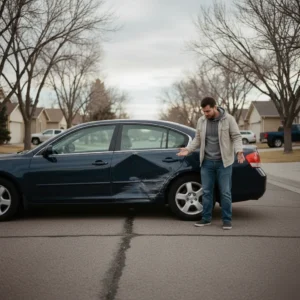
Insurance companies pushed for this rule to prevent fraud. The idea is that without physical contact, anyone could claim a “phantom vehicle” caused their crash. Colorado courts have upheld the requirement in many UM policies. Your insurer will look for paint transfer, scrape marks, dents from the other car, anything that proves the vehicles touched.
We’ve seen this play out dozens of times. A client comes in with clear injuries, a police report, maybe even a witness who saw the other car. But the insurance company points to the policy language and says no contact means no coverage. It’s one of the more frustrating arguments we deal with, because the person sitting across from us is genuinely hurt.
What Counts as Physical Contact
Contact doesn’t have to be dramatic. A sideswipe counts. A bumper tap counts. Even debris kicked up by the fleeing vehicle that strikes your car can sometimes qualify. The key is documenting it immediately.
That’s why what you do at the scene matters so much. Photos of every scratch, every mark, every piece of broken plastic on the ground. If there’s paint from another vehicle on your door panel, that single detail could be the difference between a paid claim and a denial. Don’t wait for the adjuster to come look, take the photos yourself, right then.
Exceptions and Workarounds
Not every UM policy in Colorado includes the physical contact requirement. Some policies cover “miss and run” scenarios where no contact happened. You need to pull your actual policy and read the UM section, or have an attorney read it for you.
And here’s something most policyholders never learn. Even if your policy does include the physical contact requirement, Colorado courts have recognized exceptions when there’s strong independent witness testimony. A witness who wasn’t in your car, who saw the other vehicle force you off the road, can sometimes overcome the contact rule. The witness has to be truly independent, though. Your passenger’s statement alone usually won’t do it.
We had a client hit near the Orchard Road corridor by a truck that clipped their mirror and kept going. The mirror was destroyed, so the physical evidence was ambiguous. But a driver two cars back saw the whole thing and gave a statement to Greenwood Village PD. That independent witness saved the claim. One person, right place, right time.
If you’re dealing with a hit and run and you’re not sure whether the physical contact rule applies to your policy, that’s exactly the kind of question a hit and run accident lawyer can answer in a free consultation. The difference between coverage and denial often comes down to details most people wouldn’t think to look for.
Colorado’s three-year statute of limitations for motor vehicle accidents under C.R.S. § 13-80-101 still applies to your UM claim. But your policy may have shorter internal deadlines for reporting. Don’t wait.
For a free legal consultation, call (303) 465-8733
Steps to Take Right Now to Protect Your Hit and Run Claim
The first 48 hours after a hit and run matter more than most people think. We’ve seen cases where a client did everything right at the scene but lost ground because they waited too long on one or two key steps.
File a police report with the Greenwood Village Police Department. If you haven’t already, call their non-emergency line. You need this report on file. It creates an official record of the hit and run, and your insurance company will ask for it. Without it, you’re starting from behind. The report number becomes the backbone of your claim.
Document everything you remember about the other vehicle. Color, make, model, partial plate numbers, damage to the car, which direction it went. Even small details help. We’ve had clients remember a bumper sticker or a cracked taillight that led investigators to the right car. Write it down now, before the details fade.
Get medical treatment today. Not tomorrow. Go to a hospital or urgent care near Greenwood Village and tell them exactly what happened. Sky Ridge Medical Center is close. Your medical records need to connect your injuries to this hit and run. Insurance adjusters love gaps in treatment, they’ll argue you weren’t really hurt if you waited.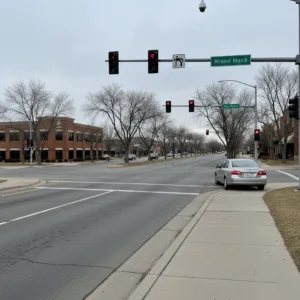
Gather any available evidence from the scene. If you were hit near the DTC area or along Arapahoe Road, check for nearby businesses with security cameras. Gas stations, restaurants, office buildings. Ask them to save footage before it’s recorded over. Most surveillance systems overwrite within 72 hours. That footage could be the only thing that identifies the driver, or at minimum, confirms the other vehicle existed.
Talk to witnesses before they disappear. Did anyone stop? Did someone honk or pull over? Get their names and phone numbers. A witness who saw the car leave can describe details you missed, and their statement carries real weight with insurance companies.
Notify your own insurance company. This is the step people skip because it feels wrong. You didn’t cause this. But your uninsured motorist coverage exists for exactly this situation. You’re not filing against yourself. You’re using coverage you’ve been paying for. Tell your insurer about the hit and run, give them the police report number, and keep the conversation short. Don’t give a recorded statement without talking to a hit and run accident lawyer first.
One thing we see all the time is people assuming the case is dead because the other driver left. So they don’t bother protecting their own claim.
That’s a mistake. Your UM/UIM policy doesn’t need a caught driver. It needs proof that an unidentified vehicle caused your injuries. Every piece of evidence you collect right now builds that proof. The police report, the medical records, the witness statements, the camera footage, all of it adds up, and all of it can be lost if you wait.
Under Colorado law, specifically C.R.S. § 10-3-1116, if your insurer unreasonably denies or delays your UM claim, you may be entitled to double damages plus attorney fees. That’s the bad faith statute. It gives you real leverage, but only if your claim is properly documented from day one. Insurance companies count on you not knowing this.
If you’re not sure whether you’ve covered all these steps, our hit and run accident lawyers can review what you have and tell you what’s missing. That conversation costs nothing.
Frequently Asked Questions
Does my hit and run case in Greenwood Village end if the police close their investigation?
No — your civil case stays open even after police stop looking. The criminal and civil sides run on separate tracks. Police closing a file has no effect on your right to file an insurance claim. In Greenwood Village, your best path forward is usually a uninsured motorist (UM) claim through your own policy. The driver being unknown doesn’t erase your options. It just changes where you look for recovery.
What is the physical contact rule, and how does it affect hit and run claims in Colorado?
Colorado’s physical contact rule means your insurer can require proof the other vehicle actually touched yours before paying a UM claim. If a car runs you off the road near the I-25 and Arapahoe interchange but never makes contact, your insurer may deny the claim entirely. Document every scratch, paint transfer, and dent at the scene yourself. Those photos can be the difference between a paid claim and a flat denial.
How long do I have to file a hit and run claim in Greenwood Village if the driver is never found?
Colorado’s statute of limitations for motor vehicle accidents is three years under C.R.S. § 13-80-101. But your own UM policy may have shorter internal deadlines — some require you to report the hit and run within 30 days. Missing those notice requirements gives your insurer a reason to deny your claim. Don’t wait months assuming nothing can be done. The clock starts the day of the crash.
Is it a mistake to handle a hit and run UM claim on your own without a lawyer?
For most people, yes. Your own insurer is not on your side once you file a claim. They will question whether the hit and run happened, argue your injuries were pre-existing, and offer low numbers on pain and suffering. Colorado’s bad faith statute (C.R.S. § 10-3-1116) allows double damages if your insurer unreasonably delays or denies a valid claim — but only if you know to pursue it. Our hit and run accident lawyer page explains how these claims are handled.
Are parking lots and garages in the DTC area a common spot for hit and run incidents in Greenwood Village?
Yes, the parking structures along the DTC corridor are a known blind spot. There’s heavy vehicle movement, inconsistent lighting, and security cameras that don’t always cover every level. A driver can clip your car and disappear quickly. If this happens to you, photograph every mark on your vehicle immediately. Don’t assume the garage has footage — confirm it, and confirm it fast before it’s overwritten.
What’s a common misconception people in Greenwood Village have about uninsured motorist coverage after a hit and run?
Most people think UM coverage only applies when the other driver has no insurance. That’s not the full picture. Under Colorado law, a hit and run driver who is never identified counts as an uninsured motorist. Your own policy can cover medical bills, lost wages, and pain and suffering — even when no one is ever caught. Many policyholders carry this coverage for years without knowing what it actually protects them from.