


What Happens to Your Case When the Driver Is Never Found
This is the question we hear most often from hit and run victims in Greenwood Village. “If they never catch the driver, do I just have nothing?” No. You don’t have nothing. But the path changes.
When the at-fault driver disappears, your claim shifts from their insurance to yours. Specifically, it moves to your uninsured motorist (UM) coverage under your own auto policy. Colorado law treats a hit and run driver the same as an uninsured driver. Your UM coverage can pay for medical bills, lost wages, and pain and suffering. Most people don’t realize they’ve been paying for this protection for years.
Here’s what catches people off guard. Your own insurance company is not on your side in a UM claim. They owe you the money, so now they’re the opposing party. They’ll use the same tactics they’d use against a stranger. They’ll question the severity of your injuries. They’ll argue you were partly at fault. They’ll drag their feet on medical records. Most people don’t know this going in.
And if your insurer acts unreasonably, Colorado has a tool for that. Under C.R.S. § 10-3-1116, if an insurance company unreasonably delays or denies a covered claim, you can recover double damages plus attorney fees. That’s the bad faith statute. It has real teeth.
We’ve handled cases along the DTC Parkway corridor where a driver clipped someone in a parking lot and took off. No plate number. No witnesses who stuck around. Police couldn’t identify the driver. Our client had solid UM coverage, we documented everything from day one, and we recovered a fair result through their own policy.
About 15 percent of Colorado drivers carry no insurance at all. So even when police do find the driver, there’s a decent chance they’re uninsured anyway. Your UM coverage matters either way. As an experienced personal injury attorney, the real question isn’t whether the other driver gets caught — it’s whether you have the right lawyer pushing your own insurer to pay what they owe. That’s the fight and how to win it.

For a free legal consultation with a Personal Injury lawyer serving Greenwood Village, call (303) 465-8733
Why Your Own Insurance Company Is Not on Your Side
This is the part that catches people off guard. The driver who hit you is gone. So you file a claim under your own uninsured motorist coverage. And you expect your insurer to help. They don’t.
Your own insurance company turns into your opponent the moment you file a UM claim. We see this constantly with hit and run cases in Greenwood Village. The adjuster sounds friendly on the phone, asks how you’re doing, maybe even says they’re sorry about what happened. Then the lowball offer shows up. Or the denial letter. Or the request for a recorded statement designed to trip you up.
“I have people tell me all the time, ‘I’ve been dealing with this insurance company for 20 years and they’ve always treated me great.’ And I say, ‘Have you ever made a claim?’ and they say, ‘no.’ Well, ok, so the person who has been taking your money has been treating you great. Not surprising. Wait till you go to the claims department.”, Jason Jordan, Founding Partner
They’ll argue comparative negligence under C.R.S. § 13-21-111, claiming you could have braked sooner or were somehow partly at fault. They’ll say your injuries were pre-existing. They’ll drag out the process hoping you’ll get tired and settle. Nine times out of ten it’s the same playbook.
Here’s what makes Colorado different. Under C.R.S. § 10-3-1116, if your insurer unreasonably denies or delays your claim, you can pursue bad faith damages. That means double the covered benefit plus attorney fees. It’s a real consequence, and it changes the math for insurers who try to stonewall legitimate claims. But you have to know the statute exists to use it.
Clients near the Landmark area or along the DTC Parkway corridor call us after weeks of getting nowhere with their own carrier. The adjuster keeps asking for more records, more time, more patience. That’s not processing. That’s a strategy. And it works on people who don’t have a lawyer pushing back. We’ve recovered over $550 million in verdicts and settlements, a good portion of that from fights with our own clients’ insurers. Your policy is a contract. They owe you what it says. We make sure they pay it.
The 48-Hour Evidence Window in the DTC Corridor
Most hit and run cases in Greenwood Village are won or lost in the first two days. Not weeks. Not months. Two days.
Here’s what happens. A driver clips your car at the Belleview and I-25 interchange, or side-swipes you in a parking garage off DTC Boulevard, then takes off. You’re shaken up. Maybe hurt. You go home, figure you’ll deal with it tomorrow. But while you’re icing your neck, evidence is already disappearing.
The DTC corridor is packed with commercial properties, office towers, and retail centers. Every one of them has security cameras. And almost every one of those systems overwrites footage on a 48 to 72 hour loop. We’ve seen this play out hundreds of times. A client calls us five days after a hit and run near Fiddler’s Green, and by the time we contact the property manager, the footage is gone. That’s a witness you can never get back.
So the clock starts the second that other driver leaves the scene. Our team moves fast on these cases because exactly what to chase and where to find it.
Traffic cameras and signals along Arapahoe Road and Orchard Road often capture plate numbers or vehicle descriptions that witnesses miss entirely. We send preservation letters to CDOT and the City of Greenwood Village before those records cycle out. Nearby business footage from gas stations, restaurants, and office lobbies can fill in gaps that traffic cameras don’t cover. We’ve pulled critical footage from a sandwich shop camera that happened to face the right direction. Witness identification matters too. People who saw the crash from a crosswalk or a parking lot will remember details on day one that they won’t recall two weeks later.
Insurers don’t send investigators to grab surveillance footage on your behalf. That’s not their job, and frankly it’s not in their interest. The less evidence you have, the easier your claim is to deny or lowball. We treat every hit and run like a trial case from hour one, because the evidence that makes the difference won’t wait for you to feel ready.

Greenwood Village Hit And Run Lawyer Near Me (303) 465-8733
How a Hit and Run Claim Moves From Incident to Resolution
Most people think a hit and run case just stalls if the driver isn’t found. That’s not how it works. We move these cases forward every day in Greenwood Village, whether police locate the other driver or not.
The process has a clear sequence, and skipping steps costs people money.
Step one is evidence lockdown. We send preservation letters to every business near the crash site that might have surveillance footage. Along Orchard Road and the DTC corridor, that often means office complexes, parking garages, and retail storefronts. Footage gets overwritten in days. Sometimes hours. So this happens immediately. We also pull the police report, request any traffic camera data from Greenwood Village PD, and gather witness statements before memories fade.
Step two is identifying every available insurance path. If the at-fault driver is found, we go after their liability policy. If they’re not found, or they’re uninsured, we file under your own uninsured motorist coverage. Colorado has roughly 15% uninsured drivers on the road, so UM claims aren’t unusual here. And here’s something most people never find out: your own insurer will fight your UM claim just as hard as the other driver’s insurer would. They’re not on your side in that situation. Bad faith handling of a UM claim can trigger double damages plus attorney fees under C.R.S. § 10-3-1116.
Step three is building the full damage picture. Medical records, lost wages, future treatment needs. We work with your doctors to document everything before we ever send a demand.
Step four is demand and negotiation. If the insurer lowballs you, we don’t just ask again nicely. We file suit. Insurance companies know which firms actually take cases to trial. That reputation changes the math on every offer. We’ve recovered over $550 million in verdicts and settlements because adjusters understand we mean it when we say we’ll try a case.
You’ve got three years from the crash date to file a motor vehicle claim under C.R.S. § 13-80-101. But waiting costs you evidence. The sooner we start, the stronger your case gets.
Parking Lot Hit and Runs Require a Different Legal Approach
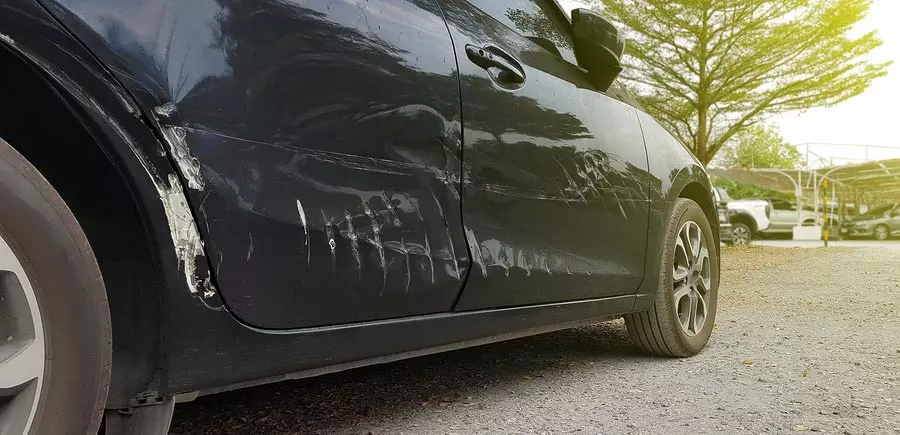
You come back to your car at Park Meadows or one of the office complexes along DTC Boulevard and find a dent, scraped paint, no note. Or worse, you’re walking through the lot and a driver clips you, then takes off. We handle these cases all the time in Greenwood Village, and they’re not the same as a hit and run on a public road.
Here’s the difference that matters. Most parking lots are private property. That changes things. Colorado traffic laws apply on public roads, but on private property the legal framework shifts toward premises liability and general negligence. The lot owner may have a duty to maintain safe conditions and proper lighting. When a hit and run happens in a dark corner of a poorly maintained lot, the property owner could share liability under C.R.S. § 13-21-115.
We dig into that angle hard.
Surveillance footage is the biggest factor in these cases, and it disappears fast. Most commercial properties overwrite their camera footage within 72 hours. Some do it in 24. So the clock starts the second that driver leaves. We send preservation letters immediately to the property owner and management company. That letter creates a legal obligation to save the footage. Without it, your evidence gets taped over before you even file a police report.
Nine times out of ten, the person who hit your car also hit a camera’s field of view. But you need someone who knows to ask for it right away. Insurance companies won’t do that work for you. They’ll process your claim based on whatever you hand them, pay as little as possible, and move on.
And here’s something people don’t expect. Colorado’s modified comparative negligence rule under C.R.S. § 13-21-111 can come into play even in a parking lot. The other driver’s insurer might argue you were partially at fault for where you parked or how you were walking. If they push your fault to 50% or higher, your recovery drops to zero. We’ve seen insurers try this with parking lot cases specifically because the rules feel murky to most people. They count on you not pushing back.
Need help with a parking lot hit and run? Give us a call before that footage gets erased.
Click to contact our personal injury lawyers today
Frequently Asked Questions
What happens to my hit and run case if the driver is never caught in Greenwood Village?
Your case moves to your own uninsured motorist (UM) coverage when the driver disappears. Colorado law treats a hit and run driver the same as an uninsured driver. Your UM policy can cover medical bills, lost wages, and pain and suffering. About 15 percent of Colorado drivers carry no insurance, so this coverage matters even when police do find the driver. The key is having a lawyer push your own insurer to pay what your policy actually says they owe.
Why would my own insurance company fight my hit and run claim?
Your insurer becomes your opponent the moment you file a UM claim. They may sound friendly at first, but then come the lowball offers, delays, and requests for recorded statements designed to trip you up. They may argue you were partly at fault or that your injuries were pre-existing. Under Colorado law, C.R.S. § 10-3-1116, if your insurer unreasonably delays or denies your claim, you can recover double damages plus attorney fees. Knowing that statute exists — and using it — changes everything.
How quickly do I need to act after a hit and run accident near the DTC corridor?
You need to act within 48 hours. Security cameras at office towers, retail centers, and parking garages along DTC Boulevard overwrite footage on a 48 to 72 hour loop. Once that window closes, that evidence is gone for good. Traffic cameras along Arapahoe Road and Orchard Road can capture plate numbers witnesses miss. A lawyer can send preservation letters to CDOT and the City of Greenwood Village right away, before those records cycle out.
Do I need a police report to file a hit and run claim in Greenwood Village?
Yes, filing a police report right away protects your claim. Most insurance policies require you to report a hit and run to law enforcement before you can use your UM coverage. The report creates an official record of the incident date, location, and your injuries. Even if police cannot identify the driver, that report is a key document your lawyer will use when dealing with your insurer. Do not skip this step, even if the damage looks minor at first.
What if I only have minor injuries right after the accident — should I still call a lawyer?
Yes, call a lawyer before you talk to your insurance company. Injuries from hit and run crashes often feel minor at first and worsen over the next 24 to 72 hours. If you give a recorded statement downplaying your pain and then need treatment later, your insurer will use that statement against you. A lawyer helps you document everything correctly from day one, so your medical records and your claim tell the same story when it matters most.
Can I recover compensation if the hit and run happened in a parking lot near Fiddler’s Green or the Landmark area?
Yes, parking lot hit and run accidents are fully covered under your UM policy in Colorado. Private lots near Fiddler’s Green or the Landmark area often have security cameras that capture the incident. The challenge is acting fast before that footage is overwritten. A lawyer can contact property managers and send legal preservation notices within hours of your call. These cases are winnable — the evidence just has to be secured before it disappears.