
You pay premiums every month for a reason. When the other driver takes off, your own policy is supposed to step in, that’s the whole point of carrying coverage beyond the state minimum. But most people don’t realize how many parts of their policy could apply until they’re staring at a denied claim.
Here’s what should kick in after a hit and run in Colorado.
Uninsured motorist coverage (UM) is the big one. Colorado law treats a hit and run driver as an uninsured motorist because they can’t be identified. Your UM coverage should pay for your medical bills, lost wages, and pain and suffering up to your policy limits. We see Greenwood Village residents who carry solid UM limits but don’t even know it, they’ve never had to use it before.
Collision coverage handles the damage to your car. It pays to fix or replace your vehicle regardless of who caused the crash. You’ll have a deductible. But the repair costs should be covered. If someone clips your car in a parking garage near the DTC and drives off, collision is what gets your bumper fixed.
Medical payments coverage (MedPay) is a no-fault benefit. It covers medical expenses for you and your passengers no matter who caused the accident. MedPay doesn’t require you to prove anything about the other driver. It just pays. Most Colorado policies include it unless you specifically declined it in writing.
And here’s one people forget about. Rental car reimbursement should cover a loaner while yours is in the shop. Small line item on your policy. But it matters when you’re trying to get to work along I-25 every morning and your car is sitting at a body shop somewhere off Arapahoe Road.
So why does your insurer push back on any of this? Because every dollar they pay you comes out of their pocket. There’s no other driver’s insurance to chase. No one to subrogate against. The hit and run driver vanished, your insurer is the only one writing a check.
That changes the math for them. Fast.
Here’s something most policyholders never learn: under Colorado’s bad faith statute, C.R.S. § 10-3-1116, if your insurer unreasonably denies or delays your claim, you could be entitled to double the covered benefit plus attorney fees. That law exists because the legislature knew insurers would try to shortchange their own policyholders. We’ve seen this play out hundreds of times at our office right here in Greenwood Village.
“I have people tell me all the time, ‘I’ve been dealing with this insurance company for 20 years and they’ve always treated me great.’ And I say, ‘Have you ever made a claim?’ and they say, ‘no.’ Well, ok, so the person who has been taking your money has been treating you great. Not surprising. Wait till you go to the claims department.”, Jason Jordan, Founding Partner
Your policy has multiple coverage types that should apply after a hit and run. UM for bodily injury. Collision for vehicle damage. MedPay for immediate medical costs. If your insurer is fighting you on any of these, something is wrong with how they’re handling your claim, not with your right to collect.
If you’re already dealing with pushback from your own insurer, our Hit and Run Accident Lawyer page walks through exactly how we handle these disputes and what your next steps should look like.
The Most Common Reasons Insurers Deny or Dispute Hit and Run Claims
You’d think filing a claim with your own insurance company would be straightforward. You pay premiums. You got hit. The other driver fled. But insurers push back anyway, and the reasons usually fall into a handful of categories we see over and over.
“Insufficient proof” that a hit and run actually happened. This is the most common one. Your insurer may claim there’s not enough evidence that another vehicle caused the damage. Maybe there’s no police report. Maybe nobody saw it. Maybe the damage pattern doesn’t clearly show a second vehicle was involved. Insurance adjusters in Greenwood Village sometimes argue that you hit a pole or a curb and are calling it a hit and run. That sounds insulting. But they do it because it works, people get frustrated and give up.
Late reporting. Colorado doesn’t set a specific hour-by-hour deadline for reporting a hit and run to your insurer, but your policy almost certainly does. Most policies require “prompt” or “timely” notice. If you waited a few days before calling, the insurer may use that gap to question whether the accident happened the way you say it did. We’ve seen claims denied over a 48-hour delay.
Policy coverage disputes. Not every auto policy in Colorado includes uninsured motorist coverage. Your insurer might argue your specific policy doesn’t cover this scenario. Or they might say the damage falls under collision coverage instead of UM coverage, which could mean a higher deductible or different limits. The distinction matters more than most people realize.
And here’s one that catches people off guard.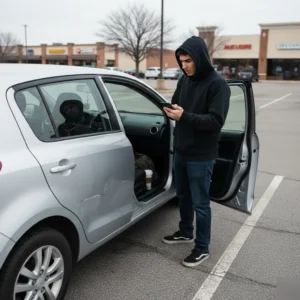
Comparative negligence arguments. Under Colorado’s modified comparative negligence rule (C.R.S. § 13-21-111), your insurer can argue you were partly at fault. Maybe you were parked illegally near the DTC Parkway corridor. Maybe they claim you failed to brake or weren’t paying attention. If they push your fault to 50% or higher, your recovery drops to zero. Most policyholders have no idea this argument is even on the table, insurance companies count on that.
Disputing the extent of your injuries or damage. Even when they accept the hit and run happened, insurers often fight over how much your claim is worth. They’ll question whether your medical treatment was necessary. They’ll argue the property damage was pre-existing. They’ll send you to an independent medical exam with a doctor they chose, not you.
Here’s a real scenario we handled. A driver got sideswiped on Arapahoe Road, the other car took off, and our client filed a claim the same day. The insurer accepted that a hit and run occurred but then spent three months arguing the neck injury was from a prior car accident five years earlier. That’s not unusual. That’s the playbook.
If your insurer is unreasonably denying or delaying your hit and run claim, Colorado law gives you a tool. C.R.S. § 10-3-1116 allows you to pursue bad faith insurance claims, which can mean double damages plus attorney fees. But you need to know the law exists to use it. Our hit and run accident lawyers can walk you through what your policy actually says and what your insurer is required to do under Colorado law.
For a free legal consultation, call (303) 465-8733
How Colorado’s UM/UIM Laws Shape Your Hit and Run Claim
Here’s something most people don’t realize until it’s too late. When the other driver flees, your own uninsured motorist coverage is the policy that pays. That’s called UM/UIM coverage, uninsured/underinsured motorist. In Colorado, this coverage exists for exactly this situation: a hit and run where the at-fault driver can’t be found.
But your insurance company doesn’t just hand over the money.
They treat your UM claim like a fight. They’ll question your injuries. They’ll dispute the cause of the crash. They’ll drag their feet on payments. We’ve seen this play out hundreds of times right here in Greenwood Village, where someone gets hit on I-25 near the Arapahoe Road interchange, the other car vanishes, and suddenly their own insurer starts acting like the opposing team.
What Colorado Law Actually Requires
Colorado requires every auto insurance policy to include UM/UIM coverage unless you reject it in writing. That matters. If you never signed a written rejection, you have this coverage even if you didn’t know it. The minimum UM/UIM limits match the state minimum liability limits, $25,000 per person and $50,000 per accident.
Many Greenwood Village residents carry higher limits. Some carry $100,000 or $250,000 in UM/UIM coverage. The problem isn’t whether the coverage exists. The problem is getting your insurer to pay it fairly.
Stacking and Resident Relative Coverage
Colorado allows something called “stacking” in certain situations. If you have multiple vehicles on your policy, you may be able to stack the UM/UIM limits from each vehicle. Two cars with $100,000 limits could mean $200,000 in available coverage. Insurers rarely volunteer this information. They’d rather you didn’t know.
There’s also resident relative coverage. If you live with a family member who has their own auto policy with UM/UIM, their coverage might apply to your hit and run claim too. This matters a lot for families in the DTC area where multiple drivers share a household, and it’s exactly the kind of detail adjusters won’t bring up on their own.
By the way, we’ve had clients who discovered they had two separate UM/UIM policies applying to the same accident and had no idea. That kind of coverage overlap doesn’t get flagged by your insurer. It gets found by someone who’s looking for it.
The Bad Faith Angle
This is where Colorado law actually protects you. Under C.R.S. § 10-3-1116, if your insurance company unreasonably denies or delays your hit and run claim, you can pursue a bad faith claim against them. The penalty? Double damages plus attorney fees.
That’s not a small thing.
Say your hit and run claim is worth $80,000 in medical bills and lost wages. If your insurer acts in bad faith by lowballing or stonewalling you, a court can award $160,000 plus your legal costs. Insurance adjusters in Colorado know this statute exists. But they also know most people don’t. So they push the limits until someone pushes back.
We see this pattern constantly. Someone gets rear-ended in a parking lot near Fiddler’s Green or sideswiped on Orchard Road, the other driver takes off, and our client files a UM claim expecting their own insurer to help. Instead they get recorded statements, independent medical exams, and months of silence. That’s not how it’s supposed to work.
And here’s the thing about timing. For motor vehicle accidents in Colorado, you have 3 years to file a claim under C.R.S. § 13-80-101. But waiting too long to push back on a bad faith delay can weaken your position. Evidence disappears. Memories fade. Surveillance footage from nearby businesses gets overwritten, and the commercial corridors along Arapahoe Road and DTC Parkway are full of cameras that recycle every 30 to 60 days. If your insurer is dragging their feet on your hit and run claim, that delay itself could be the basis for a bad faith action. You can learn more about how a hit and run accident lawyer can help protect your rights and hold your insurer accountable.
Frequently Asked Questions
Why would my own insurance company deny a hit and run claim if I’ve been a loyal customer for years?
Your insurer denies claims because every dollar paid comes directly out of their pocket — your loyalty doesn’t change that math. When the other driver flees, there’s no one else to bill. That makes your insurer the only one writing a check, and that changes how they handle your case. A long payment history means they’ve been collecting from you, not paying you. The claims department operates differently than the billing department. Don’t assume past goodwill protects you when money is on the line.
What counts as enough proof that a hit and run actually happened in Greenwood Village?
Strong proof includes a police report, witness contact information, and photos taken at the scene. If your car was hit in a parking garage near the DTC or along the Arapahoe Road corridor, nearby security cameras may also capture footage. Paint transfer on your vehicle can show another car made contact. Without a police report, insurers in Greenwood Village often argue you hit a stationary object and are calling it a hit and run. File a report right away — even if the driver is gone.
What is uninsured motorist coverage, and does it apply to hit and run accidents in Colorado?
Uninsured motorist (UM) coverage applies to hit and run accidents in Colorado because state law treats an unidentified driver the same as an uninsured one. Your UM coverage can pay for medical bills, lost wages, and pain and suffering up to your policy limits. Many Greenwood Village drivers carry solid UM limits but have never had to use them. If your insurer is disputing whether UM applies to your situation, our Hit and Run Accident Lawyer page explains how these disputes work and what your options are.
Can my insurance company argue I was partly at fault in a hit and run?
Yes, your insurer can absolutely argue you share fault — and many do. Under Colorado’s modified comparative negligence rule (C.R.S. § 13-21-111), if your fault reaches 50% or higher, your recovery drops to zero. Insurers may claim you were parked illegally, failed to react in time, or weren’t paying attention. Most policyholders never expect this argument from their own insurance company. It’s one of the most common ways claims get reduced or denied, and it catches people completely off guard.
How does Colorado’s bad faith law protect me if my insurer mishandles my hit and run claim?
Colorado’s bad faith statute (C.R.S. § 10-3-1116) gives you real leverage if your insurer unreasonably denies or delays your claim. If they violate this law, you may be entitled to double the covered benefit plus attorney fees. The legislature passed this law specifically because insurers were shortchanging their own policyholders. This protection applies to Greenwood Village residents just like anyone else in Colorado. Knowing this law exists changes the conversation with your insurance company significantly.
Does it matter how quickly I report a hit and run to my insurance company in Greenwood Village?
Yes — timing matters more than most people realize. Most Colorado auto policies require you to report accidents promptly, even if the exact deadline isn’t spelled out by state law. A delay of even 48 hours can give your insurer a reason to question your story. They may argue that a late report suggests the accident didn’t happen the way you described. Report the incident to your insurer the same day if possible, and file a police report first so you have documentation to back up your account.