
This is where most people get tripped up. And it’s the single biggest reason we see valid RTD bus accident claims die before they ever get started.
Colorado runs two completely different deadlines at the same time after a crash involving an RTD bus. Miss either one, you lose your right to recover. No exceptions. No do-overs.
Deadline #1: The 182-Day CGIA Notice
RTD is a government entity. That means the Colorado Governmental Immunity Act applies to your claim. Under C.R.S. § 24-10-109, you must file a written notice of claim with RTD within 182 days of the accident. That’s roughly six months, not a full year, not three years. Six months.
We’ve seen this play out more times than we’d like to count. Someone gets hurt on an RTD bus near the Arapahoe at Village Center station, right here in Greenwood Village. They focus on getting better. They assume they have plenty of time. Then they call us seven months later, and we have to say the hardest thing we ever have to say.
Your claim is gone.
The 182-day notice isn’t just a formality. It has to include specific information about the incident, your injuries, and the amount of damages you’re claiming. A vague letter won’t cut it. RTD’s claims department isn’t going to remind you this deadline exists, and insurance companies count on you not knowing it.
Deadline #2: The Lawsuit Filing Deadline
Even after you properly file the 182-day notice, you still have a separate statute of limitations for actually filing your lawsuit. For motor vehicle accidents in Colorado, that’s three years under C.R.S. § 13-80-101. But if someone died in the collision, the wrongful death statute of limitations drops to two years under C.R.S. § 13-21-204.
So you’re managing two clocks. The short one kills your case fast. The longer one can sneak up on you while you’re still in treatment.
Most people assume one deadline covers everything. It doesn’t. The CGIA notice is a prerequisite, you can’t skip it and then try to file a lawsuit inside the three-year window. Courts will throw your case out. We’ve watched it happen.
Why This Matters More Than You Think
Here’s a real scenario. You’re a passenger on an RTD bus heading south through the Denver Tech Center. The driver runs a red light at Orchard Road near I-25. You hit your head on the seat in front of you. You go to the ER, get checked out, feel okay after a few weeks. Five months later the headaches start getting worse. A doctor diagnoses a mild traumatic brain injury.
You’ve now burned through five of your six months. You have roughly 30 days to get a proper CGIA notice drafted and delivered to RTD. And that notice has to be done right, because a defective notice is treated the same as no notice at all.
This is exactly why talking to a bus accident lawyer early matters. Not next month. Not after your treatment wraps up. Now.
“It’s very important that you end up with the right attorney, not just the one who advertises the most or has the most clicks online. You want an attorney with significant experience, not only handling this type of work but actually trying cases.”, Jason Jordan, Founding Partner
At Jordan Law, we handle the CGIA notice immediately when a client comes to us with an RTD bus accident claim. We don’t wait. We don’t let that 182-day clock run while paperwork sits on a desk. Because once it expires, no amount of trial experience brings your claim back.
RTD Is a Government Entity, and That Changes the Rules for Your Claim
RTD isn’t a private bus company. It’s a government entity. That one fact changes almost everything about how your claim works.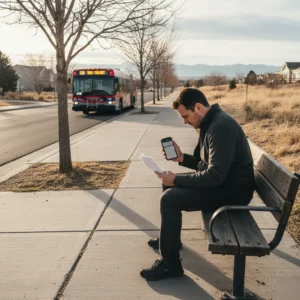
Colorado’s Governmental Immunity Act, the CGIA, found at C.R.S. § 24-10-109, sets special rules for claims against government agencies like RTD, the City of Denver, CDOT, and others. The biggest rule: you have to give written notice of your claim within 182 days of the crash. Not six months to file a lawsuit. Six months to send a formal written notice to RTD telling them you were hurt and intend to seek compensation.
Miss that window, your claim is dead.
We’ve seen this play out too many times. Someone gets hurt on an RTD bus near the Arapahoe at Village Center station in Greenwood Village, one of the busier light rail stops along the southeast corridor. They focus on getting better. They assume they have years to figure out the legal side. By the time they call us, the 182 days have passed. The law is that strict, and there’s nothing we can do at that point.
Why 182 Days Instead of Three Years?
You may have heard that Colorado gives you three years to file a motor vehicle accident claim under C.R.S. § 13-80-101. That’s true for crashes involving private drivers, rideshare vehicles, delivery trucks. RTD operates under different rules because of its government status. The three-year statute of limitations still applies to your actual lawsuit, the 182-day notice requirement is a separate, earlier deadline you have to hit first.
Think of it as a two-step process. Step one is the notice. Step two is the lawsuit. Skip step one, you never get to step two.
What the Notice Has to Include
The written notice to RTD can’t be vague. Colorado law requires specific information: the date and location of the accident, a description of what happened, the injuries you suffered, and the amount of damages you’re claiming. Getting any of these details wrong, or leaving them out, can give RTD grounds to reject your notice entirely.
RTD’s claims adjusters aren’t going to call you and walk you through the requirements. Nobody from RTD is going to remind you about the 182-day deadline. That’s by design. Insurance companies count on you not knowing this.
We handle RTD bus accident claims from our office right here in Greenwood Village at 5445 DTC Parkway, Suite 1000. One thing we tell every client: don’t wait to see how your injuries develop before reaching out. You can continue treating while the legal process moves forward. You can’t go back in time to meet a deadline you didn’t know existed.
If the crash resulted in a death, the wrongful death statute of limitations is two years under C.R.S. § 13-21-204. But the 182-day CGIA notice requirement still sits on top of that. Families of someone killed in an RTD crash have every reason to act fast, and then some.
If you or someone in your family was hurt in a collision involving an RTD bus, the smartest move is talking to a bus accident lawyer as early as possible. The 182-day clock starts the day of the crash, not the day you decide to take action.
For a free legal consultation, call (303) 465-8733
What to Do Immediately After an RTD Bus Accident
The first 24 hours after a bus crash matter more than most people realize. What you do right now shapes everything that comes later, your medical care, your claim, your ability to hold RTD accountable. We’ve seen strong cases fall apart because someone waited too long or skipped a step they didn’t know about.
Call 911 and stay at the scene. You need a police report. RTD buses run routes throughout the Denver Tech Center, along Arapahoe Road, and past the Orchard and Arapahoe at Village Center light rail stations in Greenwood Village. Officers responding to these scenes document the bus number, the driver’s information, and witness statements. That report becomes a key piece of evidence. Don’t leave before officers arrive.
Get medical attention that same day. Even if you feel okay. Bus accidents often cause soft tissue injuries, whiplash, and concussions that don’t show symptoms for hours or days. Sky Ridge Medical Center is close, go there, or another nearby ER. Tell them exactly what happened. The records created that day connect your injuries directly to the crash. Insurance adjusters look for gaps in treatment and will use any delay against you.
Document everything at the scene. Use your phone. Photograph the bus, its route number, the interior where you were sitting, any visible damage, and the surrounding intersection. Get names and phone numbers from other passengers. RTD buses carry multiple riders, and those witnesses can confirm what happened. People scatter fast after an accident, you won’t find them later.
Report the incident to RTD. This is separate from the police report. RTD has its own internal process. But here’s the part most people miss: do not confuse RTD’s incident report with the legal notice you’re required to file under the Colorado Governmental Immunity Act. Those are two different things. Filing a report with RTD’s customer service line does not protect your legal rights.
Do not give a recorded statement to any insurance adjuster. Not RTD’s insurer. Not your own. Adjusters call quickly. They sound friendly. They’ll ask you to describe what happened “just so we can get things moving.” What they’re really doing is locking you into a statement before you fully understand your injuries. We’ve seen this play out hundreds of times. Politely decline and tell them your attorney will be in touch.
Contact a bus accident lawyer before the 182-day CGIA deadline starts running away from you. RTD is a government entity, which means the Colorado Governmental Immunity Act applies under C.R.S. § 24-10-109. You must file a written notice of claim within 182 days. Miss it and your case is likely gone. No extensions. Most personal injury claims give you two or three years, this one gives you roughly six months, and that clock started the day of your accident.
Here’s a scenario we see regularly. Someone gets hurt on an RTD bus near the I-25 and Orchard Road interchange, a stretch that sees real bus traffic during the morning commute. They go to the doctor, feel better after a few weeks, figure they’ll deal with it later. Three months pass. Then the pain comes back worse. By the time they call us, they’ve burned through half their notice period without knowing it existed.
If you or someone you know was hurt on an RTD bus in Greenwood Village, visit our bus accident lawyer page to learn how the CGIA notice process works and what Jordan Law can do to protect your claim from day one.
Frequently Asked Questions
What is the 182-day CGIA notice deadline for RTD bus accidents in Greenwood Village?
The 182-day deadline is a written notice you must send to RTD within six months of your accident. RTD is a government agency, so Colorado’s Governmental Immunity Act (C.R.S. § 24-10-109) applies. This notice must include the accident date, location, your injuries, and the damages you’re claiming. A vague letter won’t work. If you were hurt near the Arapahoe at Village Center station in Greenwood Village, that clock starts the day of the crash — not the day your symptoms get worse.
Does the three-year Colorado statute of limitations cover my RTD bus accident claim?
The three-year deadline under C.R.S. § 13-80-101 applies to your lawsuit, but it does not replace the 182-day CGIA notice. You have to hit both deadlines. Miss the 182-day notice, and courts will throw out your case even if you file your lawsuit within three years. Think of it as two separate steps. Step one is the notice. Step two is the lawsuit. You cannot skip step one.
What happens if my injuries got worse after the RTD accident — does that reset my deadline?
No, the 182-day clock does not reset when new symptoms appear. It starts on the date of the accident. This catches a lot of people off guard. You might feel okay at first, then develop headaches or a brain injury diagnosis weeks later. By then, you may have already burned through most of your six months. Waiting to see how your injuries develop before taking action is one of the most common mistakes in RTD bus accident claims.
Is the deadline different if someone died in an RTD bus accident in Greenwood Village?
Yes. If someone died in the collision, the wrongful death statute of limitations drops to two years under C.R.S. § 13-21-204, which is shorter than the standard three-year window. The 182-day CGIA notice requirement still applies on top of that. Families dealing with a loss near areas like the Denver Tech Center or along the southeast RTD corridor in Greenwood Village face the same strict government notice rules as injury claims.
Why does it matter that RTD is a government agency and not a private bus company?
It matters because government agencies in Colorado operate under the Governmental Immunity Act, which adds an extra legal step before you can sue. Private bus companies do not have this protection. With RTD, you must file a formal written notice before you can even get to a lawsuit. That extra step has a shorter deadline — 182 days — and it is not something RTD or its insurance adjusters will remind you about. For more on how RTD accident claims work, see our RTD bus accident claims page.
What information must be included in the written CGIA notice to RTD after a Greenwood Village bus accident?
Colorado law requires your notice to include the date and location of the accident, a description of what happened, the injuries you suffered, and the amount of damages you are claiming. Leaving out any of these details can give RTD grounds to reject your notice entirely. A rejected notice is treated the same as no notice at all. Getting this document right from the start is the reason many people reach out to a bus accident attorney before the 182 days run out.