
Most people assume one person caused the crash. One driver. One mistake. Bus accidents in this part of Colorado almost never work that way. We’ve seen cases where three, four, even five parties share blame for a single collision near the I-25 and Arapahoe Road interchange.
That matters to you because Colorado runs on modified comparative negligence under C.R.S. § 13-21-111. Each party gets assigned a percentage of fault. You can recover as long as you’re less than 50% at fault, but insurance companies will push hard to argue you share blame. They’ll point to things like crossing outside a crosswalk or not braking fast enough. Identifying every liable party isn’t just a legal strategy, it’s how you protect your own percentage.
Here’s who we look at in a typical bus accident case in the DTC area.
The Bus Driver
This is the obvious one. A driver who runs a red light at Orchard Road and DTC Boulevard, or rear-ends your car while distracted, is personally negligent. But a bus driver’s personal insurance rarely covers the full cost of serious injuries. You need to look deeper.
The Bus Company or Transit Authority
If the driver works for RTD, you’re dealing with a government entity. That triggers the Colorado Governmental Immunity Act. You must file a written notice within 182 days under C.R.S. § 24-10-109. Miss that deadline and your claim dies. We’ve seen people lose real cases because nobody told them about this clock, not the ER, not their own insurance adjuster, nobody.
Private charter companies and corporate shuttle operators in the DTC corridor follow different rules. Their liability flows through standard employer responsibility. The company that hired the driver, trained the driver, and maintained the bus answers for what went wrong.
Maintenance Contractors and Vehicle Manufacturers
Bad brakes. Worn tires. A steering system that failed at Belleview Avenue during rush hour. If the bus had a mechanical defect, the company responsible for maintenance is on the hook. And if the defect traces back to how the bus was built, product liability under C.R.S. § 13-21-401 pulls the manufacturer into the case. Strict liability applies there, you don’t need to prove negligence, just that the product was defective and caused your injury.
Other Drivers
Sometimes a third vehicle starts the chain reaction. A distracted driver swerving near Fiddler’s Green forces the bus into your lane. That driver shares fault too. We pull dashcam footage, traffic camera data, and witness statements to build this picture.
Government Entities Responsible for Road Conditions
Greenwood Village, Arapahoe County, and CDOT each maintain different stretches of road in the DTC area. A missing traffic signal, faded lane markings, or a construction zone without proper signage can all play a role in a bus accident. Claims against these entities also require the 182-day CGIA notice, same deadline, same consequences if you miss it.
Insurance companies count on you not knowing any of this. They want you to settle with one party fast, before you realize others share blame. That’s how they pay less.
“Insurance companies know which firms actually take cases to trial, and that affects how your case is handled. A lot of the high-volume firms don’t actually try cases. In fact, many times they end up calling firms like ours to litigate and take their cases to trial.”, Jason Jordan, Founding Partner
If you’ve been hurt in a bus accident near the DTC corridor, the first step is figuring out who’s actually responsible. Our bus accident lawyers at Jordan Law investigate every angle from our office right here at 5445 DTC Parkway in Greenwood Village. these roads because we drive them every day.
RTD Buses and Private Shuttles Are Treated Very Differently Under Colorado Law
This is where most people get tripped up. They assume a bus is a bus. The legal rules change completely based on who owns and operates it. We see this confusion all the time with clients in Greenwood Village, especially along the DTC corridor where RTD routes and private corporate shuttles share the same roads, sometimes the same stops.
RTD is a government entity. That single fact changes everything about your case.
Under the Colorado Governmental Immunity Act, you have just 182 days to file a written notice of claim against RTD. That’s roughly six months. Miss it by one day, your case is gone. No exceptions. No extensions. The statute is C.R.S. § 24-10-109, and it’s the most unforgiving deadline in Colorado injury law. We’ve had people call us at month five who almost lost their right to recover because nobody told them about this clock.
Government Bus Claims: The CGIA Framework
RTD operates dozens of routes through the DTC area. Buses run along Arapahoe Road, Belleview Avenue, and the I-25 corridor daily. If an RTD bus hits you, or you’re injured as a passenger, you’re filing against a government entity. CGIA caps apply. Specific notice requirements must be met. The process looks nothing like a normal injury claim.
The notice must include your name, the date of the incident, a description of the injury, and the amount of damages you’re claiming. It goes to RTD’s legal department. Not a phone call. Not a conversation with the driver. A formal written notice, and the content requirements are strict.
Insurance companies count on you not knowing this.
Private Shuttle and Charter Bus Claims
Compare that to the corporate shuttles running employees between office buildings near the Orchard Road light rail station or along DTC Boulevard. Those are private carriers. Different rules entirely.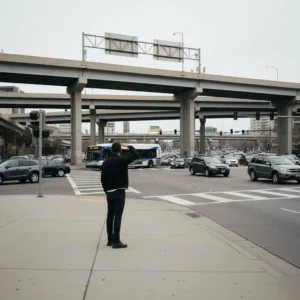
Private bus and shuttle companies carry standard commercial insurance. You file a claim against their policy like any other motor vehicle accident. The statute of limitations is three years under C.R.S. § 13-80-101. More time, more flexibility in how you build the case.
But here’s what matters for both. All buses in Colorado are classified as common carriers. That legal term means they owe passengers the highest duty of care, not just reasonable care, the highest. So whether it’s an RTD bus or a private charter heading to Fiddler’s Green for a concert, the operator must do everything possible to keep passengers safe.
The liable parties differ too. With RTD, you’re pursuing the transit authority itself. With a private shuttle, you might have claims against the driver, the company that hired them, the vehicle owner if it’s leased, even a maintenance contractor who failed to fix bad brakes. Colorado’s modified comparative negligence rule under C.R.S. § 13-21-111 still applies. You can recover as long as you’re less than 50% at fault.
So which type of bus were you on? That’s the first question we ask. The answer dictates your deadline, your strategy, and who you’re going after. If you’re not sure where your situation falls, our bus accident lawyer page walks through the next steps. Getting this right early is the difference between a strong claim and no claim at all.
For a free legal consultation, call (303) 465-8733
The 182-Day Deadline Is the Most Critical Rule in Colorado Bus Accident Claims
This is the one thing we wish every bus accident victim in Greenwood Village knew before it was too late. If a government entity operates the bus that hit you, a special clock starts the moment of the crash. Not the normal three-year statute of limitations for motor vehicle accidents under C.R.S. § 13-80-101. A much shorter one.
182 days. That’s it.
Under the Colorado Governmental Immunity Act (C.R.S. § 24-10-109), you must file a written notice of claim within 182 days of the accident. Miss that window and your case is gone. No exceptions. No extensions. The court won’t weigh how bad your injuries are or how clear the bus driver’s fault was.
Why This Deadline Catches So Many People Off Guard
Most people assume they have years to sort things out. For a typical car accident in Colorado, they’d be right. But RTD buses, school district buses, and shuttles run by municipal agencies all fall under the CGIA. That 182-day notice requirement applies to claims against RTD, the Cherry Creek School District, Arapahoe County, and any other government body operating transit in the Greenwood Village and DTC area.
The notice itself has strict content requirements. You can’t just send a letter saying “your bus hit me.” The written notice must include specific details about the incident, the injuries, and the amount of damages claimed. Get the format wrong, the entity wrong, or the timing wrong, your claim gets rejected.
We’ve seen families come to us at day 170 thinking they had plenty of time. They didn’t realize the notice had to go to a specific department within the government entity. By the time they figured it out on their own, they’d burned through most of their window.
What Happens If You File Late
Nothing good. Colorado courts have consistently enforced this deadline. A judge won’t bend the rule because you were in the hospital. Won’t bend it because you didn’t know about it. The government entity’s attorneys will file a motion to dismiss, and they’ll win.
Picture someone stepping off a bus near the Orchard Road light rail station, one of the busier stops in this stretch of the DTC, and getting struck because the driver pulled away too soon. Broken leg. Surgery. Weeks of recovery before they even think about legal options. By the time the medical fog clears, four months have already passed. That leaves roughly two months to identify the correct government entity, draft the notice, and serve it properly.
Insurance companies count on you not knowing this part: even if a private contractor operates the bus on behalf of a government agency, the CGIA notice requirement can still apply. Some shuttle services running through the DTC are contracted by RTD or Arapahoe County. The bus might have a private company’s name on the side, but the claim still runs through government immunity rules.
So the first question after any bus accident isn’t “who was driving.” It’s “who owns or contracted this bus.” That answer determines your entire timeline.
If you’re dealing with a bus accident claim involving RTD or any government-operated transit, don’t wait to sort out the details on your own. Visit our bus accident lawyer page to understand how we handle these time-sensitive claims from our office right here in Greenwood Village. The 182-day clock doesn’t pause while you’re deciding what to do.
Frequently Asked Questions
Can more than one party be held liable after a bus accident near the Denver Tech Center?
Yes — multiple parties can share liability in a single bus accident. A bus driver, the transit authority or private company, a maintenance contractor, another driver, or even a government agency responsible for road conditions can all be at fault. Colorado uses modified comparative negligence under C.R.S. § 13-21-111. Each party gets assigned a percentage of blame. You can still recover damages as long as you’re less than 50% at fault. Identifying every responsible party protects your recovery.
What is the deadline to file a claim if an RTD bus hit me along the DTC corridor in Greenwood Village?
If an RTD bus injured you, you have just 182 days to file a written notice of claim under C.R.S. § 24-10-109. That’s roughly six months. Miss that deadline by even one day and your claim is gone — no exceptions. RTD is a government entity, so the Colorado Governmental Immunity Act applies. The notice must include your name, the date, a description of your injuries, and the damages you’re claiming. It goes to RTD’s legal department in writing, not a phone call.
Does it matter whether the bus was an RTD route or a private corporate shuttle on DTC Boulevard?
It matters a lot. RTD is a government entity, so the CGIA rules and the 182-day notice deadline apply. A private corporate shuttle or charter company follows standard commercial insurance rules instead. The statute of limitations for a private carrier claim is three years under C.R.S. § 13-80-101 — much more time. Along the DTC corridor in Greenwood Village, both types of buses share the same roads and stops, so knowing which one was involved changes your entire legal strategy from day one.
What if a mechanical defect — like bad brakes or worn tires — caused the bus accident?
If a defective part caused the crash, the maintenance contractor or the bus manufacturer can be held liable. Product liability under C.R.S. § 13-21-401 applies to manufacturer defects. Under strict liability, you don’t need to prove negligence — you only need to show the product was defective and caused your injury. If a third-party maintenance company serviced the bus, that company also answers for what went wrong. This is why a full investigation matters before you accept any early settlement offer.
Can Greenwood Village or Arapahoe County be held responsible if bad road conditions played a role?
Yes. Greenwood Village, Arapahoe County, and CDOT each maintain different stretches of road through the DTC area. Missing traffic signals, faded lane markings, or poorly marked construction zones can all contribute to a bus accident. Claims against any of these government entities also require the 182-day written notice under the CGIA — the same deadline as an RTD claim. Missing that window closes your claim against the government, even if the road conditions clearly played a role.
What’s the biggest mistake people make after a bus accident along the DTC corridor?
Settling with one party too fast is the most common mistake we see. Insurance companies push quick settlements before you know how many parties actually share blame. Once you settle and sign a release, recovering from other liable parties becomes very difficult. Bus accidents near the I-25 and Arapahoe Road interchange often involve multiple responsible parties. Learning who’s liable before you settle is how you protect your full recovery. Our bus accident lawyers in Greenwood Village investigate every angle so nothing gets missed.