
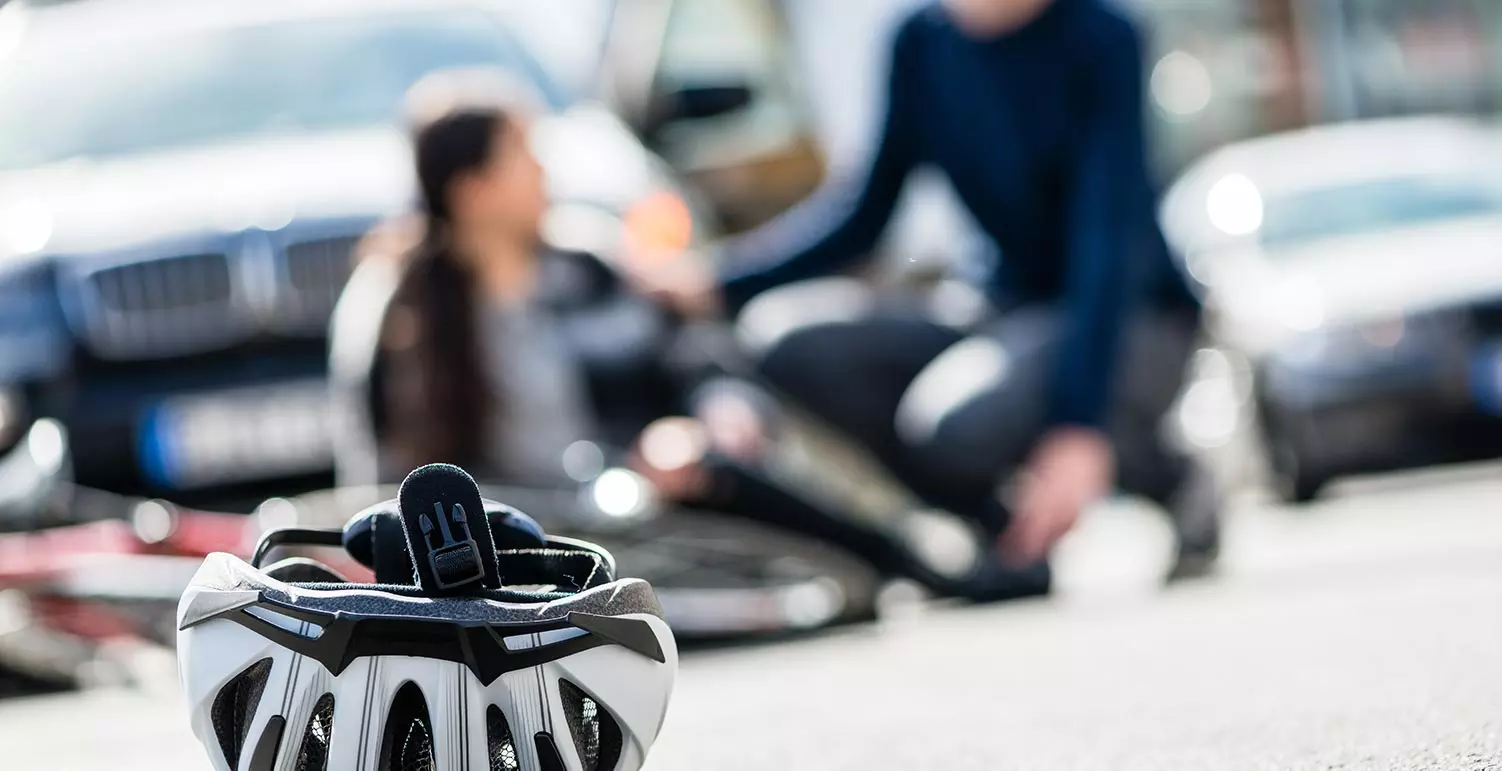



Denver's Growing Bicycle Safety Crisis
Cyclist and pedestrian fatalities in Colorado have increased 78% since 2015. Denver alone averages over 745 bicycle crashes per year. If a driver’s negligence put you in the hospital, Jordan Law will fight to hold them accountable — and to get you the compensation you need to recover.
Denver is one of the most bike-friendly cities in the country — with over 85 miles of paved trails, a growing network of protected bike lanes, and a culture that embraces cycling for commuting, fitness, and recreation. But “bike-friendly” doesn’t mean bike-safe. The reality on Denver’s streets is alarming: from 2020 through early 2025, nearly 4,000 crashes involving bicyclists were reported in Denver alone, averaging more than 745 per year.
The trend statewide is even worse. Pedestrian and cyclist fatalities in Colorado have increased 78% since 2015, while passenger vehicle deaths rose just 7% over the same period. In 2024, 134 pedestrians and cyclists were killed on Colorado roads — the second-deadliest year on record for vulnerable road users. Fourteen of those deaths were cyclists. And these numbers only tell part of the story — for every fatality, hundreds more cyclists are injured, many seriously.
The core problem is straightforward: cyclists have no structural protection. When a 3,500-pound car strikes a cyclist at 30 mph, the rider absorbs the full force of impact. The injuries — traumatic brain injuries, spinal cord damage, compound fractures, severe road rash, internal organ damage — are frequently catastrophic. And the driver who caused the crash almost always walks away unharmed.
At Jordan Law, our Denver bicycle accident lawyers represent cyclists who have been injured by negligent drivers. We understand the laws that protect cyclists, the unique evidence challenges these cases present, and the bias that injured riders sometimes face from insurance companies who assume the cyclist was somehow at fault. We’re trial lawyers who prepare every case with the depth it deserves — because insurance companies negotiate differently when they know you’re willing to go to court.
78%
For a free legal consultation with a Personal Injury lawyer serving Denver, call (303) 465-8733
Denver’s Most Dangerous Corridors for Cyclists
Bicycle crashes in Denver are spread across the city, but certain corridors and intersections consistently appear in crash data as high-risk areas for cyclists. Knowing where these hotspots are matters for your case — if a crash occurred at a known dangerous intersection, it may support arguments about inadequate road design, missing infrastructure, or the city’s failure to address documented safety concerns.
Based on Denver’s crash data, some of the most dangerous locations for cyclists include corridors along Colfax Avenue (particularly at Havana Street, Moline Street, and Chambers Road), intersections along 15th Street (including California Street), 16th and 17th Avenues, Broadway, and Speer Boulevard. The Cherry Creek Trail and Platte River Trail also see crashes where multi-use paths cross roadways.
Most bicycle crashes in Denver happen during daylight hours in clear weather — between 8 a.m. and 6 p.m. on dry pavement. This counters the common narrative that cyclist accidents are caused by poor visibility or bad weather. The data shows the primary risk factors are driver behavior — failure to yield, distracted driving, unsafe lane changes, and turning without checking for cyclists — not conditions that make cycling inherently dangerous.
“Nobody plans on getting into a car accident, and all of a sudden you’re left with what to do. And oftentimes people, they don’t want to be that person. They don’t want to hire an attorney, so they think they’ll try to handle it on their own. They’ll make a lot of these mistakes along the way thinking that they’re doing the right thing when really the insurance company is taking advantage of the fact that you don’t have an attorney representing you.”
Jason Jordan, Esq. – Founding Partner, Jordan Law
Colorado Laws That Protect Cyclists — and Strengthen Your Case
Colorado has enacted several laws specifically designed to protect cyclists on the road. When a driver violates these laws and injures a cyclist, those violations serve as powerful evidence of negligence in your personal injury case. Here are the laws that matter most:
The 3-Foot Passing Law
Colorado law (C.R.S. §42-4-1003) requires motorists to give cyclists at least three feet of clearance when passing. This isn’t a suggestion — it’s a legal requirement. A driver who passes a cyclist with less than three feet of space and causes a collision has committed a clear violation of traffic law, establishing strong evidence of negligence. Despite the law, “close passes” remain one of the most common complaints among Denver-area cyclists and a frequent contributing factor in bicycle crashes.
The Safety Stop Law
Colorado’s Safety Stop law allows cyclists to treat stop signs as yield signs and red lights as stop signs, provided they have the right of way. This law was enacted because studies showed that allowing cyclists to proceed through controlled intersections when clear actually improves safety by reducing the time cyclists spend in intersections — which is where the majority of car-bike collisions occur. Insurance companies sometimes try to argue that a cyclist was at fault for proceeding through a stop sign. If the cyclist was following the Safety Stop law, that argument fails.
The Hands-Free Law
Colorado’s hands-free law, effective January 1, 2025, prohibits drivers from holding or manually using a mobile device while driving. This law has particular significance for cyclist safety — distracted drivers are one of the leading causes of bicycle crashes because they fail to notice cyclists in their peripheral vision or at intersections. If the driver who hit you was holding their phone, they were violating state law, which strengthens your negligence claim significantly.
Vulnerable Road User Protection
Colorado’s Vulnerable Road User law (C.R.S. §42-4-1402.5) classifies cyclists as “vulnerable” road users and makes it a misdemeanor offense to drive imprudently and cause bodily injury to a cyclist. This law provides additional criminal consequences beyond a standard traffic violation and underscores the legal duty drivers owe to cyclists.
Comparative Negligence
Colorado follows a modified comparative negligence rule. Your compensation is reduced by your percentage of fault — but only if you’re less than 50% at fault. Insurance companies aggressively use comparative negligence in bicycle cases, trying to argue the cyclist was riding unsafely, wasn’t visible enough, or should have been somewhere else. An experienced bicycle accident attorney knows how to counter these arguments with evidence of the driver’s negligence and the cyclist’s lawful behavior.
Denver Bicycle Accident Lawyer Near Me (303) 465-8733
How Bicycle Accidents Happen in Denver
The most common types of bicycle crashes in Denver follow predictable patterns — and in nearly every case, the driver’s negligence is the primary cause:
The “left hook” — a driver turning left across oncoming traffic fails to see an approaching cyclist and turns directly into their path. This is one of the most dangerous and common crash types for cyclists.
The “right hook” — a driver passes a cyclist and then immediately turns right, cutting across the cyclist’s path. The cyclist, traveling in the bike lane or along the right side of the road, has no time to react.
The “door zone” crash — a parked driver opens their car door directly into the path of an approaching cyclist. At even moderate cycling speeds, the impact can cause severe injuries including facial fractures, broken collarbones, and traumatic brain injuries.
Failure to yield at intersections — drivers running red lights, rolling through stop signs, or pulling out of driveways without checking for cyclists. Intersections are where the majority of car-bike collisions occur in Denver.
Distracted driving — a driver looking at their phone, adjusting GPS, or otherwise not watching the road. Cyclists present a smaller visual target than cars, and a distracted driver may simply never see the rider until it’s too late.
Unsafe passing — drivers passing too closely (violating the 3-foot law), passing on narrow roads where there isn’t enough room, or passing and then merging back into the cyclist’s path too quickly.
Hit-and-run — drivers who strike cyclists and flee the scene. Hit-and-run is a particularly serious problem in bicycle crashes — the cyclist may be lying injured in the road while the driver disappears. In May 2025, a cyclist was fatally struck in a hit-and-run in Boulder County, and the driver was arrested days later after abandoning the damaged vehicle.
“Cases start at a zero value. Just because you’re in a crash doesn’t mean you get anything. Building up your case is how we help you recover compensation for what you’ve been through. Building up means documenting, it means notating, it means preparing to present a case. But we do it in such a way that if an insurance company doesn’t take it seriously, we are prepared to take your case as far as we need, which can include trial.”
Sarah Freedman, Esq. – Director of Pre-litigation, Jordan Law
Injuries Common in Bicycle Accidents
Cyclists have virtually no protection in a collision with a motor vehicle. Even at relatively low speeds, the injuries can be severe and life-altering:
Traumatic brain injuries — the most dangerous and most common serious bicycle injury. Even with a helmet, the forces of a car-bike collision can cause concussions, brain bleeds, and diffuse axonal injuries. Without a helmet, the risk of fatal or permanently disabling brain injury is dramatically higher. Jordan Law has recovered over $130 million in brain injury verdicts and has deep experience proving TBI cases.
Spinal cord injuries — the impact of a collision can damage the spinal cord, causing partial or complete paralysis. These are life-altering injuries requiring lifetime medical care.
Broken bones and fractures — collarbones, wrists, arms, hips, and legs are all highly vulnerable in bicycle crashes. Compound fractures often require surgery and extended rehabilitation.
Road rash — when a cyclist slides across pavement, the abrasion can strip away multiple layers of skin, requiring skin grafts and leaving permanent scarring. Severe road rash can cause nerve damage and serious infection.
Facial and dental injuries — cyclists who go over the handlebars or are struck from the side frequently suffer facial lacerations, broken jaw bones, lost teeth, and orbital fractures.
Internal organ damage — blunt force to the abdomen from handlebars or the impact of the vehicle can rupture the spleen, liver, or kidneys, causing life-threatening internal bleeding that may not be immediately apparent.
Psychological trauma — PTSD, anxiety, depression, and fear of riding or being near traffic are common after serious bicycle crashes and are compensable damages in your case.
“A treatment gap is exactly what it sounds like. It’s when you stop going to medical care or you never start, and it creates this time period where there’s no evidence of your injury. An insurance company is gonna use that against you later on to say maybe you weren’t really that injured. It also hurts you when you don’t get to recover faster.”
Sarah Freedman, Esq. – Director of Pre-litigation, Jordan Law
Click to contact our personal injury lawyers today
What to Do After a Bicycle Accident in Denver
Get to Safety and Call 911
If you can move, get out of the roadway. Call 911 to get police and medical responders to the scene. Even if your injuries seem minor, get a medical evaluation — adrenaline masks pain, and concussions, internal bleeding, and spinal injuries may not show symptoms immediately.
Document Everything
If you’re physically able, photograph the vehicle (license plate, make, model), the driver, your bicycle, your injuries, the road, traffic signals, and any relevant conditions (bike lane markings, sight lines, obstacles). Note whether the driver appeared distracted or impaired. Get contact information from witnesses — their testimony can be critical, especially if the driver disputes what happened.
Preserve Your Bicycle and Gear
Your bicycle, helmet, clothing, and any cycling electronics (GPS computers, cameras) are evidence. Do not repair or discard your bicycle until your attorney has documented its condition. If you had a cycling camera running, save that footage immediately.
Do Not Give Recorded Statements
The driver’s insurance company will contact you. Do not give a recorded statement. Do not sign a medical release authorization. Do not accept an early settlement offer. Insurance companies in bicycle cases are particularly aggressive about shifting blame to the cyclist — and anything you say can be used against you.
You retain an attorney and that just takes all of that away. And we tell you what all those things mean — like collateral source and subrogation and common fund doctrine — and why that matters to you at the end of the day. We explain those things to you and then you go back to work and you live your life and you see your medical doctors. That’s what we’re here for.
Jason Jordan, Esq. – Founding Partner, Jordan Law
Contact a Bicycle Accident Attorney
Bicycle accident cases involve unique evidence challenges — surveillance footage from nearby businesses, traffic camera data, and the driver’s phone records can all help prove negligence, but this evidence can be lost quickly. Having an attorney send preservation demands and begin investigation within the first days is critical.
How Long Do You Have to File a Bicycle Accident Claim in Colorado?
Bicycle accidents are motor vehicle accidents under Colorado law. That means you have three years from the date of the accident to file a personal injury lawsuit under C.R.S. § 13-80-101. For wrongful death claims, the deadline is two years from the date of death.
If a government entity is involved — for example, if the crash was caused by a poorly designed bike lane, a defective road surface, a missing traffic signal, or a city vehicle — the Colorado Governmental Immunity Act requires you to file a notice of claim within 182 days. Denver’s cycling infrastructure is a mix of city, county, and state-maintained roads and trails, so determining which government entity is responsible requires immediate investigation.
Three years may sound like plenty of time, but evidence in bicycle cases is fragile. Surveillance footage from nearby businesses is typically overwritten within 30 to 90 days. Witness memories fade. Road conditions change. The sooner you contact an attorney, the more evidence we can preserve to prove the driver’s negligence.
Complete a Free Case Evaluation form now
Compensation for Bicycle Accident Victims
Colorado is an at-fault state, meaning the driver who caused the crash is responsible for your damages. Bicycle accident victims may recover compensation for:
Medical expenses — emergency care, surgery, hospitalization, rehabilitation, brain injury treatment, skin grafts for road rash, dental reconstruction, and all future medical care.
Lost wages and earning capacity — income lost during recovery and, for serious injuries, diminished ability to earn in the future.
Pain and suffering — physical pain, emotional distress, PTSD, anxiety about riding or being near traffic, and diminished quality of life.
Scarring and disfigurement — road rash, surgical scars, and facial injuries create permanent visible changes that affect self-esteem and daily life.
Property damage — repair or replacement of your bicycle, helmet, cycling computer, clothing, and other gear damaged in the crash. High-end road and mountain bikes can cost thousands of dollars.
Loss of enjoyment of life — if the crash has taken away your ability to ride, participate in cycling events, commute by bike, or enjoy the active lifestyle that cycling provided.
Insurance Considerations
Many drivers carry only Colorado’s minimum liability insurance — $25,000 per person — which is grossly inadequate for a serious bicycle injury. We review every available insurance policy including the at-fault driver’s liability coverage, your own UM/UIM and MedPay coverage, and any applicable homeowner’s or umbrella policies.
“Colorado has one of the highest percentages of people driving around with no insurance. Uninsured or underinsured motorist coverage is coverage that you get to protect yourself and your family. I call it “you coverage” because it is coverage for you. People don’t always understand that by protecting themselves, they’re hedging their bets that the people out there driving around who can’t be trusted have good insurance — which they usually don’t.”
Sarah Freedman, Esq. – Director of Pre-litigation, Jordan Law
Why Jordan Law for Your Bicycle Accident Case
We understand cyclist cases. Bicycle accidents present unique legal challenges — from driver bias against cyclists to complex road design and infrastructure issues. We know the laws that protect Colorado cyclists and how to use them to strengthen your case.
Over $550 million recovered for injury victims. Our results include multi-million dollar verdicts for traumatic brain injuries, wrongful death cases, and catastrophic injury claims — all common outcomes in serious bicycle accidents.
True trial lawyers. Insurance companies in bicycle cases are notoriously aggressive about blaming the cyclist. We don’t accept that narrative. We prepare every case for trial, and our willingness to go to court is what forces insurers to make fair offers.
We fight cyclist bias. Just as with motorcycle cases, insurance adjusters and jurors sometimes carry biases against cyclists — assuming they shouldn’t have been on the road, weren’t visible enough, or were riding recklessly. We address these biases directly with evidence, expert testimony, and a clear presentation of the driver’s negligence.
No fee unless we win. We handle bicycle accident cases on a contingency fee basis. You pay nothing upfront. Consultations are always free.
Our office is located in the Denver Tech Center at 5445 DTC Parkway, Suite 1000, Greenwood Village, CO 80111.
We represent bicycle accident victims across Denver, Aurora, Boulder, Colorado Springs, Fort Collins, and throughout Colorado.
Frequently Asked Bicycle Accident Questions
What should I do after a bicycle accident in Denver?
Move to safety if possible, call 911, and get medical attention even if injuries seem minor — adrenaline can mask concussions, internal bleeding, and spinal injuries. Document the scene with photos of all vehicles, your bicycle, your injuries, and the road. Get the driver’s name, insurance, and license plate. Collect witness contact information. Preserve your bicycle and gear as evidence. Do not give a recorded statement to any insurance company. Contact a bicycle accident attorney immediately to preserve time-sensitive evidence like surveillance footage and phone records.
What is Colorado’s 3-foot passing law?
Colorado law (C.R.S. §42-4-1003) requires motorists to give cyclists at least three feet of clearance when passing. A driver who violates this law and strikes a cyclist has committed a clear violation of traffic law, which serves as strong evidence of negligence in a personal injury case. Despite the law, close passes remain one of the most common safety complaints from Denver cyclists.
What is Colorado’s Safety Stop law for cyclists?
Colorado’s Safety Stop law allows cyclists to treat stop signs as yield signs and red lights as stop signs when they have the right of way. This means a cyclist who proceeds through a stop sign after yielding is acting legally. Insurance companies sometimes try to argue a cyclist was at fault for not coming to a complete stop — if the cyclist was following the Safety Stop law, that argument has no legal basis.
What compensation can I recover after a bicycle accident?
Bicycle accident victims can seek compensation for medical expenses (current and future), lost wages and earning capacity, pain and suffering, emotional distress and PTSD, scarring and disfigurement from road rash, property damage (bicycle, gear, electronics), and loss of enjoyment of life. Colorado follows a modified comparative negligence rule — your compensation is reduced by your percentage of fault, but only if you’re found to be less than 50% responsible for the crash.
Can I still recover compensation if I wasn’t wearing a helmet?
Colorado does not require adult cyclists to wear helmets, so not wearing one is not negligence per se and cannot establish fault. However, insurance companies may argue that your head injuries would have been less severe with a helmet — a tactic designed to reduce your compensation. An experienced bicycle accident attorney knows how to counter this with medical evidence showing the actual cause and severity of your injuries, regardless of helmet use.
How much does it cost to hire a bicycle accident lawyer?
Jordan Law handles bicycle accident cases on a contingency fee basis. You pay nothing upfront and owe no attorney fees unless we recover compensation for you. Your initial consultation is always free, with no obligation. As Jason Jordan puts it: “If you don’t want to hire us, that’s fine — I’d recommend you to three, four, five different attorneys that I would trust my family members to go with.”