Distracted Driving in Denver: A Growing and Preventable Danger
Distracted driving is the third leading cause of traffic crashes in Colorado — and despite increased public awareness, the problem persists. According to CDOT’s 2024 Driver Behavior Report, 77% of Colorado drivers admitted to using their phones while driving. That number has been climbing steadily: up from 67% in 2022 to 75% in 2023 to 77% in 2024.
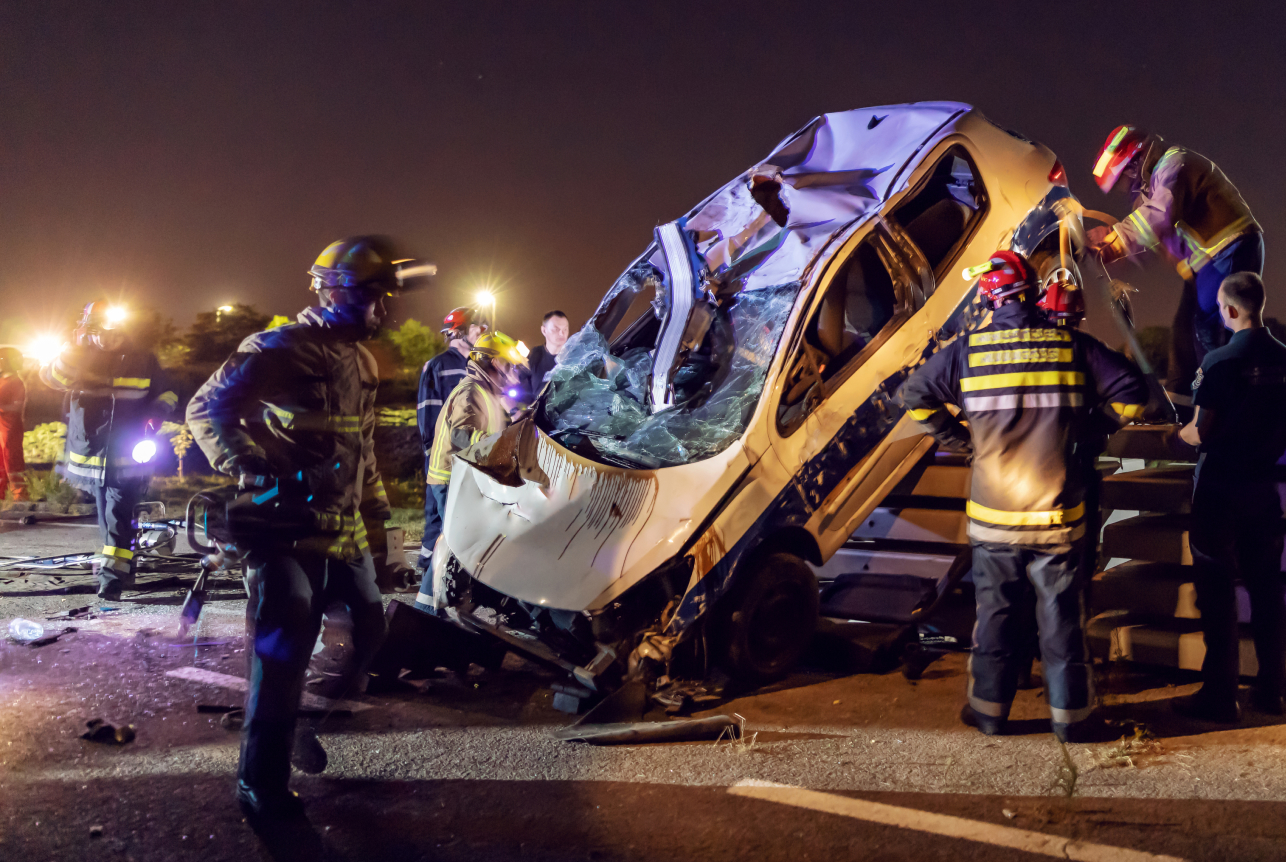
The consequences are devastating. Between 2012 and 2022, 718 Coloradans died in crashes involving a distracted driver. In a single year, distracted driving contributes to roughly 36 crashes per day across the state. And the victims aren’t just other motorists — one in five people killed by distracted drivers were pedestrians, cyclists, or others outside a vehicle.
If you or someone you love was injured by a distracted driver in Denver or anywhere in Colorado, Jordan Law is here to help. Our distracted driving accident lawyers handle serious injury claims against drivers who chose to text, scroll, eat, or otherwise take their attention off the road. We’re trial lawyers who prepare every case with the depth it deserves — because insurance companies negotiate differently when they know you’re willing to go to court.
77%
For a free legal consultation with a distracted driving lawyer serving Denver, call (303) 465-8733
Colorado’s New Hands-Free Law: What It Means for Your Case
On January 1, 2025, Colorado implemented a sweeping new distracted driving law (Senate Bill 24-065) that significantly changes the legal landscape for accident victims. Understanding this law is critical if you’ve been hit by a distracted driver.
Colorado Hands-Free Law — Key Provisions
What’s prohibited: Holding or manually using a cellphone or any mobile electronic device while driving — including at stoplights and in traffic. This covers calls, texting, GPS, social media, and all other phone use.
What’s allowed: Hands-free accessories including Bluetooth, dashboard mounts, CarPlay, and Android Auto. The phone must be operated without holding it.
Penalties: First offense: $75 fine and 2 points on your license. Penalties escalate for repeat violations. First-time offenders can have the charge dismissed by showing proof of purchasing a hands-free accessory.
Exemptions: Emergency calls, first responders, utility workers, and individuals in parked vehicles.
Why This Law Matters for Injury Victims
Before this law, proving distracted driving negligence could be challenging. The old framework required showing that phone use caused the driver to operate their vehicle in a “careless and imprudent” manner — a subjective standard that gave insurance companies room to argue. Now, simply holding a phone while driving is a violation of state law, period. That’s a powerful piece of evidence in your injury case.
If the driver who hit you was holding their phone, they were breaking the law. This establishes negligence per se — meaning the violation of a safety statute is itself evidence of negligence. Your attorney doesn’t need to prove the driver was being “careless enough” — the law violation speaks for itself.
Early Results: The Law Is Working
The data from the first months of the hands-free law is encouraging from a public safety standpoint. In the first five months of 2025, Colorado State Patrol responded to 1,161 inattentive driving crashes — a 19% decrease from the 1,432 crashes during the same period in 2024. Traffic fatalities overall dropped 11% in the same window. Citations for distracted driving increased 135% compared to the prior year, indicating stronger enforcement.
But distracted driving crashes are still happening every day. And when they do, the new law gives victims a stronger legal foundation than ever before.
Types of Distracted Driving That Cause Crashes
While cell phone use dominates the conversation, distracted driving takes many forms. Any behavior that diverts a driver’s visual, manual, or cognitive attention from the road can cause a crash. Common forms of distraction that lead to serious accidents include:
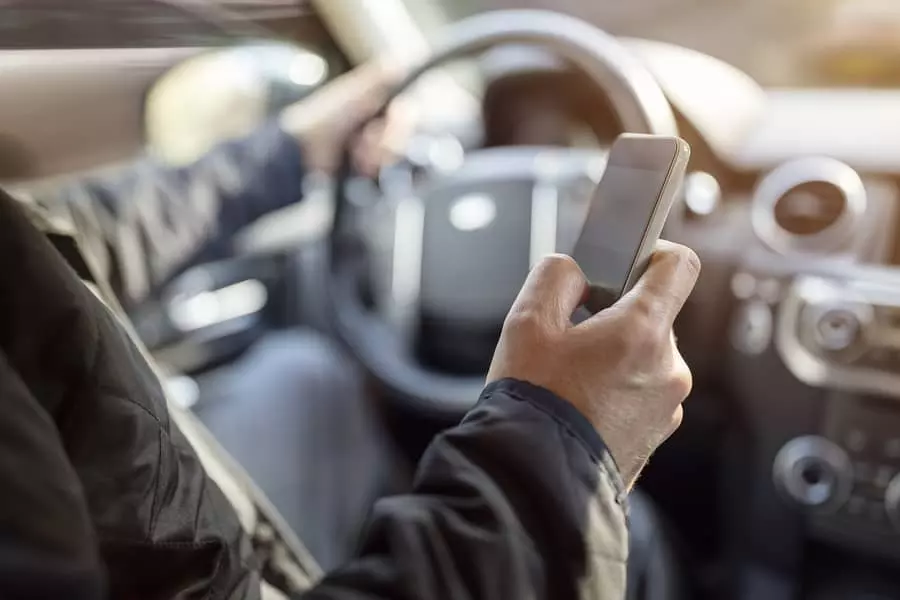
Texting and phone use — the most dangerous form of distraction because it combines all three types: eyes off the road, hands off the wheel, and mind off driving. At 55 mph, looking at a phone for five seconds means traveling the length of a football field essentially blind.
GPS and navigation apps — even with the phone mounted, programming a destination or glancing at turn-by-turn directions pulls attention from the road. Under the new law, GPS use is allowed only with a hands-free setup, but it can still be cited as a contributing factor in a crash.
Eating and drinking — CDOT’s survey found that eating was among the most common distracting activities Colorado drivers engage in weekly. Unwrapping food, reaching for drinks, and cleaning up spills all take hands off the wheel and eyes off the road.
Adjusting vehicle controls — changing radio stations, adjusting climate settings, or programming infotainment systems can be momentary distractions, but at highway speed, even a second or two of inattention can be fatal.
Passengers and children — turning to talk to passengers, managing children in the backseat, or attending to pets creates visual and cognitive distraction.
Daydreaming and fatigue — cognitive distraction is the hardest to detect but equally dangerous. A driver whose mind is elsewhere may fail to notice slowing traffic, red lights, or pedestrians until it’s too late.
“Nobody plans on getting into a car accident, and all of a sudden you’re left with what to do. And oftentimes people, they don’t want to be that person. They don’t want to hire an attorney, so they think they’ll try to handle it on their own. They’ll call up an insurance company, and maybe they’ll even give a recorded statement when they shouldn’t and they don’t have to. They’ll make a lot of these mistakes along the way thinking that they’re doing the right thing when really the insurance company is taking advantage of the fact that you don’t have an attorney representing you.”
Jason Jordan, Esq.- Founding Partner, Jordan Law
Denver Distracted Driving Lawyer Near Me (303) 465-8733
How We Prove a Distracted Driving Accident Case
Distracted drivers rarely admit they were on their phones. Insurance companies will look for any reason to deny or minimize your claim. That’s why evidence collection in the first days and weeks after a crash is critical — and why having an attorney involved early makes a significant difference.
Cases start at a zero value. Just because you’re in a crash doesn’t mean you get anything. Building up your case is how we help you recover compensation for what you’ve been through. Building up means documenting, it means notating, it means just preparing to present a case. But we do it in such a way that if an insurance company doesn’t take it seriously, we are prepared to take your case as far as we need, which can include trial. And so you’re building this case not just for the purposes of settlement or resolution, but it could be all the way to building it for a jury.
Sarah Freedman, Esq.- Director of Pre-litigation, Jordan Law
Cell Phone Records
We can subpoena the at-fault driver’s phone records to show whether they were texting, making calls, using apps, or browsing the internet at the time of the crash. This is often the strongest piece of evidence in a distracted driving case — but phone records can be altered or deleted, which is why we move quickly to send preservation demands.
Police Reports and Citations
If the responding officer cited the driver for distracted driving or noted phone use in the accident report, that becomes valuable evidence. Under the new hands-free law, a citation for holding a phone while driving directly supports your negligence claim.
Witness Testimony
Other drivers, passengers, and bystanders who saw the at-fault driver on their phone or otherwise distracted can provide critical testimony. We interview witnesses early, before memories fade and details are lost.
Surveillance and Dashcam Footage
Nearby traffic cameras, business security cameras, and dashcam video from other vehicles can capture the moments before impact — sometimes clearly showing a driver looking down at their phone. This footage gets overwritten quickly, so preservation letters need to go out immediately.
Vehicle Data
Modern vehicles contain event data recorders (similar to a “black box”) that capture speed, braking, and other data in the seconds before a crash. If the data shows no braking before impact, it strongly suggests the driver wasn’t looking at the road.
Accident Reconstruction
In serious or fatal cases, we work with accident reconstruction experts who can analyze physical evidence — skid marks, vehicle damage patterns, point of impact — to demonstrate that the crash is consistent with an inattentive driver.
19%
What to Do After a Distracted Driving Crash
The steps you take immediately after a distracted driving accident can make or break your case. Here’s what our attorneys recommend:
Get Medical Attention Right Away
Even if you feel okay at the scene, get evaluated by a doctor. Adrenaline can mask pain from serious injuries like concussions, whiplash, and internal bleeding. Your medical records from day one become foundational evidence in your claim — and any delay in treatment gives the insurance company ammunition to argue your injuries weren’t that serious.
A treatment gap is exactly what it sounds like. It’s when you stop going to medical care or you never start, and it creates this time period where there’s no evidence of your injury. An insurance company is gonna use that against you later on to say maybe you weren’t really that injured. It also hurts you when you don’t get to recover faster.
Sarah Freedman, Esq. – Director of Pre-litigation, Jordan Law
Document Everything at the Scene
If you’re physically able, take photos and video of the vehicles, the road, traffic signals, and your injuries. Note whether you could see a phone in the other driver’s hand or on their seat. Get contact information from witnesses who may have seen the driver on their phone.
Do Not Give a Recorded Statement to the Insurance Company
The at-fault driver’s insurer may contact you quickly. As Jason Jordan warns: “I have people tell me all the time, ‘I’ve been dealing with this insurance company for 20 years and they’ve always treated me great.’ And I say, ‘Have you ever made a claim?’ And they say, ‘No.’ Well, okay. So the person taking your money has been treating you great. Wait till you go to the claims department.”
You are not required to give a recorded statement. Do not sign any medical release authorizations from the other driver’s insurance company. These are tools designed to limit your recovery, not to help you.
Contact a Distracted Driving Accident Lawyer
Time-sensitive evidence — phone records, surveillance footage, witness memories — deteriorates quickly. Having an attorney send preservation letters and begin investigation within the first few days after a crash significantly strengthens your case.
You retain an attorney and that just takes all of that away. And we tell you what all those things mean — like collateral source and subrogation and common fund doctrine and ERISA plans as opposed to state funded plans and why that matters to you at the end of the day. We explain those things to you and then you go back to work and you live your life and you see your medical doctors. That’s what we’re here for.
Jason Jordan, Esq. – Founding Partner, Jordan Law
Click to contact our Denver Car Accident Lawyers today
Compensation for Distracted Driving Accident Victims
Colorado is an at-fault state, which means the distracted driver who caused your crash — and their insurance company — is responsible for your damages. Victims of distracted driving accidents may be entitled to recover compensation for:
Medical expenses — emergency care, surgery, hospitalization, physical therapy, rehabilitation, prescription medications, and all future medical treatment related to your injuries.
Lost wages and earning capacity — income you’ve lost during recovery, and in serious injury cases, diminished ability to earn income in the future.
Pain and suffering — the physical pain, emotional distress, anxiety, sleep disruption, and diminished quality of life caused by the crash.
Property damage — repair or replacement of your vehicle and personal belongings.
Loss of enjoyment of life — compensation for activities, hobbies, and daily pleasures you can no longer participate in because of your injuries.
Punitive damages — in cases involving extreme recklessness (such as a driver watching a video or livestreaming while driving at high speed), Colorado courts may award additional damages to punish the wrongdoer.
Insurance Coverage Considerations
Even when the distracted driver is clearly at fault, their insurance may not be enough to cover your damages — especially in catastrophic injury cases. We conduct a thorough review of every available policy to maximize your recovery.
Colorado has one of the highest percentages of people driving around with no insurance. Uninsured or underinsured motorist coverage is coverage that you get to protect yourself and your family. I call it “you coverage” because it is coverage for you. People don’t always understand that by protecting themselves, they’re hedging their bets that the people out there driving around who can’t be trusted have good insurance — which they usually don’t.
Sarah Freedman, Esq. – Director of Pre-litigation, Jordan Law
Why Jordan Law for Your Distracted Driving Accident Case
Not every law firm is prepared to take a distracted driving case to trial — and insurance companies know it. Here’s why victims choose Jordan Law:
We’re true trial lawyers. Insurance companies track which firms actually litigate. When your attorneys have a track record of going to court and winning, negotiations change. As Jason Jordan explains: “The insurance carriers know which law firms try cases and you get better value on your case if you’re with a law firm that the insurance companies respect as true trial lawyers. A lot of the ones that are running those big volumes, they don’t try anything. In fact, a lot of times they’re calling us to litigate and try their cases.”
We move fast on evidence. Distracted driving cases hinge on time-sensitive evidence — phone records, surveillance footage, and vehicle data. We send preservation letters and begin investigation immediately, before critical proof is lost.
We understand the new legal landscape. Colorado’s hands-free law creates new opportunities for accident victims. We know how to leverage this law to strengthen your negligence claim and maximize your recovery.
Personalized attention, not case volume. We limit our caseload so every client gets direct attorney involvement, clear communication, and a real plan — not vague promises. As our litigation attorney Michael Harris puts it: “Trusting our strategy, trusting the decisions we’re making, trusting our advice is really important. And that doesn’t mean not asking questions. We love questions — that is every client’s right.”
No fee unless we win. We work on a contingency fee basis. You pay nothing upfront, and we only get paid if we recover compensation for you.
We represent distracted driving accident victims across Denver, Aurora, Centennial, Englewood, Littleton, Lakewood, Colorado Springs, Fort Collins, and throughout Colorado.
Complete a Free Case Evaluation form now
Our Colorado Location
Our office is located in the Denver Tech Center at 5445 DTC Parkway, Suite 1000, Greenwood Village, CO 80111.