


How Our Ski Accidents Lawyers Can Help You
Ski accidents can be scary and create a lot of confusion. Who is responsible for my injuries? Who can I pursue for compensation to cover my medical expenses, property damage and more? Do I sue the other skier? The ski resort?
The attorneys at Jordan Law love to ski and know the dangers associated with skiing and snowboarding. We also know the law. In addition to providing you with a free case evaluation call, we can help with the following:
- Investigate the Accident: We will find out what happened and who is responsible. Our lawyers will gather evidence, talk to witnesses, and work with experts to understand the accident.
- Negotiate with the Insurance Company: Insurance companies often try to pay less than what victims deserve. We will talk to the insurance companies for you, making sure you get a fair deal.
- Represent the Victim in Court: If we can’t settle with the insurance company, we will go to court to fight for your rights. Our lawyers are experienced in presenting cases to judges and juries.
- Provide Support: We know that dealing with a ski accident can be hard. We will be there to answer your questions and help you through the process.
What Is a Ski Accident Case?
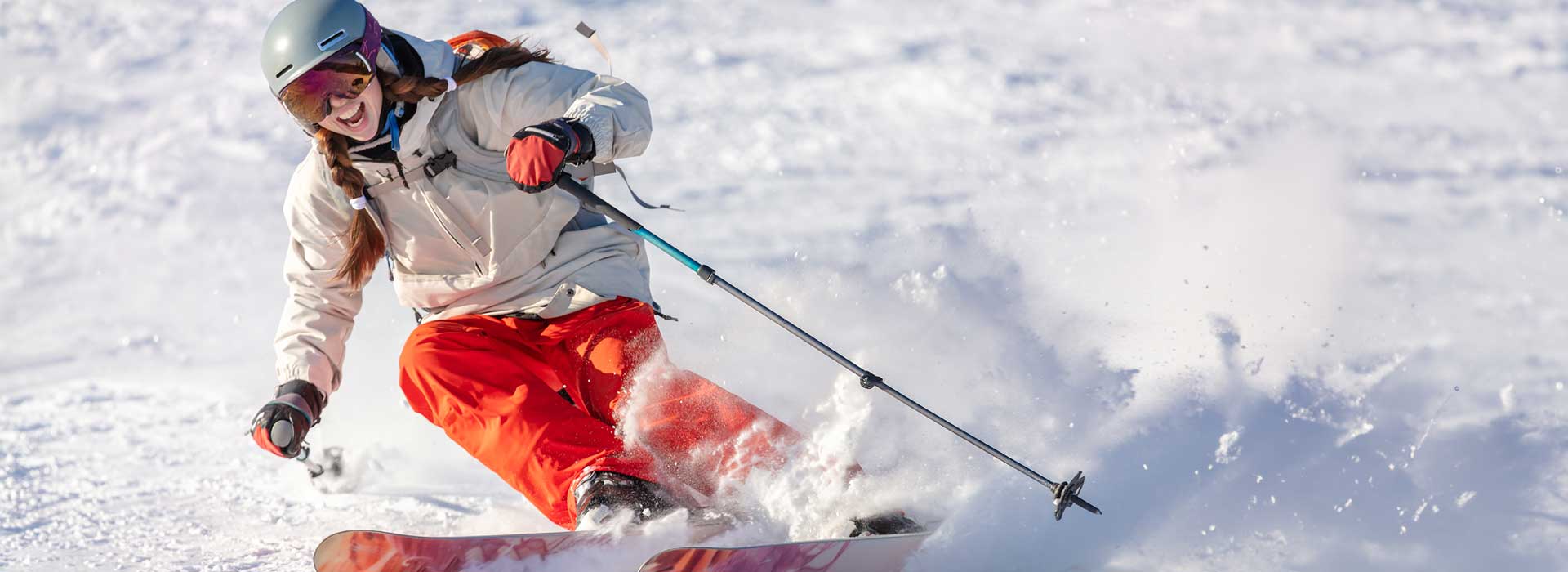
Everyone knows what a ski accident is but what makes a ski accident case? A ski accident case occurs when someone gets hurt while skiing due to another person’s carelessness. This usually includes accidents caused by other skiers. Sometimes we can also pursue cases for faulty equipment or dangerous ski resort conditions.
What Do I Need to Do to Receive Compensation for a Ski Accident?
To get compensation for a ski accident, you need to prove that someone else was at fault. This means showing that they were careless and that their carelessness caused your injury. In legal terms, this is called “negligence.” Our lawyers can help gather the proof needed to build a strong case.
Explaining Negligence and the Relevant Legal Elements
Negligence means not being careful enough and causing someone else to get hurt. There are four parts to proving negligence in a ski accident:
- Duty: This means that someone had a responsibility to be careful. For example, ski resorts must make sure their slopes are safe.
- Breach: This is when someone does not fulfill their duty. If a ski resort does not fix a dangerous slope, they might have breached their duty.
- Causation: This means that the breach of duty caused the accident. For example, if a dangerous slope causes a skier to fall, there is causation.
- Damages: This is the harm or injury caused by the accident. In a ski accident, damages could include broken bones, medical bills, and pain and suffering.
Contributory Negligence in Colorado: In Colorado, if you are partly responsible for your accident, your compensation might be reduced. But as long as you are less than 50% responsible, you can still get money.
Who Is Responsible for My Injuries?
In a ski accident, many people or companies could be responsible, including:
- Other skiers who were careless
- Ski instructors who did not teach safely
- Ski resorts that did not keep slopes safe
- Equipment manufacturers that made faulty gear
What Compensation Can I Receive in a Ski Accident Case?
If you are hurt in a ski accident, you might be able to receive money for:
- Medical bills
- Lost wages if you can’t work
- Pain and suffering
- Damage to your property, like broken equipment
What Are the Potential Sources of Recovery?
You might get compensation from:
- The person who caused the accident (most common in Colorado)
- The ski resort
- Insurance companies
- Equipment manufacturers
Common Injuries in Ski Accidents
Ski accidents can cause many types of injuries, such as:
- Broken bones
- Head injuries
- Sprains and strains
- Cuts and bruises
Common Causes of Ski Accidents
Ski accidents can happen for many reasons, including:
- Collisions with other skiers
- Faulty equipment
- Dangerous ski slopes
- Poor weather conditions
What to Do After a Ski Accident
- Get Medical Help: See a doctor right away, even if you feel okay.
- Report the Accident: Tell the ski resort about the accident.
- Gather Information: Take pictures of the accident scene and get contact information from witnesses.
- Call Jordan Law: Our lawyers can help you understand your rights and start your case.
Why You Should Hire Jordan Law
Jordan Law has experience with ski accident cases. We know the law and will work hard to get you the compensation you deserve. Our team will be with you every step of the way.
About Contingency Fees
At Jordan Law, we work on a contingency fee basis. This means you don’t pay us unless we win your case. We believe everyone should have access to a good lawyer, no matter their financial situation.
Call Jordan Law For a Free Consultation About Your Ski Accident Case
Call Jordan Law today for a free consultation. We’re always free to speak to and if you don’t want to hire us for any reason, we’ll give you the names of other firms we respect to treat you with dignity and professionalism.
At Jordan Law, we are here to help you through this difficult time. If you or a loved one experiences a ski accident, contact us today for a free consultation. We also serve clients in Denver, Fort Collins, and elsewhere across Colorado.
For a free legal consultation with a Personal Injury lawyer serving Denver, call (303) 465-8733
Frequently Asked Ski Accident Questions
What’s my ski crash case worth?
The value of your case depends on your injuries, medical bills, and other factors. Our lawyers can help estimate what your case might be worth.
Will my case go to trial?
Many cases settle before going to trial, but if we can’t reach a fair settlement, we will go to court for you.
How long will my case take?
The length of a case varies, but we will work to resolve it as quickly as possible while getting you fair compensation.
How soon after the accident should I call an attorney?
You should call an attorney as soon as possible. The sooner we start working on your case, the better we can help you.
What Are Some Local Resources for Ski Injury Victims?
- Colorado State Patrol: Call 303-239-4501 for accident reports.
- Ski Patrol: Most ski resorts have a ski patrol for emergency help.
- Colorado Department of Public Health and Environment: Visit for more health resources.
How Do I find a Good Ski Accident Lawyer?
In short, the best way to find a personal injury lawyer is to start with a list of attorneys in your area. You can create a list by going to Google, Avvo.com or calling your local bar organization. From there, research the attorneys. Use their website, look at their Google reviews, etc. Narrow down your list to the top three attorneys. Schedule free consultations with each and interview them. For more details read How To Find A Personal Injury Lawyer
Our Greenwood Village / Denver Tech Center Location
Jordan Law Accident and Injury Lawyers – 5445 DTC Parkway Suite 1000 Greenwood Village CO 80111