
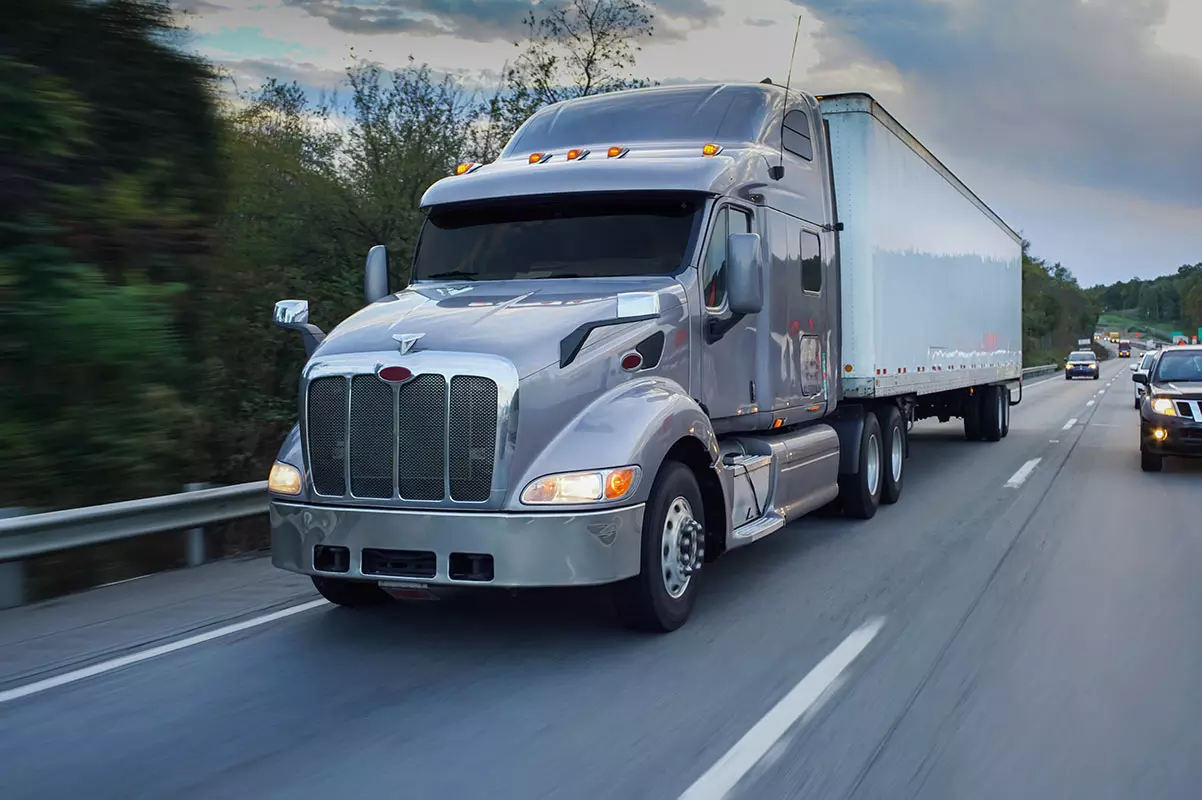



Truck Accidents in Colorado: Massive Vehicles, Massive Stakes
Within hours of a truck accident, the trucking company sends investigators to protect itself — not you. Jordan Law moves just as fast. We’ve recovered $18.6M, $20M, and $26.6M in truck accident verdicts because we know how to hold trucking companies accountable under federal regulations they hoped you’d never learn about.
Colorado’s interstate system — I-25 running north-south through Denver, I-70 cutting east-west through the mountains, I-76 connecting to the northeast — makes the state a major trucking corridor. In 2024, large trucks were involved in 1,809 reportable crashes in Colorado, killing 105 people and injuring 584 more. Provisional 2025 data shows 1,878 crashes and 736 injuries. Crashes cluster where the freight moves: Denver and Adams counties see more commercial-truck involvement than anywhere else in the state, along the I-70, I-25, and I-76 corridors.
When a fully loaded semi-truck weighing up to 80,000 pounds collides with a passenger vehicle weighing 3,500 pounds, the physics are devastating. The occupants of the smaller vehicle absorb virtually all of the impact force. The injuries — traumatic brain injuries, spinal cord damage, crush injuries, severe burns, amputations — are frequently catastrophic. And in too many cases, they are fatal.
But what makes truck accident cases truly different from car accident cases isn’t just the severity of injuries. It’s the legal complexity. Federal Motor Carrier Safety Regulations govern every aspect of commercial trucking — from how long a driver can operate before resting to how cargo must be secured to when brakes must be inspected. When a trucking company violates these regulations and someone gets hurt, those violations become powerful evidence of negligence. The challenge is preserving and finding that evidence before the trucking company destroys it.
“Truck accidents are very significant. We have interstates in Colorado. You’ve got major trucking routes through I-70, going up to I-80, down I-25. You see a lot of semi accidents, and a lot of these things are significant and extremely serious as you can imagine. They’re huge. They’re massive. And they cause massive injury and damage.”
Jason Jordan, Esq.– Founding Partner, Jordan Law
For a free legal consultation with a Personal Injury lawyer serving Denver, call (303) 465-8733
Our Truck Accident Track Record
Truck accident cases require substantial resources to investigate and litigate — accident reconstruction experts, trucking industry specialists, medical experts, and the financial ability to go up against corporate legal teams. Our results demonstrate we have the firepower and the will to take these cases as far as necessary:
- Truck parking brake malfunctioned, crashing through a kitchen wall and causing catastrophic deep fryer burns
- Fuel tanker explosion leaving the victim with a permanent brain injury
- Verdict for a child who was run over by a garbage truck and lost his leg
These verdicts share a common thread: in every case, the trucking company or its insurer refused to fairly compensate the victim, and we took the case to trial. Our willingness to do that — and our track record of winning when we do — is what produces real results for truck accident victims.
“It’s very important that you wind up with the right attorney — not just the attorney that advertises the most or has the most clicks on the Internet. You want to go with an attorney that has tried cases, because the insurance carriers know which law firms try cases and you get better value on your case. And a lot of the ones that are running those big volumes, they don’t try anything. In fact, a lot of times they’re calling us to litigate and try their cases.”
Jason Jordan, Esq. – Founding Partner, Jordan Law
See how truck accident cases in Colorado are valued.
Federal Motor Carrier Safety Regulations: The Rules Trucking Companies Break
Commercial trucking is one of the most heavily regulated industries in the country. The Federal Motor Carrier Safety Regulations (FMCSRs) impose strict requirements on trucking companies, fleet owners, and drivers. When these regulations are violated and an accident results, those violations are powerful evidence of negligence — and an experienced truck accident attorney knows exactly where to look.
“There is something called the Federal Motor Carrier Safety Regulations that apply to trucking companies that have certain rules and regulations that they have to follow. And I’m sure you’ve heard of these things before where the drivers have to keep logs. And sometimes they have two logs you’ll hear stories about — one that they show the police showing that they’re sleeping enough hours, and the ones that they’re really running so that they can get their shipments across the country in time.”
Jason Jordan, Esq. – Founding Partner, Jordan Law
Hours-of-Service Violations
Federal law limits how long a truck driver can operate before mandatory rest. Property-carrying drivers cannot drive more than 11 hours after 10 consecutive hours off duty, and cannot drive beyond 14 hours after coming on duty. After 60/70 hours on duty in 7/8 consecutive days, a 34-hour restart is required. These rules exist because fatigued driving is one of the leading causes of truck accidents. When drivers or companies falsify electronic logging device (ELD) records to exceed these limits — as Jason describes with the “two logs” problem — they are violating federal law and creating extreme danger on the road.
Vehicle Maintenance and Inspection Failures
Trucking companies are required to conduct regular inspections and maintain their vehicles in safe operating condition. Brake systems, tires, lights, steering components, and coupling devices must all meet federal standards. Pre-trip and post-trip inspections are mandatory. When a company cuts corners on maintenance — as often happens with owner-operators working on thin margins — the results can be catastrophic. Our $26.6 million verdict involved a truck parking brake malfunction that caused a devastating explosion and burn injury.
“These cases have become more and more common the more you have owner-operator type situations. So you have more of these trucking companies that are not really companies, but they’re more solo drivers who own their own vehicle, their own truck, and they’re doing contract work for other people. And a lot of these people, unfortunately, when they’re having to pay their own tolls and pay their own gas and not get reimbursed, they wind up trying to run lines that are too long, and they wind up piecemealing a lot of their maintenance together. So you find out half their brakes are out of adjustment or something like that.”
Jason Jordan, Esq. – Founding Partner, Jordan Law
Driver Qualification Violations
The FMCSRs require trucking companies to verify that drivers hold valid commercial driver’s licenses (CDLs), pass medical examinations, have clean driving records, and pass drug and alcohol testing. In 2024, 21 drivers involved in Colorado trucking accidents were suspected of alcohol use and 11 were suspected of drug use. When a company puts an unqualified, impaired, or medically unfit driver behind the wheel of an 80,000-pound vehicle, the company bears responsibility for the consequences.
Cargo Securement Violations
Improperly loaded or unsecured cargo can shift during transit, causing the truck to roll over, jackknife, or lose its load onto the roadway. Federal regulations specify exactly how different types of cargo must be secured, including the number and type of tie-downs, weight distribution requirements, and blocking and bracing standards. When cargo securement failures cause an accident, both the loading company and the carrier may be liable.
Denver Truck Accident Lawyer Near Me (303) 465-8733
Who Is Liable in a Truck Accident?
Unlike a typical two-car crash, truck accidents frequently involve multiple liable parties. Identifying every responsible party is critical because it expands the insurance coverage available to you and ensures full accountability. Potentially liable parties include:
The truck driver — for negligent driving, hours-of-service violations, distracted driving, impaired driving, or failure to follow traffic laws.
The trucking company — for negligent hiring, inadequate training, pressuring drivers to exceed hours limits, failing to maintain vehicles, or failing to enforce safety policies. Under the doctrine of respondeat superior, the trucking company is generally liable for the negligent acts of its employee drivers.
Owner-operators and their contracting companies — the rise of independent owner-operators has created complex liability questions. When a solo driver owns the truck and contracts with a carrier, both the driver and the carrier may share liability depending on the contractual relationship and the degree of control the carrier exercises.
Maintenance contractors — third-party companies that service and repair trucks. If a brake failure, tire blowout, or mechanical defect caused the accident and a maintenance company performed deficient work, that company may be liable.
Cargo loading companies — the company that loaded, secured, or distributed the truck’s cargo. These can be common with delivery truck accidents. If improperly loaded cargo caused the truck to roll over, jackknife, or spill, the loading company shares liability.
Vehicle and parts manufacturers — if a defective truck component (brakes, tires, steering, coupling devices) caused or contributed to the accident, the manufacturer may be liable under product liability law.
Government entities — if hazardous road design, missing signage, or poor road maintenance contributed to the accident, a government entity may be liable. Note that claims against government entities are subject to the 182-day CGIA notice deadline.
Evidence Preservation: Why You Need an Attorney Immediately
This is the most time-critical aspect of any truck accident case. Within hours of a crash, the trucking company will dispatch its own investigators, adjusters, and legal team to the scene. Their job is to protect the company — not to preserve evidence that might help you. Critical evidence can be lost, overwritten, or destroyed quickly if you don’t have an attorney sending preservation demands right away.
“If you’ve been injured in a trucking case and you’ve had the misfortune of being hit or involved in a trucking accident, you definitely need to call an attorney as soon as possible. There is a certain time limit where they have to maintain all that information under those federal rules, and you want to make sure that you have someone on your side immediately sending out letters saying you need to preserve that information, so that we can actually gather it and conduct a true investigation for you.”
Jason Jordan, Esq. – Founding Partner, Jordan Law
Electronic Control Module (ECM) / Event Data Recorder (EDR) Data
Commercial trucks are equipped with onboard electronic systems that capture critical data in the seconds before and during a crash: vehicle speed, braking events, engine throttle position, hours-of-service data, cruise control use, hard deceleration records, and fault codes. This data can prove whether the driver was speeding, failed to brake, or was operating in violation of federal regulations. But it can be overwritten by subsequent use of the truck if not preserved promptly.
Electronic Logging Device (ELD) Records
Since 2019, most commercial trucks have been required to use electronic logging devices to track hours of service. These records show exactly when the driver was driving, on-duty, in the sleeper berth, or off-duty. ELD data can prove hours-of-service violations — one of the most common and dangerous forms of trucking negligence. Companies are only required to retain these records for six months, so preservation demands must go out immediately.
Dashcam and Surveillance Footage
Many commercial trucks have forward-facing and cabin-facing cameras. This footage can show what the driver was doing in the moments before the crash — whether they were looking at the road, checking a phone, reaching for something in the cab, or falling asleep. Nearby traffic cameras and business surveillance systems may also have captured the accident. All of this footage gets overwritten on short cycles.
Maintenance and Inspection Records
Pre-trip and post-trip inspection reports, maintenance logs, repair invoices, and DOT inspection records can reveal whether the truck had known mechanical defects that the company failed to address. Brake adjustment records are particularly important — improperly adjusted brakes are one of the most common mechanical causes of truck accidents.
Driver Qualification Files
The driver’s personnel file — including CDL records, medical certificates, drug and alcohol test results, training records, and driving history — can reveal whether the trucking company hired an unqualified or dangerous driver.
Click to contact our personal injury lawyers today
What to Do After a Truck Accident in Denver
Call 911 and Get Medical Attention
Truck accident injuries are frequently severe. Get emergency medical care immediately. Even if you feel able to move around at the scene, adrenaline can mask serious internal injuries, brain injuries, and spinal damage. Go to the hospital and get a thorough evaluation. Your medical records from day one are critical evidence.
Document Everything You Can
If you’re physically able, photograph the truck (including its DOT number, company name, license plate), all vehicles involved, the road, traffic signals, skid marks, debris, and your injuries. Get the truck driver’s name, CDL number, and company information. Collect contact details from witnesses.
Do Not Speak to the Trucking Company or Its Insurer
The trucking company’s representatives will contact you quickly — and they are not on your side. Do not give a recorded statement. Do not sign any documents. Do not accept an early settlement offer. Everything you say can and will be used to minimize your claim.
“I have people tell me all the time, “I’ve been dealing with this insurance company for twenty years and they’ve always treated me great.” And I say, “Have you ever made a claim?” And they say, “No.” It’s like, well, okay. So the person taking your money has been treating you great. Wait till you go to the claims department. You’re not dealing with the salesperson anymore. You’re dealing with the people who are having to pay the money back out.”
Jason Jordan, Esq. – Founding Partner, Jordan Law
Contact a Truck Accident Attorney Immediately
Speed matters more in truck accident cases than almost any other type of personal injury claim. An attorney can send spoliation letters (evidence preservation demands) to the trucking company within 24 hours, begin an independent investigation, retain accident reconstruction experts, and protect you from the trucking company’s legal team. Every day of delay is a day the evidence degrades.
“You retain an attorney and that just takes all of that away. We tell you what all those things mean — like collateral source and subrogation and common fund doctrine — and why that matters to you at the end of the day. We explain those things to you and then you go back to work, you live your life, you see your medical doctors. That’s what we’re here for.”
Jason Jordan, Esq. – Founding Partner, Jordan Law
How Long Do You Have to File a Truck Accident Claim in Colorado?
Colorado’s statute of limitations for motor vehicle accidents — including truck collisions — is three years from the date of the accident under C.R.S. § 13-80-101. If you miss this deadline, you lose the right to pursue compensation entirely, regardless of how strong your case is.
However, three years is misleading comfort in a truck accident case. The real deadline is much shorter — because the evidence that wins these cases disappears fast. Electronic control module (ECM) data can be overwritten. ELD driving logs have retention limits. Dashcam footage gets recorded over. Trucking companies are under no obligation to preserve this evidence unless they receive a formal preservation demand from an attorney.
If the truck was owned or operated by a government entity — a city vehicle, a state DOT truck, a municipal fleet — the Colorado Governmental Immunity Act requires you to file a notice of claim within 182 days of the accident. Miss that deadline and your claim against the government entity is barred.
If a defective truck part (brakes, tires, steering, coupling) contributed to the crash, that component of your claim may fall under product liability with a separate two-year statute of limitations under C.R.S. § 13-80-102.
The bottom line: call an attorney immediately. We send preservation demands on the day you hire us and start securing evidence before the trucking company can destroy it.
Complete a Free Case Evaluation form now
Compensation for Truck Accident Victims
Because commercial trucks carry significantly larger insurance policies than passenger vehicles — often $1 million or more — the potential recovery in truck accident cases is typically higher than in standard car accident claims. Truck accident victims in Colorado may recover compensation for:
Medical expenses — emergency care, surgery, hospitalization, rehabilitation, brain injury treatment, burn care, prosthetics, and all future medical needs related to the accident.
Lost wages and earning capacity — income lost during recovery and, for catastrophic injuries, the permanent reduction in your ability to work and earn over your remaining career.
Pain and suffering — the physical pain, emotional distress, PTSD, anxiety, and diminished quality of life caused by the crash and its aftermath.
Property damage — repair or replacement of your vehicle and personal property destroyed in the collision.
Loss of enjoyment of life — the activities, hobbies, relationships, and daily pleasures that your injuries have taken from you.
Wrongful death damages — if you lost a loved one in a truck accident, surviving family members can seek compensation for funeral and burial expenses, loss of income, loss of companionship, and grief.
Insurance in Truck Accident Cases
Commercial trucking companies are required to carry minimum liability insurance ranging from $750,000 to $5 million depending on the type of cargo. Many carry even higher limits. However, just because the insurance exists doesn’t mean the insurer will pay willingly. We also review your own UM/UIM and MedPay coverage to ensure every available source of compensation is pursued.
“Colorado has one of the highest percentages of people driving around with no insurance. Uninsured or underinsured motorist coverage is coverage that you get to protect yourself and your family. I call it “you coverage” because it is coverage for you. You gotta talk to an insurance agent about how much it’s gonna cost on your policy, but it’s usually not a lot of money to increase your coverage.”
Sarah Freedman, Esq. – Director of Pre-litigation, Jordan Law
Why Jordan Law for Your Truck Accident Case
Proven truck accident results. Over $65 million in truck accident verdicts — including a $26.6M brake malfunction case, a $20M fuel tanker explosion, and an $18.6M garbage truck verdict. These results came from cases where the trucking company’s insurer refused to pay fair compensation, and we took them to trial.
We know federal trucking regulations. FMCSA hours-of-service rules, ELD requirements, vehicle maintenance standards, driver qualification files, cargo securement regulations — we understand these rules and know exactly where to look for violations that prove negligence.
We move fast on evidence. Truck accident evidence has a short shelf life. We send preservation demands within 24 hours, retain accident reconstruction experts early, and begin independent investigation immediately — before the trucking company can sanitize its records.
Resources to take on corporate defendants. Trucking companies and their insurers have deep pockets and experienced legal teams. We have the financial resources, expert networks, and trial experience to match them — and a track record that proves it.
True trial lawyers. Insurance companies settle truck accident cases for their full value only when they believe the other side will actually go to trial. Our record removes any doubt.
No fee unless we win. We handle truck accident cases on a contingency fee basis. You pay nothing upfront. Consultations are always free.
We represent truck accident victims across Denver, Aurora, Colorado Springs, Fort Collins, Boulder, Grand Junction, and throughout Colorado.
Hesitant to Call a Lawyer?
Don’t be. Many people who need a personal injury lawyer wait too long to call one — not because they don’t need help, but because they’re intimidated, overwhelmed, or afraid of doing something “wrong.” At Jordan Law, attorney Sarah Freedman sees this every day.
Calling an attorney is easy and shouldn’t cause stress. A free consultation is simply a conversation — we can do it in person, on the phone, or via Zoom. We want to know what happened and whether we can help. If we can, great. If not, we’ll tell you honestly and recommend other attorneys we trust. Learn more about what to expect.

Truck Accident Frequently Asked Questions
What should I do immediately after a truck accident in Denver?
Call 911, get medical attention even if injuries seem minor, and document the scene with photos of all vehicles, the truck’s license plate, DOT number, and company name. Get contact information from witnesses. Do not give a recorded statement to any insurance company — especially the trucking company’s insurer. Contact a truck accident attorney immediately so they can send evidence preservation letters before critical data like electronic logging device records, dashcam footage, and maintenance logs is destroyed or overwritten.
Why are truck accident cases more complex than car accident cases?
Truck accidents involve federal regulations (Federal Motor Carrier Safety Regulations), multiple potentially liable parties (the driver, trucking company, maintenance contractor, cargo loader, and vehicle manufacturer), complex insurance coverage with higher policy limits, electronic data from the truck’s onboard systems, and corporate legal teams that begin investigating within hours of the crash. The trucking company sends its own investigators to the scene to protect the company — not to help you. Having an attorney involved immediately levels the playing field.
Who can be held liable in a truck accident?
Multiple parties may share liability: the truck driver (for negligent driving, fatigue, or impairment), the trucking company (for negligent hiring, maintenance failures, or pressuring drivers to exceed hours limits), the vehicle or parts manufacturer (for defective brakes, tires, or other components), the maintenance contractor (for negligent repairs), and the cargo loading company (for improperly secured loads). If a government entity’s road design or maintenance contributed, they may also be liable — subject to the 182-day CGIA notice deadline. An experienced attorney investigates all sources of liability to maximize your recovery.
What are Federal Motor Carrier Safety Regulations?
The FMCSRs are comprehensive federal rules governing commercial truck operations. They cover hours-of-service limits (how long drivers can operate before mandatory rest), vehicle inspection and maintenance requirements, driver qualification standards (CDL, medical certification, drug testing), cargo securement rules, and insurance minimums. When a trucking company or driver violates these regulations and causes an accident, that violation is strong evidence of negligence in your personal injury case.
What compensation can I recover after a truck accident?
Truck accident victims can seek compensation for medical expenses (current and future), lost wages and diminished earning capacity, pain and suffering, emotional distress and PTSD, property damage, and loss of enjoyment of life. Because trucking companies carry larger insurance policies (often $1 million or more), the potential recovery is typically higher than in standard car accident cases. In wrongful death cases, surviving family members can seek additional damages for funeral expenses, loss of income, and loss of companionship.
How much does it cost to hire a truck accident lawyer?
Jordan Law handles truck accident cases on a contingency fee basis. You pay nothing upfront and owe no attorney fees unless we recover compensation for you. Truck accident cases require significant resources — accident reconstruction experts, trucking industry specialists, medical experts — and we invest those resources at our own expense. If you don’t recover compensation, you owe us nothing. Consultations are always free.
How long do I have to file a truck accident lawsuit in Colorado?
You have three years from the date of the accident to file a personal injury lawsuit for a truck accident in Colorado under C.R.S. § 13-80-101. For wrongful death claims, the deadline is two years from the date of death. If a government-owned vehicle was involved, you may need to file notice within 182 days under the Colorado Governmental Immunity Act. If a defective truck component contributed to the crash, that portion of the claim may carry a separate two-year deadline under product liability law. Contact an attorney immediately — critical evidence like ECM data and ELD logs can be lost within days.
Our Denver Tech Center / Greenwood Village, Colorado Office Location
Jordan Law Accident and Injury Lawyers – 5445 DTC Parkway Suite 1000 Greenwood Village CO 80111